
Brescia: History, Art and Landscape in Transition
Accommodation in Brescia
Brescia combines significant evidence of the city’s and region’s history with expansive landscapes and paths through the surrounding area. Between museums, fortifications, archaeological sites and natural spaces, a diverse picture emerges of the Lombard city and its surroundings.
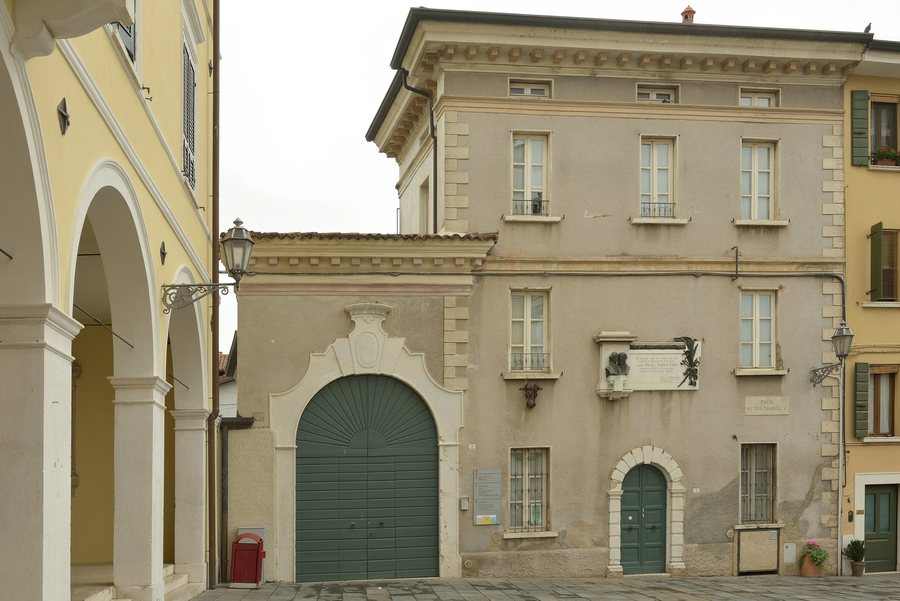 File:Bedizzole edificio Piazza Vittorio Emanuele provincia di Brescia.jpg
Photo: Photo: This Photo was taken by Wolfgang Moroder . Feel free to use my photos, but please mention me as the author and send me a message . This image is not in the public domain . Please respect the copyright protection. It may only be used according to th
File:Bedizzole edificio Piazza Vittorio Emanuele provincia di Brescia.jpg
Photo: Photo: This Photo was taken by Wolfgang Moroder . Feel free to use my photos, but please mention me as the author and send me a message . This image is not in the public domain . Please respect the copyright protection. It may only be used according to th
Culture
The Museo delle Armi Luigi Marzoli houses more than 700 objects related to Brescian arms production from the 15th to the beginning of the 19th century. The museum also contains one of Europe’s most important collections of antique weapons and armour and tells of the long-standing and productive tradition of arms manufacturing in Brescia. The monumental San Salvatore–Santa Giulia complex was founded in 753 AD by Desiderius, Duke of Brescia and later King of the Lombards.
Castello di Brescia stands as a fortified complex on Colle Cidneo. Traces of various rulers can still be seen throughout the site today. Paths and spaces within the complex offer views of the slopes of the Ronchi, the valleys of the Brescian region, the Apennines and the Alps. At the Museo del Risorgimento Leonessa d’Italia, the exhibition is divided into eight sections and presented in Italian and English. In an immersive box, visitors can relive the Ten Days of Brescia; visual material is combined with stories about individual protagonists such as the patriot Tito Speri.
The Pinacoteca Tosio Martinengo takes visitors through art from the 14th to the 19th century: the exhibition tour begins with works from the 14th century and ends with works from the 19th century. Another historical trace is preserved in Parco di Naquane in Valle Camonica. It was established in 1955 as Italy’s first archaeological park and protects a complex of 104 large rocks with prehistoric and protohistoric rock carvings. Musil – Museo del Ferro di Brescia welcomes visitors with an interactive tour featuring artefacts, old photographs, models, and audio and video installations. The visit also includes the outdoor facilities used to harness the water power of the Bova canal; the city’s only still-functioning water wheel is located there.
Nature and Trails
Southeast of Brescia lies Parco delle Cave, a 967-hectare landscape park with former quarry lakes as well as cycling and walking paths. Three of the park’s basins are open to the public. They also feature cycling and walking paths as well as birdwatching observation points. The several important entrances to Parco delle Cave include Lago Canneto, Lago Bose, Lago Gerolotto and Lago Fuserino.
In the wider regional area around Brescia, Parco dell’Adamello has a network of almost 1,000 kilometres of trails. These include family hiking trails, challenging high-alpine mountaineering routes and the approximately 50-kilometre-long Alta Via dell’Adamello. La Via delle Sorelle also passes through Brescia: a 130-kilometre-long walking trail through 36 municipalities with six recommended stages. The route can be walked in both directions.
Regional Cuisine
Traditional dishes are also part of the local character. The recipe for Spiedo bresciano was recognised as a Denominazione Comunale in March 2011 and is associated with the towns of Serle and Gussago. Casoncelli alla bresciana follows a culinary tradition dating back more than six centuries.
Events and Information
The 1000 Miglia takes place over four days. It starts in Brescia, travels to Rome and returns nonstop to Brescia. Along the way, it follows ordinary roads that remain open to traffic. The Infopoint di Brescia provides additional information about museums, historic and artistic sights, transport, excursions and events in Brescia and its province.
More destination pages:Pregasio, Tre Capitelli, Arias, San Colombano, Vezza D'oglio, Temù, Marone, Breno, Collio, Darfo Boario Terme, Artogne, Piovere, Lozio, Borno, Zone, Pisogne, Sale Marasino, Bassanega, Campione Del Garda, Limone Sul Garda, Tignale, Tremosine, Vesio, Voiandes, Anfo, Parole, Vesta, Voltino, Ponte Di Legno.
For the higher-level travel overview: Lombardy.
