
Safety, rules & conduct on the slopes
Safe skiing in accordance with the slope rules combines control with consideration: adjusting your speed and line to your ability, visibility and traffic gives others room and helps you respond to changing conditions.
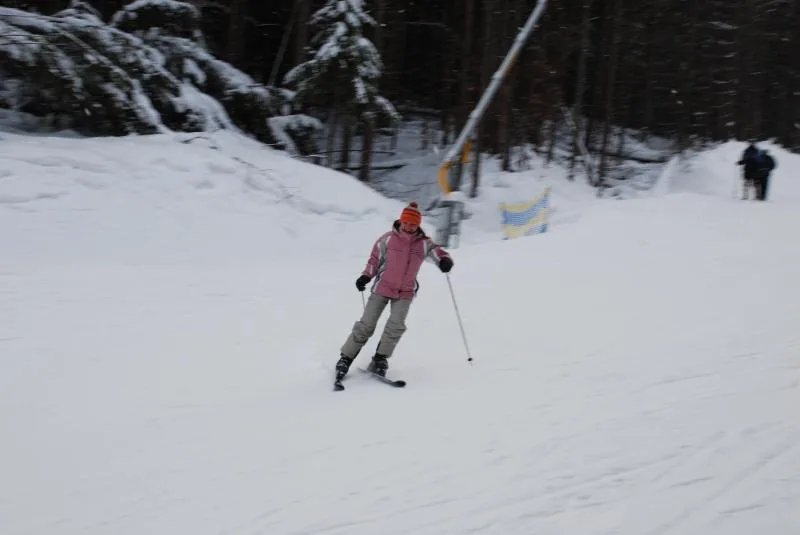 Skifahrer in pinker Jacke und orangefarbener Mütze fährt einen verschneiten Hang hinab.
Photo: Olga Buko
Key facts
- You must be able to control your speed.
- If you are coming from behind, choose a line that does not put others at risk.
- When overtaking, leave enough room for the person being overtaken to move.
- Before entering a run or setting off again, look uphill and downhill.
- Narrow sections and areas with limited visibility are not places to stop.
- After an accident, you must help without putting yourself in danger.
Consideration and choice of line
The FIS rules require skiers to adapt their speed to their ability, the terrain, snow, weather and traffic. Anyone coming from behind must choose a line that does not endanger people skiing ahead. Overtaking is permitted on either side, provided there is enough room for the person being overtaken to move voluntarily or involuntarily. Before entering a run or setting off again after stopping, check the slope uphill and downhill to make sure no one is put at risk. Unless there is a compelling reason, do not stop in narrow sections or where visibility is limited; after a fall in such a place, clear the slope as quickly as possible.
Markers and terrain boundaries
Slope markers show the route and difficulty level of open runs. Pay attention to closures and barriers. A groomed run, or one that looks accessible, is not automatically open. Secured ski areas differ from off-piste terrain in terms of safety measures and avalanche risk. When preparing to ski off-piste, take avalanche danger and planning as well as the snowpack structure into account.
Helping after an accident
Under the FIS rules, skiers are required to assist after a ski accident. The first priority when responding to a ski accident is your own safety. If it is safe to do so, mark the location and warn other slope users. When calling the ski patrol or slope rescue service, give useful location details such as the ski area, the run and nearby landmarks. When skiing with children, choose easy-to-follow runs and agree on meeting points.
