
How to overtake, merge and stop safely on the piste
Overtaking, merging and stopping are among the situations where people most often come close together. Looking ahead and keeping your speed under control reduce the risk.
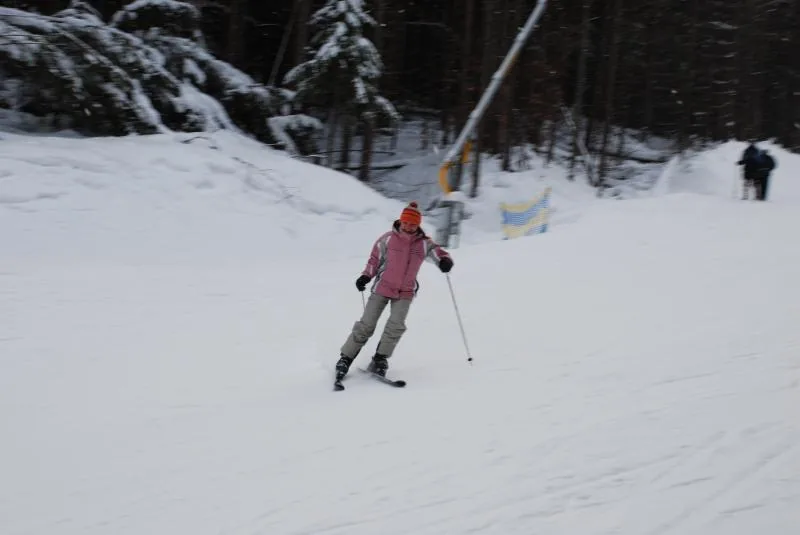 Skifahrer in pinker Jacke und orangefarbener Mütze fährt einen verschneiten Hang hinab.
Photo: Olga Buko
Skifahrer in pinker Jacke und orangefarbener Mütze fährt einen verschneiten Hang hinab.
Photo: Olga Buko
Overtake with enough space
Before setting off, take a quick look at the current piste map. Find your location, the next suitable run and a route back that you can still manage if you start to tire. On many maps, lifts, pistes, intersections and closed areas are marked differently. These details help you find your way, but do not replace staying alert on the mountain. A section that looks clear in the morning may be different to ski later because of fresh snow, ice, shade or heavy traffic.
When choosing a route, piste types and difficulty ratings are key. Choose the easiest suitable option if anyone in your group feels unsure. Families and mixed-ability groups should not automatically take the direct route just because it looks shorter on the map.
Merge onto a piste safely
Read the signs, arrows and colour codes at the base station and at every major intersection. Leave enough space to take in the signs and react in time. A piste does not always end where it first appears to widen; narrow connections or a path to the next lift may follow. Obey closure signs and barriers, and if you are unsure, choose the marked, clearly visible route back.
Piste markings provide basic guidance. Also check the weather, visibility, snow conditions and how you are feeling that day. Someone who can brake safely and control their direction will make better decisions than someone choosing a route based only on its colour.
Stop only where you can see clearly
Before setting off, agree on a meeting point that everyone can recognise and that is not in the middle of a ski line. After a fall, one person should stay as close to the edge as possible and make themselves visible; the others should wait in a safe place. If visibility is poor, the wind is strong or fatigue is setting in, it is wise to take an early break. For guidance on behaviour, keeping your distance and merging safely, see the advice on piste safety.
The official FIS rules for skiers and snowboarders cover consideration for others, speed, overtaking, merging, stopping, signs and providing assistance. They are a reliable basis for behaviour on groomed pistes; local guidance from the ski area also applies.
Quick practical checklist
- Check the piste map and visible markings before setting off.
- Match the difficulty, visibility and snow conditions to your ability.
- Agree on meeting points away from ski lines.
- Slow down and stay alert at intersections.
- If you are unsure, tired or the weather changes, turn back in good time.
Frequently asked questions about piste behaviour
Which side can I overtake from?
The FIS rule allows overtaking on either side, but requires enough space for the other person to move freely.
What should I do before merging?
Look uphill and downhill, wait for a suitable gap and move in a controlled way into an area you can see.
Where is it safe to take a break?
At the side of the piste in a place with a clear view—not behind a crest, in a narrow section or right at an intersection with poor visibility.
Decide together before setting off
Take a moment to agree on who will lead, where you will wait and which section you will skip if conditions worsen. A clear plan is especially helpful when the group includes people travelling at different speeds, children or less experienced skiers. Smartphones may fail in the cold, run out of battery or lose reception, so agreed meeting points and visible landmarks remain important. Never go faster than you can safely control and stop.
Stay aware of your surroundings while waiting, too. A safe place at the edge is not directly behind a crest or where people emerge from a lift or crossing. Before setting off again after a break, look in both directions. After a fall, first make sure your position is safe before the group continues. If someone is injured or the situation is unclear, contact the local piste patrol.
Take the weather and how you are feeling into account
Wind, snowfall and changing light can reduce visibility faster than expected. A run that feels easy in sunshine may be hard underfoot in the shade or difficult to read in fog. So do not plan to fit in the maximum possible number of runs; leave enough time for breaks, detours and getting back to your accommodation. Children and beginners often need more time at intersections and when stopping safely. Deciding to finish the day early is part of good planning.
