
What to do after a skiing accident: secure the scene, call for help, take the first steps
Key facts for emergencies
After an accident, securing the scene comes first. Place your skis or another clearly visible marker above the injured person, making sure you remain on safe footing yourself.
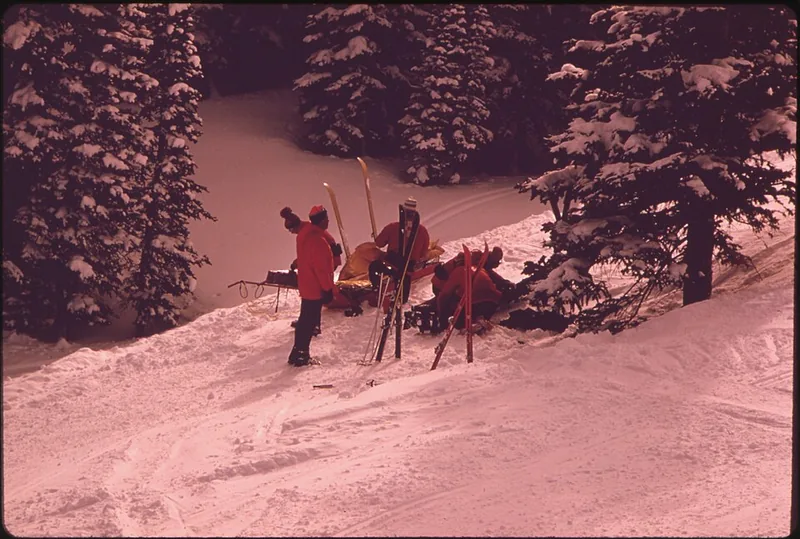 Skiwacht transportiert einen verletzten Skifahrer auf einer verschneiten Piste.
Photo: Ron Hoffman / U.S. National Archives
Skiwacht transportiert einen verletzten Skifahrer auf einer verschneiten Piste.
Photo: Ron Hoffman / U.S. National Archives
Arrange help clearly
Contact the ski patrol or the relevant emergency service and provide the location, piste name, recognizable landmarks, and a brief description of the injury. Stay with the injured person if it is safe to do so.
Stay calm and avoid making things worse
Do not move injured people unnecessarily. Keeping them warm, reassuring them, and giving clear information is often more helpful than taking rushed action. Anyone who witnessed the accident should leave their contact details in case the circumstances need to be clarified later.
After a skiing accident, your first priorities are your own safety, securing the scene, and making a clear emergency call. The most important decisions are made in the first few minutes: check that you are safe, pinpoint the location as accurately as possible, contact help clearly, and warn other winter sports enthusiasts. Stay in a safe place and follow the instructions of the local ski patrol. The information on winter sports can help you plan your day.
Act calmly and methodically
If you are unsure what to do, follow a clear sequence. Secure the area, check whether those involved are responsive, and get help. Do not present guesses as a diagnosis. Professional assistance is especially important in cases of unconsciousness, severe pain, breathing problems, or a possible head or spinal injury. Move the injured person only if there is immediate danger.
Marked routes, highly visible clothing, and a charged phone make communication easier, but do not guarantee reception. A brief note with your accommodation and contact details can simplify arrangements after an accident. For equipment and conduct, ski and snowboard equipment and piste safety information are useful.
After the incident
If possible, make a note of the time, location, and people involved. In the event of a collision, exchange contact details. The official FIS Rules for Conduct on Ski Slopes are the appropriate reference for conduct, helping others, and consideration. Local rescue and resort instructions take precedence.
Practical preparation
- Check emergency numbers and agree on a meeting point before setting off.
- Read the piste map and current notices.
- Use only suitable, inspected equipment.
- Take a break if the weather changes, you become tired, or you are injured.
- In an emergency, give your location, piste, lift, and situation.
Frequently asked questions
What is the first step?
Secure the accident scene, make yourself visible, and do not put yourself in additional danger.
What information should I give when calling for help?
Give the location as precisely as possible, including the piste or lift, the number of people involved, and any visible injuries.
Should I move an injured person?
Only if there is immediate danger. Otherwise, wait for the ski patrol.
Making decisions throughout the day
Plan your day with enough time for navigation, breaks, and a safe return. Conditions change with temperature, wind, fresh snow, shade, and the number of people on the slopes. Your own ability can also be affected by fatigue or cold. Choosing an easier option in good time is a sensible decision and avoids having to push into a risky situation. With children and beginners, an experienced person should explain the route and adjust the pace.
Before setting off, check that your clothing, boots, helmet, and goggles fit comfortably. Freedom of movement and clear vision matter more than a particularly sporty look. After a fall or collision, the group should first move to a sheltered spot and watch for approaching traffic. Follow the resort’s local instructions on getting help, looking out for others, and using marked areas.
Preparing for the return
Keep lift opening hours, the last connection, and the route down to the valley in mind, without leaving yourself too little time. A less demanding return route may be the better choice when your concentration starts to fade. Agree on meeting points and an alternative in case a section is closed or visibility is poor. A charged phone, water, and an extra warm layer are useful on longer days. If you are unsure, ask at the local ski or rescue station.
