
Skiing accident on a winter holiday
A skiing accident can happen despite good preparation. The key is not to make the accident site more dangerous, avoid moving injured people unnecessarily, and promptly contact the appropriate emergency services. The response depends on the terrain, injury, weather, and local procedures. Staying calm and providing clear information helps everyone involved.
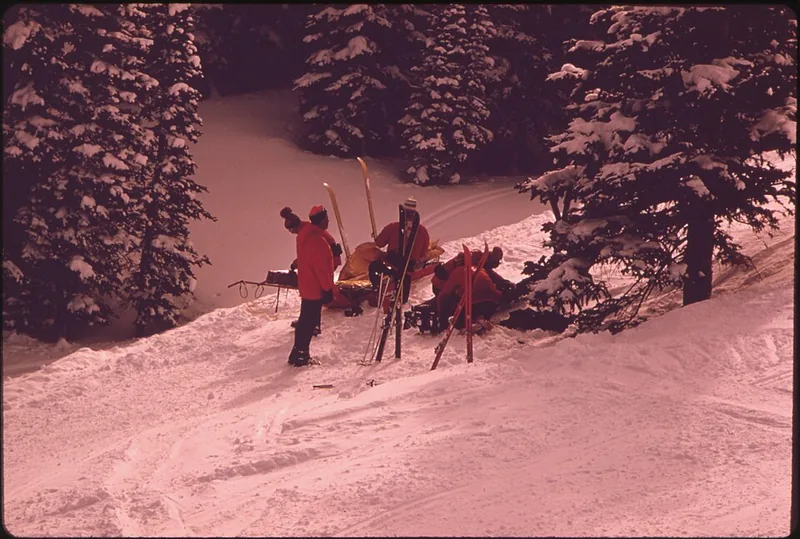 Skiwacht transportiert einen verletzten Skifahrer auf einer verschneiten Piste.
Photo: Ron Hoffman / U.S. National Archives
Skiwacht transportiert einen verletzten Skifahrer auf einer verschneiten Piste.
Photo: Ron Hoffman / U.S. National Archives
First priority: Get an overview
After a fall, first check for other skiers, ice, steep slopes, or other hazards. Anyone able to help should remain clearly visible above or beside the scene and warn approaching traffic. Skis or other easily visible objects should be placed only where they will not cause someone to trip.
Bergwacht Bayern describes the responsibilities of mountain rescue services. The specific rescue chain and emergency-call options depend on the country and ski area. Check local emergency information, the trail map, and the operator’s guidance before setting out.
Contact emergency services
In the event of a serious injury or an unclear situation, contact the locally responsible rescue service immediately. Give the location, trail name or number, visible landmarks, number of people involved, and the injured person’s condition. Keep the phone available for follow-up questions.
If possible, have one person wait for rescuers at a clearly visible spot. Others can look after companions and children. If the call is disconnected, do not make repeated, conflicting alerts; instead, follow the dispatch center’s instructions.
Help injured people
Do not sit injured people up or carry them away unless there is immediate danger. Talk to them, keep them warm, and monitor them. In cases of unconsciousness, severe pain, or breathing or circulation problems, professional assistance takes priority over attempts to transport them yourself.
Do not remove helmets or clothing unnecessarily. Only carry out measures you can perform safely and that the rescue service has instructed you to take. Keep onlookers away. Respect the privacy and dignity of the person involved.
After the accident
The time, place, circumstances, possible witnesses, and contact details can be useful for further treatment. Do not dispose of or alter equipment prematurely if an insurance company or a later investigation may need information about it. The operator, rescue service, and insurer will advise you on the next steps.
Taking a break after an accident is sensible, even if the injury initially seems minor. Headache, dizziness, increasing pain, or limited mobility should be taken seriously. Return to the slopes only when it is medically and personally appropriate.
Prevent accidents on the slopes
Keeping your speed under control, maintaining distance, being considerate, and observing signs all reduce risk. Take weather, visibility, and fatigue into account. Keep children in agreed areas, and set meeting points for groups. The advice in Planning a ski holiday can help you prepare.
A small emergency card with your accommodation details, a contact person, and local information can be useful. It is no substitute for checking current conditions on site. Knowing the facility’s rules and taking a break early when in doubt go a long way toward making your ski day safer.
Prepare well and stay flexible
Before booking, travelers should check that the activity suits their experience, fitness, and group. Age, meeting point, duration, required equipment, breaks, and the return route all belong in the plan. Information about opening hours, prices, and availability may change with the season and should be confirmed with the provider.
The weather also affects the day. Cold, wind, visibility, and wet clothing can affect concentration and exertion. A warm layer to change into, drinks, and a charged phone are simple but useful preparations. If you are traveling with children, plan shorter sessions, convenient breaks, and a reliable adult contact person.
Consider the activity as part of your winter holiday as a whole. The advice in Planning a ski holiday can help with routes, extra time, and combining activities with a day of skiing. Snow conditions, school holidays, and the resort’s seasonal opening dates are also important when choosing when to travel. A flexible plan is better than a packed schedule with no room for contingencies.
When choosing accommodation, short distances, a dry place to store equipment, and good connections to the town center can be important. If you combine several sports, make time for rest days and ensure that shoes, gloves, and clothing can dry overnight. This leaves room for spontaneous changes without compromising safety and well-being.
Respect for staff, other guests, and local rules is part of every winter sports activity. An orientation session is not a formality: it explains activity areas, signals, equipment, and the limits of what is offered. Ask questions before starting. If you experience pain, dizziness, feel overwhelmed, or encounter unsafe conditions, stop the session and inform the responsible staff.
Frequently asked questions
Should injured people be moved?
If there is no immediate danger, leave injured people as much as possible in the position in which they were found. Rescue workers or the dispatch center will provide further instructions.
What information do rescuers need?
The location, trail name or number, landmarks, number of people involved, and their apparent condition. Stay available in case they have follow-up questions.
When can you continue skiing?
Only when the person is symptom-free and it is appropriate to return. Symptoms such as dizziness or increasing pain need to be assessed.
