
Queralbs: Vall de Núria, mountain trails and Romanesque culture
Accommodation in Queralbs
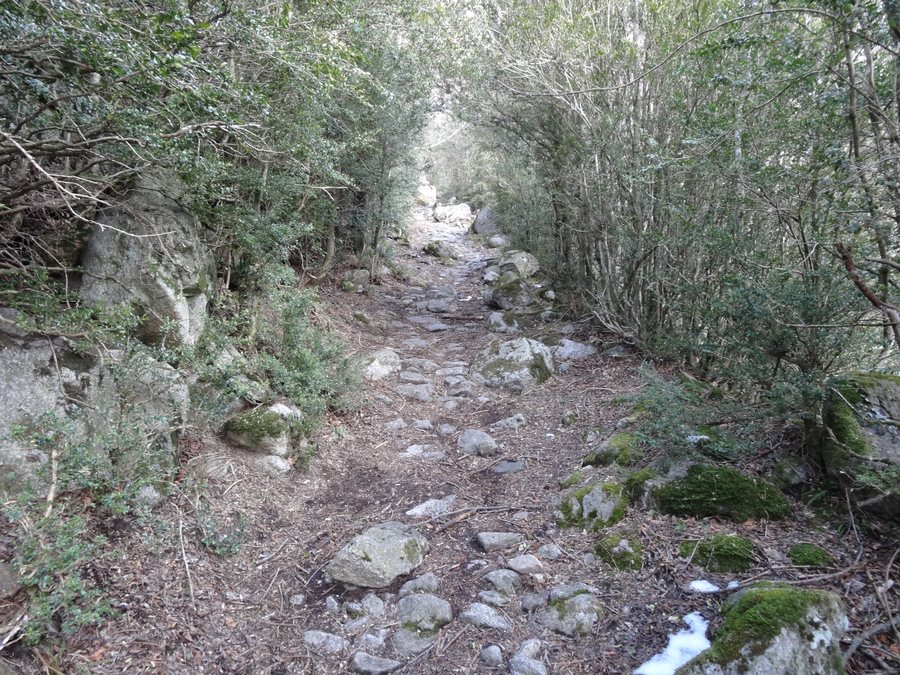
In Queralbs, the Camí Vell de Núria begins at Plaça del Raig. The path leads through shady mixed forests with ash, hazel, rowan and oak trees, across scrubland and a scree area, and along the cliff face of Roc del Dui. It then runs through the Núria gorges beside the river, with several waterfalls, and reaches views of the lake and the sanctuary of Núria, surrounded by high mountains. The changing landscapes shape the course of the path. For hikes across varied terrain, the route, surface conditions and current trail conditions are among the points that should be checked before setting out.
 File:Queralbs, 17534, Province of Girona, Spain - panoramio (1).jpg
Photo: EliziR via Wikimedia Commons, CC BY-SA 3.0
File:Queralbs, 17534, Province of Girona, Spain - panoramio (1).jpg
Photo: EliziR via Wikimedia Commons, CC BY-SA 3.0
Nature and trails
Another hike in Queralbs leads through the Bosc d’Estremera and along the Tosa River to an impressive stretch of river between two imposing rock walls. The municipality of Queralbs accounts for 54% of the area of the Parc Natural de les Capçaleres del Ter i del Freser.
Winter and mountain sports
The Vall de Núria, a ski resort and mountain sports centre located at an altitude of 2,000 m in the eastern Pyrenees, lies within the municipality of Queralbs. The ski resort and mountain sports centre offers activities all year round and can only be reached by rack railway or on foot. At a mountain sports centre offering activities year-round, the applicable opening and operating hours are a separate planning factor; current information should be checked before travelling.
Culture and history
The portico of the Església de Sant Jaume de Queralbs consists of six round arches built with voussoirs, resting on five columns. It is considered one of the finest examples of Catalan Romanesque porches. The church of Sant Jaume de Queralbs was first mentioned in 978 and rebuilt in the 12th century. The dates mark different construction phases: the first mention in 978 was followed by the rebuilding in the 12th century.
The Romanesque church of Sant Sadurní de Fustanyà is located in the settlement of Fustanyà. The remains of Queralbs Castle lie in the lower part of the village, at a strategically located site for the rapid defence of the population. In Serrat, old bread ovens built into the walls of houses can be seen.
Surroundings
The ancient site of Pedra Dreta is located in the immediate surroundings of Queralbs. The summit of Roc del Dui is also in the immediate surroundings of Queralbs. The summit of Cim de l'Ortigar is likewise located in the immediate surroundings of Queralbs. The Santuari de Núria is located in the surroundings of Queralbs. The summit of Puig Cerverís is in the surroundings of Queralbs, as is the summit of el Balandrau.
Other destinations in the same surrounding area include Gombrèn, Bolvir, Ogassa, Isòvol, Campdevànol, Puigcerdá, Ger and Ribes De Freser.
The Museu Municipal De Llívia museum is located in the wider regional surroundings of Queralbs. Castell de Montesquiu Castle is also located in the wider regional surroundings of Queralbs.
For the general travel overview: Girona.

.jpg)