
Campdevànol: Trails, Churches and Cultural Heritage
Accommodation in Campdevànol
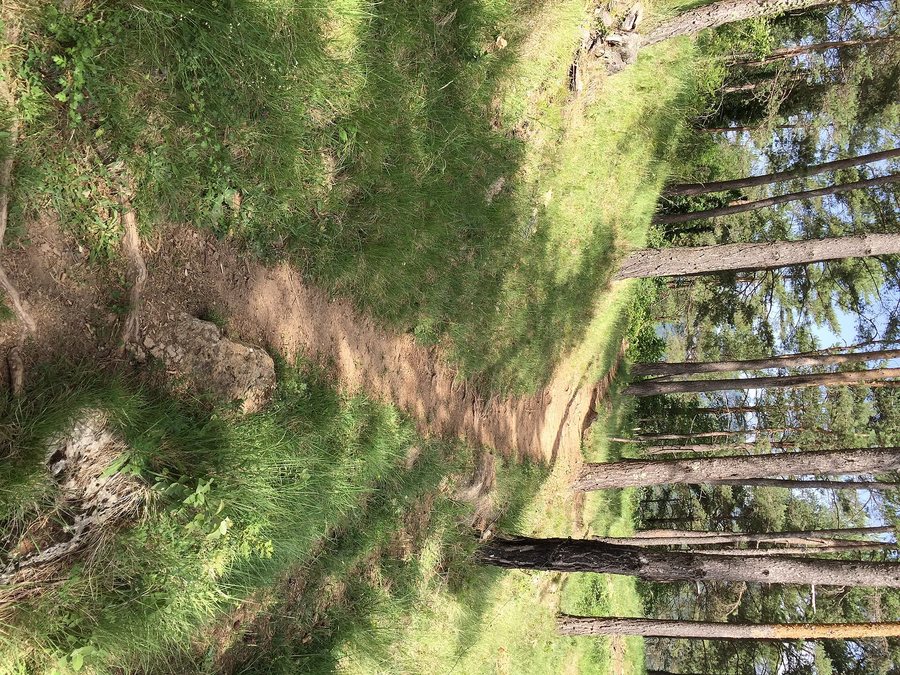
The Camí ral ramader begins in Campdevànol and can be explored on foot or by bicycle.
 File:Campdevànol, Province of Girona, Spain - panoramio (1).jpg
Photo: Yliana S.P. via Wikimedia Commons, CC BY-SA 3.0
File:Campdevànol, Province of Girona, Spain - panoramio (1).jpg
Photo: Yliana S.P. via Wikimedia Commons, CC BY-SA 3.0
Nature
The route to the Torrent de la Cabana follows the Estiula stream, also known as the Torrent de la Cabana or Ruta dels 7 Gorgs. Under this name, it leads to seven named pools: Gorg de la Cabana, Gorg de la Tosca, Gorg de l’Olla, Gorg de la Bauma, Gorg del forat, Gorg petit del Colomer and Gorg gran del Colomer. Advance reservation of a day pass per person is mandatory to access the Torrent de la Cabana.
In August 2026, access to the Torrent de la Cabana is expected to be via the Font del Querol information point, as access via the Camí Ral is currently impassable. Another itinerary leads to natural viewpoints over the Freser Valley and connects four churches in Campdevànol.
For a riverside walk, the starting point is Plaça de la Dansa in Campdevànol. From there, the walking route follows the Freser downstream to Font del Tòtil. There you will find a large covered area and a children's playground with a grassy area. The Centre PYRFER is also the starting point of the ten-stop Ruta del Ferro i l’Aigua de Campdevànol.
Culture
Molí Gros, also known as Molí de Baix de Campdevànol, is a grain mill dating from the mid-17th century that was powered by water and a vertical mill wheel. Hospital de Campdevànol is a modernist building by Joan Rubió i Bellver, a student of Gaudí, and is included in the Inventory of the Architectural Heritage of Catalonia. Xalet Fossas is also a modernist building and is included in this inventory.
The church of Sant Llorenç has been recorded in the parish register of the Diocese of Vic since 1075. Only the bell tower and parts of the walls remain from the original Romanesque church. Sant Pere d’Aüira has been known since 1150, was rebuilt at the beginning of the 13th century and consecrated on 6 June 1235 by Bishop Bernat Calvó of Vic. The church of Sant Cristòfol dates from 1718 and was recently restored.
The Romanesque part of the bridge dates from the 11th century. The bridge was part of the former royal road from Ripoll to Cerdanya. Campdevànol therefore brings together different historical periods: Romanesque structures, ecclesiastical landmarks and modernist architecture.
Festivals and Art
La Gala refers to traditional ceremonial dances. In 2014, La Gala was recognised as an “Element Festiu Patrimonial d’Interès Nacional”. It is the main event of the Festa Major del Roser and is performed on the third Sunday in September.
The Festa de la Sardana has been celebrated in Campdevànol for more than 50 years and takes place on 1 May.
The Coll Bardolet Art Gallery has a collection of 200 works reflecting the entire artistic career of the painter, who was born in Campdevànol. The family rally “El agua, el hierro y el oro” begins with the first riddle at the Centre PYRFER in Molí Gros, Carrer Major 9B, 17530 Campdevànol, Girona.
To the overarching travel overview: Girona.

.jpg)