
Villanova: Mountains, Trails and Pyrenean Architecture
Accommodation in Villanova
Villanova lies on the right bank of the river, in the Sierra de Chía and opposite Pico de Eresué.
This location combines the river area with the named mountain features. The result is a townscape in which its position between the riverbank, the sierra and the peak is just as important as the more immediate topography of the town centre. For spatial orientation, it is useful to consider these three features separately: they do not describe the same terrain, but different sides of the town and its surroundings.
Location
The town centre of Villanova lies below La Coma and Cerro de Santa Quiteria. The A-139 road runs alongside the lower part of Villanova; it connects Benasque with Castejón de Sos.
Different points of reference exist side by side in the townscape: the town centre, the higher-lying terrain points and the regional road connection.
Trails and nature
After crossing the Ésera, the PR-HU 86 hiking trail leads to Villanova, a town with Pyrenean architecture. Circular Route 4 begins in the upper part of Villanova. Its starting point can be reached via the A-139 road; the route passes through Sesué and then returns to Villanova.
Dense forests, traditional mountain houses and impressive natural viewpoints alternate along the PR-HU 51. The hiking trail also offers a descent option towards Villanova. BTT Route 31 connects Castejón de Sos, Villanova and the Sesué power station.
The trails therefore differ not only in their names, but also in their form and the particular landscape features they describe. For comparison, you can consider the starting point, the route and the type of travel involved. This keeps the hiking trails, with their own route characteristics, distinct from the BTT connection, while the natural features of the PR-HU 51 form a different layer of information.
Different route formats and themes help you compare the trails. The combination of river landscape, forest, mountain houses and viewpoints makes the route description varied, without prescribing a single tour or a fixed order.
Culture
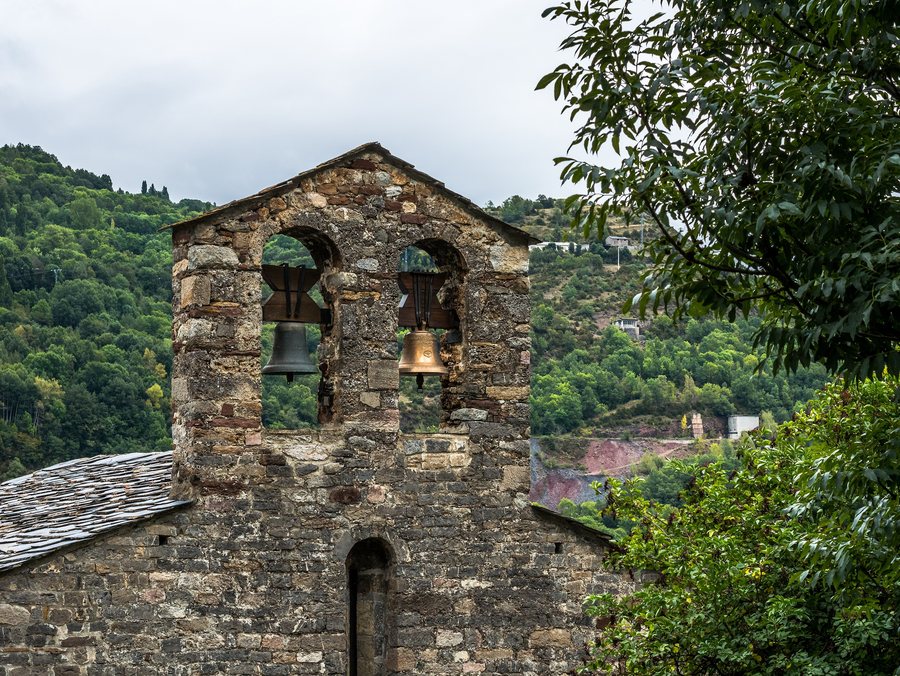
The parish church of Santa María houses a 16th-century altarpiece. Casa El Ríu has a 16th-century portal, and Casa Beltrán features an arcaded courtyard.
A virtual 360° tour is available for the Iglesia de San Pedro in Villanova.
On Saint John's Day, the Fallas were run in Villanova.
The cultural information brings together sacred interior furnishings, historic architectural elements, a digital tour and the running of the Fallas on Saint John's Day. In Villanova, different forms of cultural experience exist side by side: visible architecture, a church interior accessible virtually and the running of the Fallas associated with Saint John's Day.
When comparing a hotel in Villanova, you can consider travel dates, room category and cancellation policies separately. The period, the desired room type and the respective conditions are presented as different details alongside one another.
For the overarching travel overview: Huesca.

