
Aísa – Hiking Trails, Nature and History
Accommodation in Aísa
Aísa is part of the Parque Natural de los Valles Occidentales.
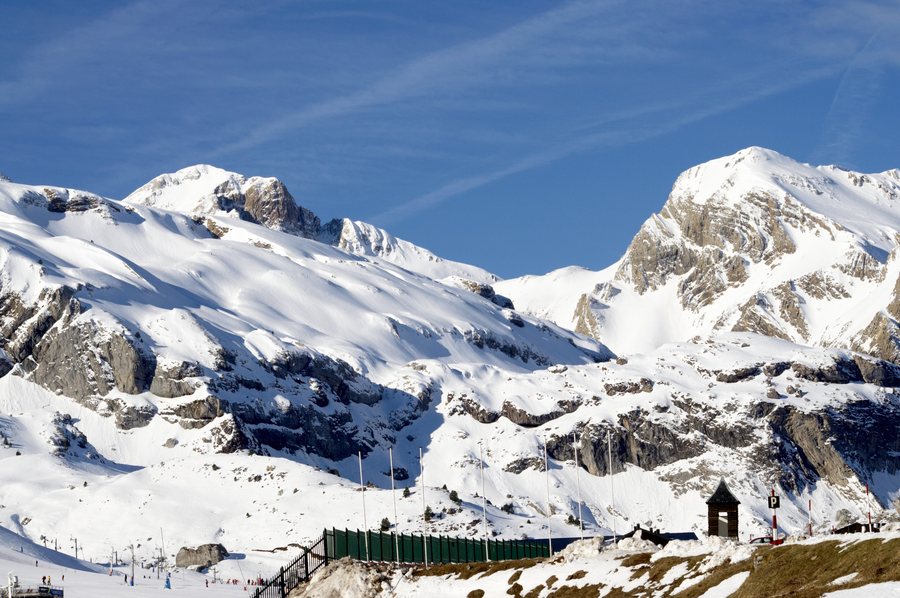
Nature
The Valle de Aísa opens up along the Estarrún River, a tributary of the Aragón. The protected area connected with Aísa is home to 179 species, including the bearded vulture (Gypaetus barbatus) and the white-backed woodpecker (Dendrocopos leucotos). Outdoor and sports activities in the Valle de Aísa include paragliding. The river landscape, biodiversity and paragliding each place a different emphasis on nature observation and activity.
Hiking
The GR 15 Jasa–Aísa is a 5.7 km-long hiking route with a stated duration of two hours. From Aísa, the GR 15 initially descends to the Molino de Aísa, crosses the Estarrún River and then climbs to the Collado de la Loma de Aísa.
The Sendero de Abi crosses the Estarrún River, passes through a beech forest and reaches the Cueva de Abi, which served as a refuge for shepherds and former inhabitants of these valleys. The starting point of the Sendero de Abi is accessible by car: drive through Aísa on a paved road up the valley and turn at the signposted entrance to the Abi recreation area. The GR 15 is thus defined by its route length and stated duration, while the Sendero de Abi leads through beech forest to the Cueva de Abi.
The two routes therefore differ in their documented structure: for the GR 15, the fixed distance, stated duration and route via the Molino, river crossing and Collado are the main points. For the Sendero de Abi, the sequence of river, beech forest and cave, together with the described access route, are the key details.
Geographical Setting
Aísa lies south of Pico de Aspe. Many houses in Aísa have been well preserved in traditional mountain architectural style.
When choosing accommodation in Aísa, travel dates, room category and cancellation conditions may serve as practical selection criteria. These details can be considered separately: the period determines the stay, the room category describes the desired accommodation, and the cancellation conditions complement the planning.
History and Culture
The Castillo de Candanchú was built in the 13th century on an isolated rock at an elevation of 1,565 m for defensive purposes and to collect tolls. The Hospital de Santa Cristina was founded at the foot of the Somport towards the end of the 11th century to receive pilgrims and ease the hardships of their journey.
In the vicinity of the municipality of Aísa, an old Roman road was used in the 11th century as a pilgrimage route to Santiago de Compostela. In Aísa, Virgen de Agosto and San Roque are celebrated on 15 and 16 August.
The historic sites and routes represent different functions and periods: the Castillo de Candanchú served for defence and the collection of tolls, while the Hospital de Santa Cristina received pilgrims and was intended to ease the hardships of their journey. The old Roman road was used as a pilgrimage route to Santiago de Compostela. The historical details mentioned here range from the 11th to the 13th century.
For the broader travel overview: Huesca.
More destinations
More places within the same destination:

