
Candanchú: Ski Resort, Trails and History
Accommodation in Candanchú
In Candanchú, Pista Grande is one of the area's ski resorts and is particularly popular with skiers who learn to ski there. The Candanchú ski resort has three cross-country ski trails, while the toboggan run in Candanchú is suitable for everyone. This means that different types of activities are available side by side in the same winter sports resort: alpine skiing, cross-country skiing and tobogganing.
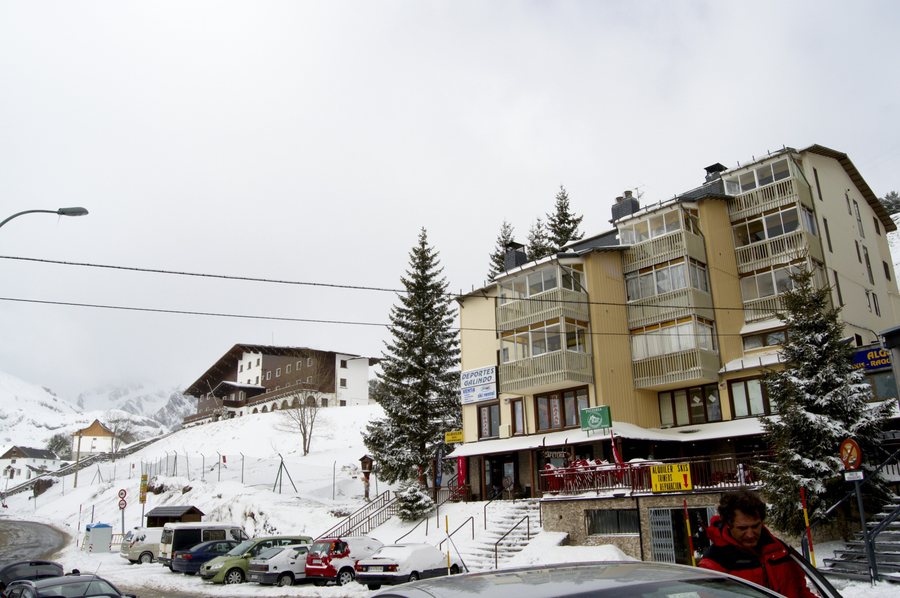 File:22889 Candanchú, Huesca, Spain - panoramio (1).jpg
Photo: José Ibáñez via Wikimedia Commons, CC BY 3.0
File:22889 Candanchú, Huesca, Spain - panoramio (1).jpg
Photo: José Ibáñez via Wikimedia Commons, CC BY 3.0
The highest ski area in Candanchú is located at Tuca Blanca at an altitude of 2,400 metres. Tuca Blanca lies at the foot of Pico Aspe, is surrounded by large rocky mountains and faces northwest. On the GR-11 route to Candanchú, the first ski lifts of the Candanchú ski resort are reached at the Tuca Blanca pass. To put the ski resort information into context, altitude, the connection with the landscape and the link to the route can be considered separately.
Skiing, cross-country skiing and tobogganing can be considered different types of activities when planning your day. The three cross-country ski trails, the toboggan run and Pista Grande represent different ways of structuring a winter's day. You can consider these offerings separately and then examine the route sections described according to your own priorities.
When choosing accommodation in Candanchú, travel dates, room category and cancellation conditions can be considered as separate details. This keeps the selection focused on your own requirements without mixing the winter sports and trail topics described here.
Stages and Getting There
The first stage of the Aragonese Way of Saint James leads from Candanchú to Jaca and is designated as GR 65.3. The third stage of the GR 11 leads from the Refugio de Lizara mountain refuge to Candanchú. The fourth stage of the GR 11 leads from Candanchú through the Canal Roya valley, reaches the Ibones de Anayet and continues via Formigal to Sallent de Gállego.
The stages mentioned differ in their respective starting and finishing points as well as in the intermediate places named. The first stage connects Candanchú with Jaca, while the third stage begins at the Refugio de Lizara mountain refuge. The fourth stage runs from Candanchú via Canal Roya, the Ibones de Anayet and Formigal to Sallent de Gállego.
A scheduled bus runs from Jaca to the Candanchú ski station and stops in various places in the Valle del Aragón. The bus connection therefore represents a separate travel option alongside the stages mentioned.
History Along the Way
The medieval castle of Candanchú is located 1 km south of Candanchú on the former route to France. The castle of Candanchú was built in the 13th century for defensive purposes and to collect customs duties.
The Hospital Santa Cristina included a Romanesque church, of which the ground plan and crypt remain. The Hospital Santa Cristina was founded at the end of the 11th century to accommodate pilgrims and ease the hardships of their journey. Together, the castle and hospital highlight two historical sites along the way to Candanchú with different functions: the castle is associated with defence and customs, while the hospital is associated with accommodating pilgrims.
The information on winter sports, trails, the bus connection and history thus provides several factually distinct ways of approaching Candanchú. For your own planning, you can first distinguish between the types of activities and the different stages, and then consider the historical sites as independent destinations along the way.
For the overarching travel overview: Aísa.

.jpg)