
Natural Snow and Artificial Snow
Snow on an open ski run may consist of natural snowfall, machine-made snow, or a mixture of both. For holidaymakers, the specific piste grooming, temperature, and current conditions matter more than the label. When comparing ski regions in Germany or overviews of other countries, check the snow report and local operator’s updates for information about individual runs.
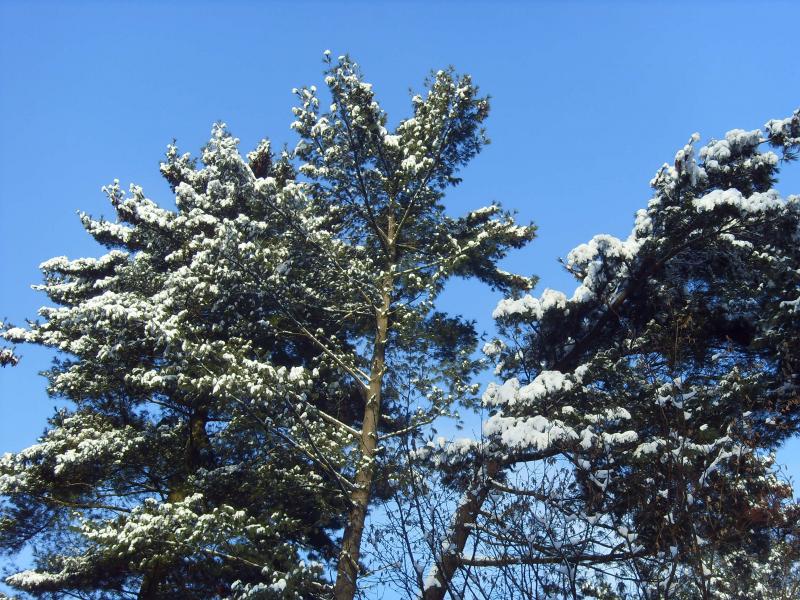 Mit Schnee bedeckte Kiefern stehen vor blauem Winterhimmel.
Photo: Markus / MaxTD Imagebank
Key facts
- Natural snow forms in clouds and falls as natural precipitation, depending on temperature and weather conditions.
- Machine-made snow is produced from water and air under suitable conditions.
- The two types of snow can be mixed on a piste and then groomed.
- Temperature, humidity, sunlight, and the underlying surface all affect how the snow feels to ski on.
- Snowmaking requires water and energy, so its impact should be assessed according to the location.
- For a trip, current conditions, open lifts, and piste grooming matter more than the label alone.
How natural snow forms
Natural snow forms when ice crystals grow in clouds and fall to the ground as flakes. Its shape and properties depend, among other things, on temperature and humidity. Dry powder can feel different to ski on than wet snow, which changes in response to warmth, wind, or sunlight. Conditions in the valley may therefore differ from those on a higher section of a piste.
Regional context can help with trip planning: the pages on skiing in Austria, skiing in Switzerland, and skiing in Germany cover a range of elevations and winter conditions.
How machine-made snow forms
In snowmaking, water is dispersed into fine droplets so they can freeze in cold air. Whether this works depends not only on temperature, but also on humidity, wind, and the snowmaking equipment. The droplets need enough time and suitable conditions before reaching the ground. Snowmaking supplements the natural snow cover.
Snowmaking systems vary depending on their location and purpose. Some areas are prepared early, while others are supplemented with machine-made snow only when conditions are suitable. Snow cannons therefore do not mean that every run is open at all times or has uniform snow conditions.
Effects on the piste
Machine-made snow can be denser and more durable than loose fresh snow. Once groomed, it forms a compact surface on which skis may grip differently. Natural snow can be blown around by the wind, altered by the sun, or compacted by frequent use. The feel of the snow cannot therefore be predicted from its type alone.
Piste grooming combines the existing snow cover with machinery and expertise. A snow groomer moves and redistributes the snow, shaping the surface for the next day’s operations. When conditions change, some sections may still be harder, softer, or icier than others.
Water, energy, and a responsible perspective
Snowmaking requires water, energy, pipes, reservoirs, and suitable operating conditions. There is no useful single figure that applies to every area. Geology, climate, equipment, and management all vary. Water supplies and storage ponds are part of the infrastructure at many snowmaking facilities.
For your trip, this means checking the latest information from the operator, respecting closed areas, and not judging the condition of valley runs or sledding routes solely by the condition of the pistes.
FAQ
Is natural snow always better?
No. How the snow feels depends on temperature, humidity, the underlying surface, grooming, and use. Either type of snow can produce good or challenging conditions.
Is machine-made snow artificial plastic?
No. In snowmaking, water is turned into frozen droplets using air under suitable conditions. It is not plastic.
Why might a piste be open when there is little natural snow?
A groomed snow cover supplemented by snowmaking may be sufficient locally. The operator decides whether to open a piste based on current conditions and safety.
Does snowmaking affect the environment?
Snowmaking facilities require water, energy, and infrastructure. Their effects depend on the location and how they are operated, so they should not be judged with a blanket verdict that applies to every area.
