
How snowmaking systems and snow cannons work
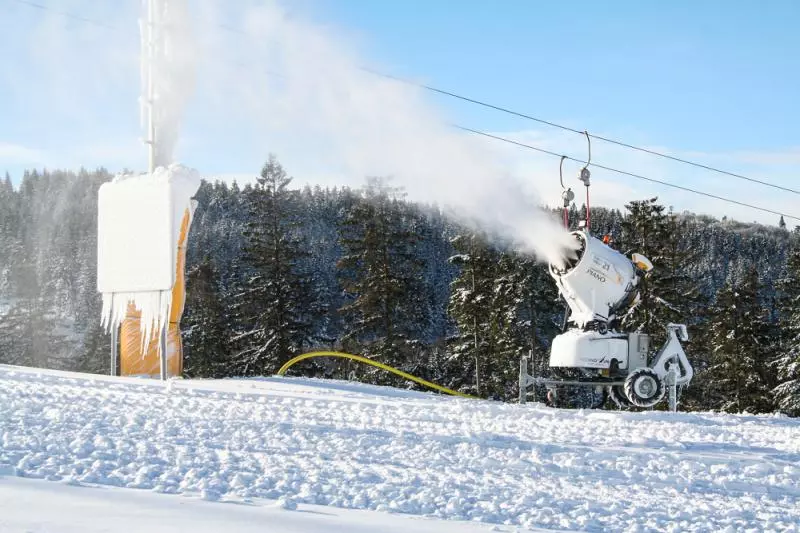 Eine Schneekanone erzeugt Wassernebel auf einer verschneiten Skipiste; im Hintergrund sind verschneite Nadelwälder und Leitungen der Anlage zu sehen.
Photo: Sabine / MaxTD Imagebank
Key facts
- Snowmaking systems deliver water to snow cannons via reservoirs, pumps and pipes.
- The droplets must freeze under suitable temperature and humidity conditions before reaching the ground.
- Wet-bulb temperature combines air temperature and humidity into an important operating measure.
- Wind, elevation, system design and available time affect which sections of a slope can be covered with snow.
- Water withdrawal, storage and operation are governed by local conditions and applicable requirements.
- Specific information about consumption, permits and current operations varies by area.
Storing and supplying water
Many ski areas use reservoirs to ensure water is available during suitable cold spells. Their size, location and filling depend on the terrain, water availability, permits and local conditions. Water withdrawal and operations must comply with applicable requirements.
Pumps, pipes and snow cannons
A pumping station provides the required water pressure. Pipes carry water to the snow cannons; their layout and dimensions take account of elevation changes, route length, connections and available flow. Valves and controls supply individual sections as needed. The cannons spray water into fine droplets. Depending on the design, compressed air helps form the droplets and create the first ice crystals; compressors may be located locally or centrally. The droplets need enough time and suitable conditions to freeze before they land.
Weather windows and snowmaking operations
Air temperature is not the only decisive factor: wet-bulb temperature also accounts for humidity. The appropriate operating threshold depends on the equipment and weather. Operators coordinate operating windows, water supply and system use based on measured conditions. Wind, changing temperatures and the desired amount of snow affect which areas can be covered and when.
Resources and local conditions
Pumps and compressors require electricity. Reservoirs, water supply, pipe networks and snow cannons must be coordinated and maintained. The resources used in an area and the applicable requirements depend on the location.
FAQ
Is machine-made snow artificial?
It is made from sprayed water that freezes under suitable conditions.
Why can’t a ski area make snow at any time?
Humidity, wind, system capacity and available resources all play a part alongside temperature. Whether and how snow can be made also depends on the specific system.
Where does the water come from?
This varies from area to area. Reservoirs and water withdrawals depend on local planning and applicable permits.
