
Snow, Snowmaking & Snow Cannons
Natural snow and machine-made snow together shape how a run develops in winter. Snowmaking can help build a piste, but it cannot replace the weather or natural snow conditions. Snow cover, surface conditions and openings can change over the course of a day.
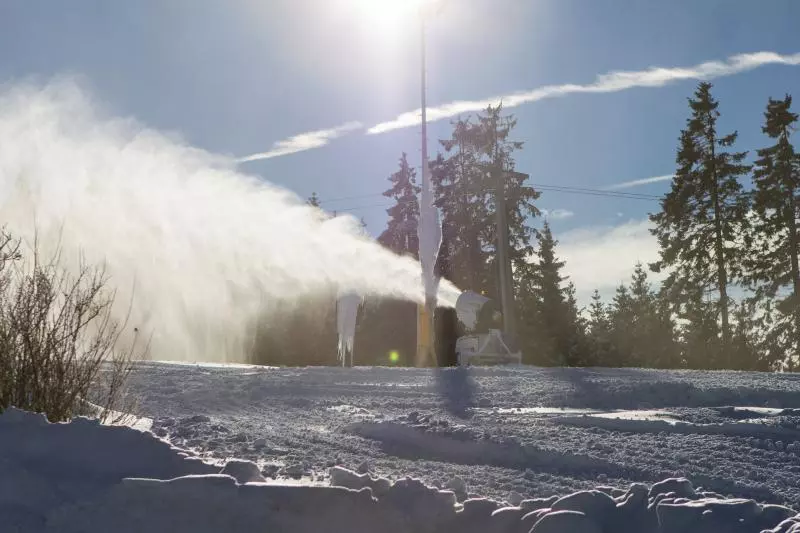 Schneekanone erzeugt technischen Schnee auf einer verschneiten Skipiste.
Photo: Dago Wiedamann
Key facts
- Machine-made snow production requires water, energy and suitable weather conditions.
- Temperature and humidity affect the snow particles produced.
- Altitude, aspect, shade, wind and precipitation shape natural snow conditions.
- Machine-made snow can support groomed pistes, but cannot guarantee complete winter snow cover.
- Natural and machine-made snow differ in how they form and in their properties.
- Grooming changes the piste surface; operations and openings remain dependent on current conditions.
Natural snow and snow cover
Natural snow forms when ice crystals develop and grow in clouds. Temperature, moisture and wind affect their shape. After falling, the snow cover changes with sun, rain, warmth, cold and pressure. As a result, the type of snow at a ski resort can change: powder snow may later become more compact, wet or hard.
Snow conditions depend on more than the reported snow depth. Shade, altitude and aspect affect how long snow remains on the ground. Wind can move snow, thin it on ridges and fill hollows. Weather patterns and terrain therefore create different conditions even on neighboring slopes.
How machine-made snow works
With technical snowmaking, water is finely dispersed using snow cannons, allowing small ice particles to form in sufficiently cold conditions. Snowmaking systems need the right combination of temperature and humidity. Water availability, pipes, reservoirs, pumps and the time until the next operating day also play a role.
Machine-made snow does not replace every kind of natural snow. It can provide a base for groomed pistes, but needs time to be spread and compacted. Rising temperatures, rain or strong winds alter its effect and the surface. A snowmaking system guarantees neither that all runs will open nor that conditions will remain constant.
Piste grooming and changing conditions
Piste grooming shapes the snow cover into a piste surface, which continues to change with temperature and skier traffic. A freshly snowed-on or groomed run may feel different from soft fresh snow; how you ski, braking distance and edge grip depend on the current surface. Runs may also be closed when snow cover is good, for example while maintenance work is underway.
Resources and long-term planning
Snowmaking is an operational decision that requires resources. Water, energy, pipe networks and permits must suit the location. When choosing travel dates, current information from resort operators matters, as does long-term snow reliability. Climate change in winter sports is changing conditions for ski resorts; altitude and local climate vary from one location to another.
