
How snowmaking works
Technical snowmaking helps many ski areas build or supplement a usable snow cover. Water is finely dispersed and frozen in cold air. However, the process is not simply a switch that produces snow at any time, regardless of the weather. Temperature, humidity, wind, equipment, reservoirs and the ground determine when and how snowmaking can take place. The page Natural Snow and Artificial Snow explains the difference as it applies to the slopes.
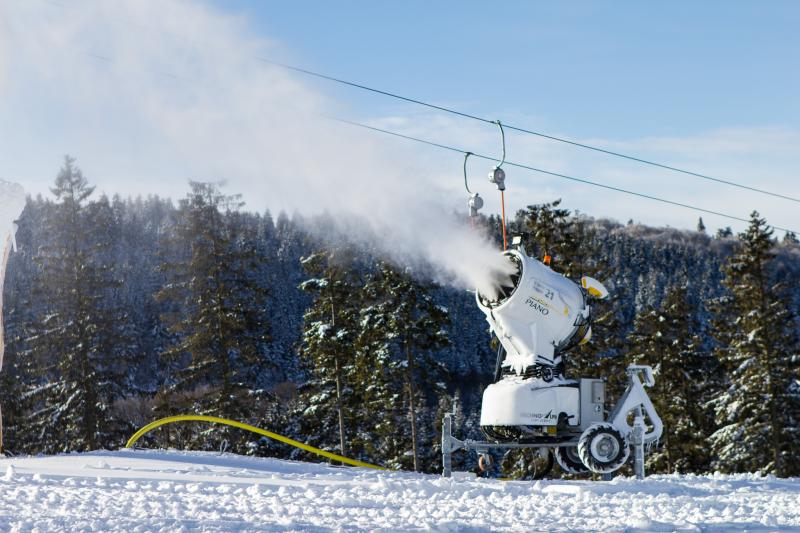 Eine Schneekanone verteilt Wassernebel auf einer verschneiten Skipiste.
Photo: Dago / MaxTD Imagebank
Eine Schneekanone verteilt Wassernebel auf einer verschneiten Skipiste.
Photo: Dago / MaxTD Imagebank
Key facts
- Snowmaking uses water, air and technical equipment to create frozen droplets.
- Suitable temperature and humidity matter more than any single temperature reading.
- Wind can affect the throw distance and even distribution.
- Water is usually stored, transported and fed to the equipment through pipes.
- Water and energy consumption depend on the location, technology, terrain and operational goals.
- Snowmaking can help with the start of the season or at specific sections, but it cannot fully compensate for weather conditions.
From water to snow cover
A snowmaking system pumps water from a reservoir or available supply to the snow generators. Nozzles disperse it into very small droplets. The air and surrounding conditions help the droplets freeze on their way to the ground. The drier and colder the air, the more favorable conditions may be; humidity and wind affect the result.
The particles produced land on the ground and are spread as needed. Not every system works in the same way: snowmaking systems differ in their nozzles, air assistance, range and controls. Snow cannons are the visible face of the technology, but they are part of a larger system involving water, energy, pipes, reservoirs and slope maintenance.
When can snowmaking take place?
Operations depend on the conditions. A cold evening may be suitable, while mild or humid air makes the work more difficult. Wind can change how the snow is distributed and cause it to land somewhere other than where intended. Water availability, electricity, staff and the order in which slopes are worked on also play a part.
That is why statements such as “snowmaking means there will always be snow” are too broad. For trip planning, check the latest snow report, which lifts and slopes are open, and the operator’s updates. If you are planning to ski in Austria, ski in Italy or ski in Switzerland, check this information for your specific destination.
Slope preparation after snowmaking
Technical snow does not simply remain as a loose layer. It may first be spread, compacted and combined with existing natural snow. Slope grooming shapes it into a surface intended to suit the planned use. Snow groomers and other equipment work according to the weather, snow quantity, terrain and operator’s plans.
The surface can change throughout the day. Sun, temperature, wind and large numbers of skiers all affect the snow cover. So a section freshly groomed in the morning may look different by the afternoon. Do not ski on closed slopes while work is underway.
Water, energy and reservoirs
In addition to water, snowmaking requires electricity to run pumps, pipes, controls and snow generators. Many ski areas use water and reservoirs to make water available when conditions are suitable. Requirements vary between ski areas: terrain, climate, equipment, snowmaking targets and pipe routes all have an impact.
The Snow Compass from Seilbahnen Schweiz provides an objective overview. For visitors, it is important not to confuse technical capabilities with a guarantee that slopes will be open. The page on snow, snowmaking and snow cannons offers further guidance.
Frequently asked questions about snowmaking
Is cold water all that is needed to make technical snow?
No. Humidity, wind, equipment and timing also affect whether water droplets freeze sufficiently.
Can a snow cannon make snow in any weather?
No. Conditions have to be right. Warm or very humid air can make snow production difficult or uneconomical.
Is technical snow the same on every slope?
No. The ground, snow mixture, grooming, sun exposure and use all change the surface.
Why is snowmaking done at night?
At night, temperatures, traffic and operating schedules are often more favorable. The operator decides whether and when to make snow based on local conditions.
