
Toses: Trails, Natural Areas and Romanesque Cultural Heritage
Accommodation in Toses
Toses first catches the eye with its houses arranged in terraces, giving the village a fortified appearance. When planning your trip, you can consider the natural environment, trails, transport links and historic buildings as separate topics.
Nature and Trails
Parts of the municipality of Toses lie within the areas of special natural interest Serra de Montgrony and Capçaleres del Ter i del Freser. The Volta al bosc de Dòrria circular hike follows the GR11 and leads to the Pleta de Dòrria mountain refuge.
The Camí de Nevà a Espinosa i Dòrria is a section of the longer route between Nevà and Dòrria and forms part of the footpath network connecting the inhabited settlements of the Toses Valley. When comparing trail options, you can consider an explicitly named circular hike and a section within a longer connecting network as different forms of planning.
The two trail references therefore represent different types of route: the Volta al bosc de Dòrria is described as a circular hike with a named destination, while the Camí de Nevà a Espinosa i Dòrria is part of a longer route between several settlements. This distinction helps you read the information about route progression and geographical connections separately.
The N-260 road, locally known as the Collada de Toses, crosses the municipality. The trans-Pyrenean railway line also passes through Toses. When locating the village geographically, you can consider the road route and railway line as separate transport topics.
For orientation, the transport information can be considered alongside the trail descriptions: the N-260 forms part of the road route through the municipality, while the trans-Pyrenean railway line represents a separate topic. Together with the footpath network, this creates not one uniform route description, but a picture made up of different forms of transport and connection.
Culture and History
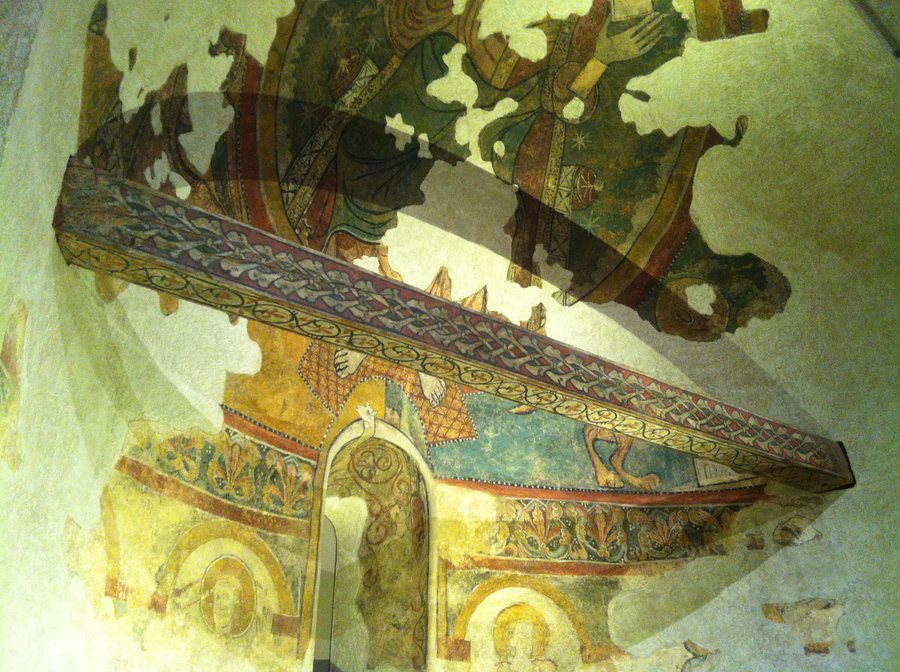
The church of Sant Cristòfol de Toses is a Romanesque church from the 11th century and contains exceptional interior paintings from the late 12th century. Dòrria is classified as a cultural asset of national interest (Bé Cultural d’Interès Nacional) because of its beauty.
The church of Sant Víctor de Dòrria preserves Romanesque wall paintings from the 12th century. Nevà also brings together two different historical traces: the ruins of the former Romanesque church of Sant Cristòfol have been preserved there; in addition, the 18th-century church of Mare de Déu del Carme stands there, integrated into the rural landscape.
There are around one hundred defensive structures of the Pyrenean Line in the municipality of Toses. The former Castell de Toses castle stood on a hill above the centre of Toses.
In Fornells de la Muntanya, there is a small church dedicated to Saint Martin, with a staircase on the east façade and a sturdy bell gable.
The historical references thus range from Romanesque churches and wall or interior paintings to later religious buildings, defensive structures and a former castle. The individual places and buildings preserve different features: Dòrria is associated with the national cultural asset and Romanesque wall paintings, Nevà with two church landmarks from different periods, while Fornells de la Muntanya stands out for the design of its small church.
For the overall travel overview: Girona.
More destinations
More places within the same destination:

.jpg)