
Dillenburg
Accommodation in Dillenburg
In Dillenburg, there is plenty to do, from historic buildings and museums to wildlife watching and outdoor trails. The Wilhelm Tower, defensive structures and Historic Trail offer insights into the city’s history. Villa Grün and the State Stud add cultural attractions. The Donsbach Wildlife Park, Juniper Trail and Orangist Trail offer even more ways to spend your time here.
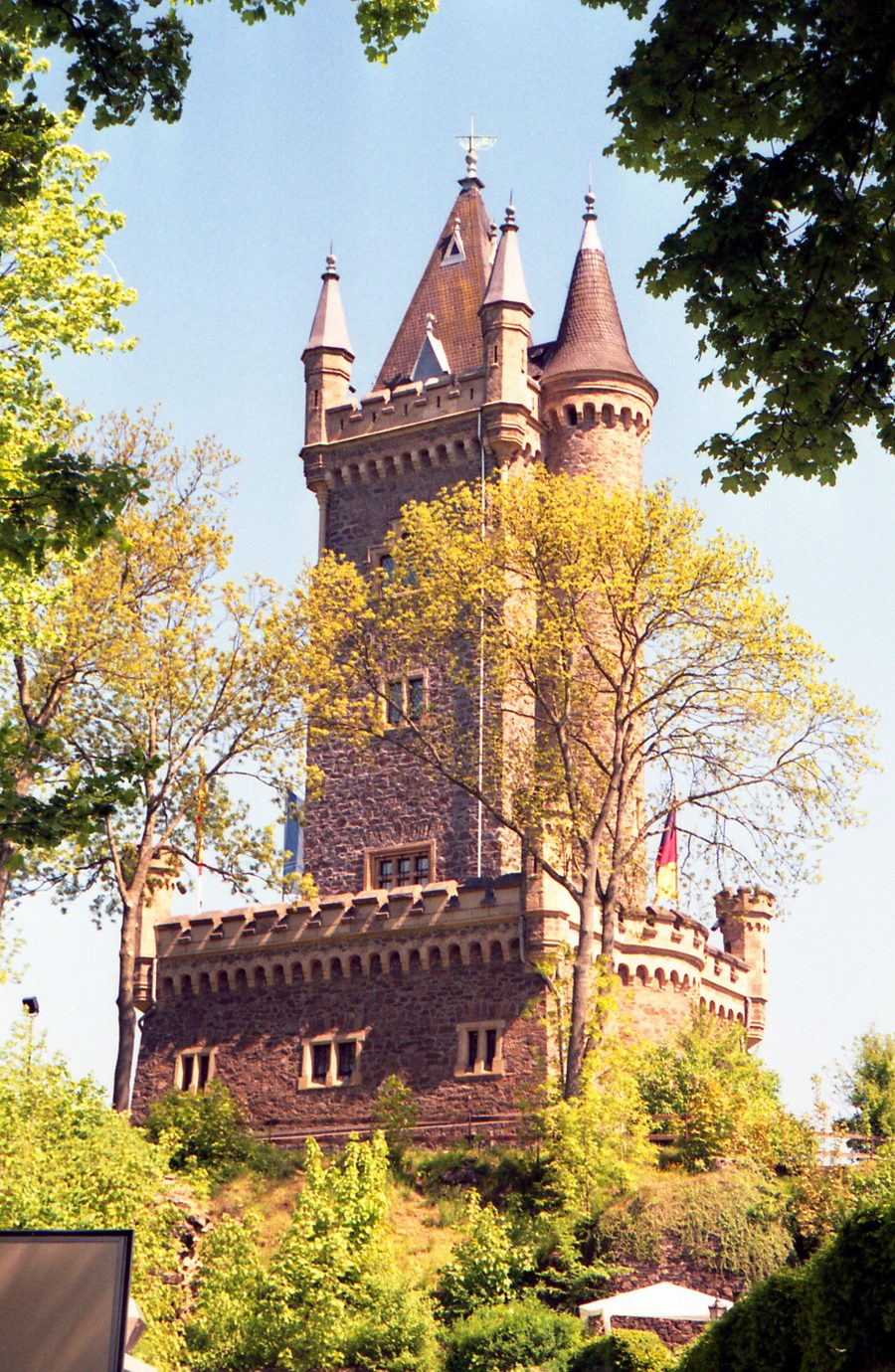 Der Wilhelmsturm ist ein Wahrzeichen Dillenburgs und verbindet Stadtgeschichte mit einem Aussichtspunkt über die Umgebung.
Photo: Wandernder Weltreisender via Wikimedia Commons, CC BY-SA 3.0
The Wilhelm Tower and Dillenburg’s History
The Wilhelm Tower was built between 1872 and 1875 on the former upper castle courtyard in Dillenburg. It is a memorial to William I, Prince of Orange, and stands 41 metres high. The tower houses the Orange-Nassau Museum, with numerous exhibits and richly illustrated texts about William I and his struggle for freedom in the Netherlands. The tower’s architectural history and the historical figure commemorated by the memorial come together in one place.
Dillenburg’s partially excavated underground defensive structures lie on Castle Hill. They include bastions and defensive passages known as casemates. The city describes the structures as unparalleled in Germany in terms of their scale. A guided tour of Dillenburg’s underground passages ends with a visit to the well in the Lion’s Den and the Rubens Prison. The Historic Trail in Dillenburg offers another way to find your bearings: signs mark the route, and QR codes provide information about the sites in text or audio format.
Museums and the State Stud
The Economic History Museum has been housed in the villa of mining owner Carl Grün since 1983. The villa was built in the neoclassical style in 1914 and 1915. Its historic architecture and present-day use as a museum make it a destination in its own right for anyone interested in economic history.
The cultural and historic complex of the Dillenburg State Stud shapes the cityscape and preserves a centuries-old tradition. The Carriage Museum is now housed in the Orangery, built in 1719. An extensive tour takes visitors through the stables and the large riding hall, offering insights into the state-owned riding and driving school. In the Brunnenhof, visitors can watch horses at work, possibly even harnessed to historic carriages. The stud, tour and museum each offer a different focus: horses, riding and driving traditions, and historic carriages are all part of a connected visitor experience.
Wildlife Park and Trails Around Donsbach
At Donsbach Wildlife Park, spacious outdoor enclosures designed to suit the animals allow visitors, especially children, to experience nature and animal behaviour up close. The wildlife park also has a playground and a petting zoo. It offers a different focus for a visit centred on wildlife watching than the museums and historic buildings.
For those planning a longer walk, the Juniper Trail is a certified 16-kilometre circular route and one of eight additional Rothaarsteig trails. It loops around the district of Donsbach and starts and ends at the village community centre or the wildlife park in Dillenburg-Donsbach. The Orangist Trail offers a different experience: it makes a wide loop around Dillenburg, passing natural landmarks, geological features and historic buildings. When comparing the trails, the Juniper Trail is described specifically by its stated length and start and end points; the Orangist Trail combines a wide loop with a range of nature and history themes.
Insights into Mining History
The 140-metre-long Ypsilanta mine is located in Oberscheld. It was once a drainage adit and can now be explored through a restored entrance. This offers a different way to experience history than a museum tour: visitors walk through a former mine tunnel whose original function was related to draining water.
When looking for hotels in Dillenburg, it can help to first decide what you would most like to focus on during your stay: cultural and historical sites, the State Stud, or trails and wildlife watching.
For an overview of the wider region, see: Lahn-Dill District.
More destinations
More places in the same destination:

