
Snow types at ski resorts: powder, firn, slush and crust
Snow doesn’t always feel the same on the slopes. Powder, firn, slush and crust describe different conditions of the snowpack—and therefore conditions that can affect how you ski, brake and choose your equipment. These terms offer a useful guide, but they are no substitute for assessing the actual slope conditions at the time.
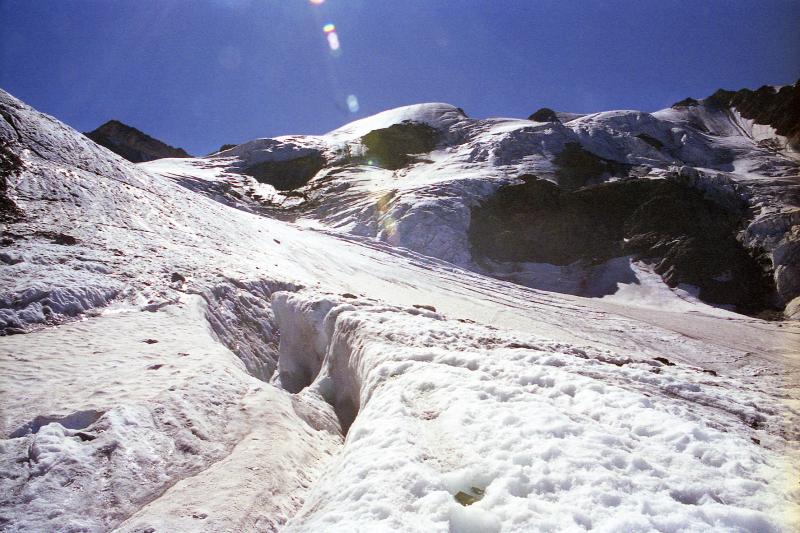 Schneebedeckter Gletscher mit Spalten und Eisformationen unter klarem blauem Himmel.
Photo: VinschgerEngl
Schneebedeckter Gletscher mit Spalten und Eisformationen unter klarem blauem Himmel.
Photo: VinschgerEngl
Quick facts
- Temperature, moisture, wind, sunlight and time all change the structure and surface of snow.
- Powder is generally associated with loose, dry snow.
- Firn refers to older, transformed snow and is not the same as every fresh snowfall.
- Slush is typically wet, heavy snow that can occur in milder conditions.
- Crust describes a hardened surface; the term alone does not tell you how well it will support your weight.
- Snow conditions can vary over the course of a day, at different elevations and on slopes with different aspects.
- A label for the snow surface is no guarantee of safety, enjoyment or consistent conditions.
How snow changes
Snow is a constantly changing snowpack. Temperature and moisture affect the crystals and the bonds between layers. Wind can move snow, while sunlight and temperature fluctuations alter the surface. The SLF explains the basics of snow; MeteoSwiss describes the meteorological factors involved. For a specific slope, local and up-to-date information is still essential.
The terms used on a ski holiday are therefore best understood as practical descriptions. Powder refers to a loose, dry surface that feels very different from a hard or wet piste. Firn forms as older snow layers transform over time. Slush often feels heavier because of its higher water content. Crust describes a hardened layer or surface; whether it supports you, breaks or feels uneven depends on the actual conditions.
Understanding powder and firn
Powder is often used to describe snow after a snowfall. But the amount of snow is not the only factor: wind, temperature and grooming may already have changed the surface. When choosing skis to suit your height, shape and intended use, you should therefore not rely solely on a general promise of good snow.
Firn is older and denser than fresh powder because it has undergone repeated transformation. The term can be used differently in everyday conversation. When planning a trip, it’s therefore worth checking what the surface is actually like on the day and in the specific area you plan to ski. Our guides to snow reliability at ski resorts and snow reliability on a ski holiday cover how to assess current conditions in more detail.
Recognising slush and crust
Slush often occurs in milder temperatures or after the surface has warmed up. It can be harder to ski on and may change over the course of the day. Crust is characterised by a hard surface. Depending on how it formed and its current state, a crusted patch can vary in firmness. The term alone cannot tell you exactly how your skis will behave.
For practical guidance, see piste types and difficulty ratings, advice on piste rules and our article on snow groomers and piste maintenance. This information is no substitute for checking conditions yourself before setting off. If in doubt, ask resort staff or a ski school.
Snow conditions, equipment and planning your day
The snow surface is only one factor to consider. Suitable ski and snowboard equipment, well-fitting ski boots and correctly checked ski bindings are just as important. Ski maintenance can also matter for the bases and edges when conditions shift between hard, dry and wet.
Pay attention to whether conditions change with elevation, aspect and time of day. A piste that is hard in the morning may soften later, but this depends on the weather and the resort. Don’t rely on a term from an old description: check the latest updates and ski at a speed suited to both the surface and your ability.
FAQs about snow types
What is powder snow?
In everyday use, powder refers to loose, relatively dry snow. Its actual characteristics depend, among other things, on temperature, wind, moisture and how long ago it snowed.
What does firn mean?
Firn is older snow that has changed through transformation and become denser. The precise surface conditions can vary with the weather, elevation and terrain.
What is slush?
Slush is usually wet, heavy snow that can occur as temperatures rise. It may change over the course of the day and feel different to ski on than dry snow.
Is crust always dangerous?
The term initially describes a hardened surface. Whether it supports you, breaks or feels uneven depends on the current conditions. Ski cautiously and follow local advice.
Which type of snow is best?
That depends on your ability, equipment, terrain and personal preference. No type of snow on its own guarantees safe or suitable conditions.
