
Cable lifts at ski resorts: gondolas, chairlifts, and combination lifts
Cable cars connect valley stations, intermediate stations, and mountain areas within a ski resort. When choosing a lift for a day on the slopes, it matters whether it can transport many people quickly, offer protection from the wind, provide easy access for beginners, or lead directly to a particular run. Gondolas, chairlifts, and combination lifts serve these purposes in different ways. Which lift is actually operating also depends on the weather, technical conditions, safety checks, and the current operating schedule.
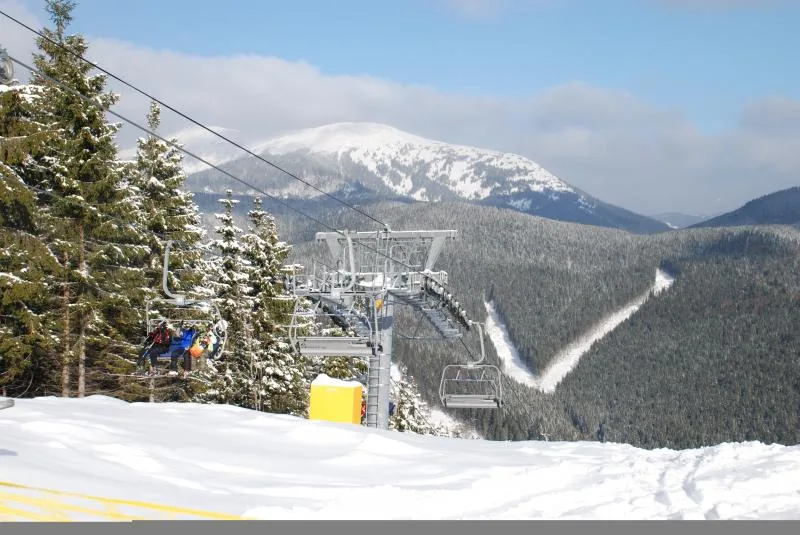 Zwei Skifahrer sitzen in einem Sessellift über einem verschneiten Wald und Berggebiet.
Photo: Olga Buko
Zwei Skifahrer sitzen in einem Sessellift über einem verschneiten Wald und Berggebiet.
Photo: Olga Buko
Key facts
- Gondolas carry passengers in enclosed cabins and usually offer better protection from wind and snowfall.
- Chairlifts carry guests on open seats; passengers board and disembark at designated areas while the lift is moving.
- Combination lifts use both chairs and cabins on the same route.
- Travel speed, capacity, accessibility, and boarding arrangements vary from one lift to another.
- Signs, staff instructions, and local rules always take precedence over general explanations.
Gondolas: enclosed cabins for longer connections
On a gondola, passengers ride in an enclosed cabin. The cabins usually travel continuously between the valley and mountain stations, slowing down in the stations. This makes boarding easier and allows for regular service. The manufacturer’s overview of Doppelmayr gondolas describes the basic technology; check with the local operator for information about a specific lift.
The cabin is especially comfortable in windy or snowy weather and at low temperatures. Depending on the lift, skis and snowboards are carried outside or in designated racks. Strollers, wheelchairs, and bulky equipment are not accepted on every lift. If you are traveling with small children or have limited mobility, check the information for the specific lift in advance and ask station staff if needed.
Chairlifts: open, fast, and right on the slopes
A chairlift consists of open seats attached to a cable. As the chairs enter the station, they slow down so passengers can board. The safety bar is lowered after boarding and raised again before disembarking. Operating procedures, seating arrangements, and rules for children may vary from one lift to another.
In strong winds, a chairlift is more exposed to the weather than an enclosed cabin. Weather hoods or heated seats can make the ride more comfortable, but not every lift has them. For a day on the slopes, the current winter lift operations, wind advisories, and possible pauses are therefore more important than the type of lift alone.
Combination lifts: two types of vehicles on one route
On a combination lift, chairs and cabins alternate on the same cable. This can be convenient for different needs: skiers can use the open chairs, while families, beginners, or guests in poor weather may prefer a cabin. The number of vehicles, spacing, and arrangement vary by lift. Not all combination lifts are built the same way, and stations do not all offer the same boarding and disembarking options.
Before setting off, check the trail map and local signs. They show whether a lift leads to a blue beginner run, a more challenging descent, or an important connection. Choosing the right route also depends on run types and difficulty levels.
Boarding, disembarking, and conduct
At the station, follow the marked queue line. On a chairlift, the group should move forward together and sit down only when the chair reaches the designated boarding point. Keep the safety bar down during the ride. Raise it only in the marked disembarking area, then clear the exit promptly.
When boarding a gondola, wait until the cabin has come to a complete stop in the station or staff have signaled that you may board. Keep backpacks, poles, and skis clear of doors and racks. If the lift stops, stay seated and wait for instructions. If someone falls or drops an item, notify staff immediately rather than reaching into a restricted area yourself.
Weather, maintenance, and interruptions
Cable lifts are inspected and maintained regularly. Even so, wind, thunderstorms, ice, poor visibility, or a technical inspection can cause delays. An interruption does not automatically mean there is a fault; it may be a precautionary safety measure. Energy use and operating plans explain some of the technical procedures, but they are no substitute for the operator’s latest updates.
If a connection is out of service, an alternative run or another lift may be a good option. The overview of lift types clarifies the terminology, while the ski resort infrastructure can help you find meeting points, restrooms, or a ski depot. Snow groomers may also be out on the slopes outside operating hours; closed runs must remain off-limits.
Choosing the right lift for your day on the slopes
Beginners often choose a lift with a calm, easy-to-follow boarding area. Families look at waiting areas, seat width, and whether they can ride together in one cabin. Experienced skiers choose a connection based on where it goes in the resort, not just on the type of lift. The snow park and beginner runs may have different access points and rules. Ultimately, follow local instructions, take your equipment into account, and make a realistic assessment of the weather and your ability.
FAQ: Cable lifts in ski resorts
What is the difference between a gondola and a chairlift?
A gondola uses enclosed cabins, while a chairlift has open seats. This means they differ in weather protection, boarding, equipment transport, and suitability for different guests.
Why does a chairlift sometimes stop?
Possible reasons include a difficult boarding, a fall, a dropped item, a safety check, or weather conditions. Passengers should remain seated and follow staff instructions.
Are gondolas always accessible?
No. Stations, cabins, platforms, and boarding procedures vary. Check with the operator about accessibility before your ride.
Can I take a stroller on any gondola?
It depends on the cabin size, door width, how busy the lift is, and the operator’s rules. Local signs and station staff can provide reliable information.
What should I do if the lift stops during the ride?
Stay calm, remain seated, and wait for announcements over the speakers or for staff instructions. Do not open the doors yourself.
