
Snowparks, Fun Parks and Freestyle Areas
Snowparks and freestyle areas offer jumps, features and creative lines.
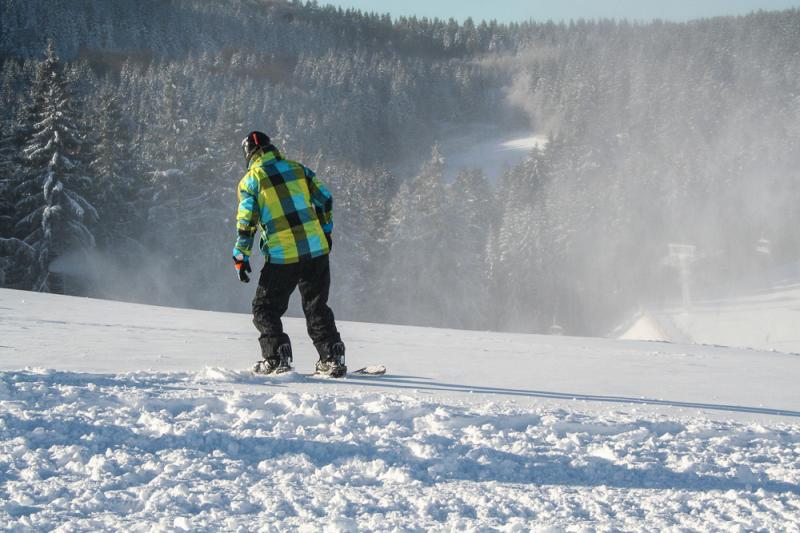 Snowboarder bei einer dynamischen Fahrt durch den Schnee.
Photo: Sabine
Snowboarder bei einer dynamischen Fahrt durch den Schnee.
Photo: Sabine
Park rules and choosing a line
Before your first run, observe the takeoff, landing and runout. Choose a line whose speed and movements you can control at all times. Wait outside the approach and start only when the area is clear.
Progress gradually with the features
Small features are no guarantee of safety: snow, visibility and speed all affect the landing. Start with a simple feature and skip individual features if the approach is unclear or you cannot see the landing. Information about difficulty levels can help you assess them.
Equipment and planning your day
Check your bindings, boots, helmet and goggles before entering the park. Suitable ski and snowboard equipment helps you stay in control, but is no substitute for training. Taking breaks helps prevent imprecise landings. In changeable weather, a quieter piste is often the better choice.
The FIS rules for skiers and snowboarders emphasise controlled speed, consideration for others, safe distances and following local signs. The rules of the individual facility also apply in the park.
Quick check before your next run
- Read the park map and difficulty ratings.
- Observe the takeoff, landing and runout.
- Keep your distance and start only when the line is clear.
- Skip a feature if you are unsure.
- Take a break if you are tired or visibility is poor.
For behaviour throughout the ski area, the guidance on piste safety remains essential.
Frequently asked questions about snowparks
Do I have to wear a helmet in a snowpark?
Local rules and safety requirements apply. A properly fitting helmet is a sensible essential.
How do I get started in the park?
Start with the smallest suitable feature, observe the approach and wait until the area is clear.
What is important when jumping?
You must be able to see and control the approach, landing and runout, as well as other people’s movements.
Making decisions throughout the day
Plan your day with enough time for getting oriented, taking breaks and returning safely. Conditions change with temperature, wind, fresh snow, shade and the number of people on the run. Your ability can also be affected by fatigue or cold. Choosing an easier option in good time is a way to plan ahead and avoid forcing a risky situation. With children and beginners, an experienced person should explain the route and adjust the pace.
Before setting off, check that your clothing, boots, helmet and goggles fit comfortably. Freedom of movement and clear vision matter more than a particularly sporty look. After a fall or collision, the group should first move to a safe place and watch for traffic. Follow the operator’s local guidance on getting help, showing consideration and using marked areas.
Preparing for the return
Keep lift opening times, the last connection and the route down to the valley in mind, without leaving yourself too little time. A less demanding way back may be a better choice if your concentration is waning. Agree on meeting points and an alternative in case a section is closed or visibility is poor. A charged phone, water and an extra warm layer are useful on longer days. If in doubt, ask the local ski patrol or rescue station.
Consideration and clear signals
Give others plenty of room and remember that their movements may not always be predictable. Clear, calm decisions are safer than sudden changes of direction. Read the facility’s guidance and leave an area if you cannot see what lies ahead. After a break, check again whether the route and your concentration are still up to it. This helps keep winter sports manageable and enjoyable, even when conditions change.
A beginner-friendly approach
If you have little freestyle experience, first practise your stance, braking and controlled turns on a suitable piste. Only then should you move on to small park features. Ask staff about instruction, opening hours and current grooming. Never enter a landing or runout area while others are using it. After several repetitions, your attention can start to fade; taking a break helps prevent unnecessary mistakes.
