
Ski lifts at a glance: drag lifts, chairlifts and gondolas
Drag lifts, chairlifts and gondolas differ in how you get on and off, seating position, weather protection and suitability for groups. A drag lift requires active participation and can be tiring for beginners. A chairlift makes longer uphill rides easier, but requires a confident entry and a focused exit. A gondola offers greater protection from the weather and is often practical for families or bulky equipment. The right choice depends on the ski area, your ability and the operating status.
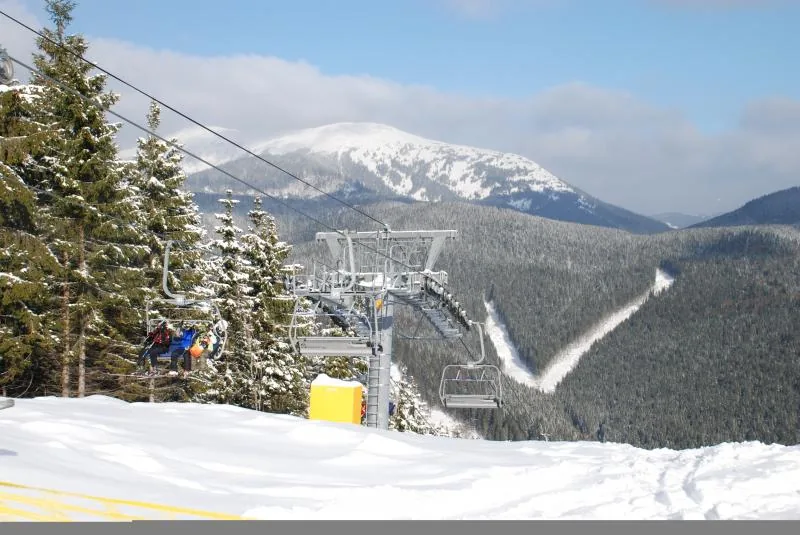 Zwei Skifahrer sitzen in einem Sessellift über einem verschneiten Wald und Berggebiet.
Photo: Olga Buko
Zwei Skifahrer sitzen in einem Sessellift über einem verschneiten Wald und Berggebiet.
Photo: Olga Buko
Making the right choice
Choose the lift whose entry and exit you can handle safely. Beginners should first practise the routine on a quiet lift. For chairlifts and gondolas, plan seating, luggage and how to behave in the station. Operating status and signage take priority.
Practical use
On a drag lift, stay in the track and do not let go of the bar or platter before reaching the exit. If you fall, clear the track and follow instructions. On a chairlift, wait behind the marked line, sit down promptly and keep the safety bar and equipment steady. When getting off, move clear of the area so the next person has room. Be considerate when loading and unloading a gondola; skis and poles must be stowed as instructed. Children should know who will accompany them when boarding. Wind, cold and visibility can affect which type of lift is most comfortable. So check the waiting area, uphill ride, return route and the status of the lift section. For beginners, a short ride on a suitable lift is often better than a long connection with an exit that is too difficult.
Safety and consideration
Do not cross or stop in the lift area. If you fall, alert staff and leave the track as instructed. Keep the safety bar down until you reach the exit zone. Children should ride only with someone who knows the procedure.
Preparation and daily plan
Read the map, choose an easy first lift and, after the uphill ride, check whether the descent is suitable. Avoid unnecessary changes in windy conditions or when tired. For basic information about terrain and routes, see Understanding the ski area.
Before setting off, check the weather, snow conditions, lift status, travel arrangements and opening hours. Rental equipment, lessons, tickets and breaks should suit the group’s ability and size. Agree on a visible meeting point and a time to return. If visibility is poor, it is windy or you are tired, simplify the plan. Current information from the operator is more important than older travel reports; prices, availability and opening times can change. Keep your phone stowed while riding, and also note important information offline or on paper. If you are travelling with children, plan for warmth, drinks and dry spare clothes. This makes for a ski day with room to repeat runs and without depending on a single lift being open.
Find out more about regional ski destinations, understanding the ski area and ski schools.
Checklist for making your own decision
Before your visit, write down what question you want to answer and what information you actually need. Check the details provided by the specific operator, and note the timestamp, who is responsible and any possible restrictions. A plan with one main option and one easy alternative helps avoid unnecessary pressure. For families, agree in advance on a meeting point, who will accompany whom, breaks and the return route. In groups with different ability levels, no one should take a more difficult route just because it looks shorter on the map. Adjust equipment before use; return rental gear immediately if there is a problem. Weather, visibility, wind, snow surface and fatigue can change what was a good decision. Wait and use your phone only at a visible, safe spot off to the side. Keep important information on paper or in offline storage as well, in case the battery, network or app fails. This helps keep your visit practical, straightforward and suited to the actual conditions.
Frequently asked questions about ski lifts
What information should I check first?
Start with the weather, snow conditions, lift status and travel arrangements. Then check tickets, equipment, lessons, meeting points and breaks. For digital services, also check your battery and offline access.
What should we do when ability levels differ?
Agree on a meeting point and choose areas that everyone can reach safely. Beginners need easy runs to repeat and someone to accompany them; more advanced skiers should adapt their pace and line. No one has to join a difficult descent.
When should I change the plan?
If visibility is poor, it is windy, conditions are hard, lifts are closed or concentration is fading. A shorter loop, a break or an alternative winter activity is the sensible choice in these circumstances.
Reliable basic information and current examples are available from the official Mythenregion winter page.
