
Energy at ski resorts: electricity, storage and efficient operations
Cable cars, snowmaking, buildings, workshops and vehicles all require energy at a ski resort, but their consumption profiles differ. Anyone wishing to compare figures from different resorts therefore needs to know which facilities and time period are covered.
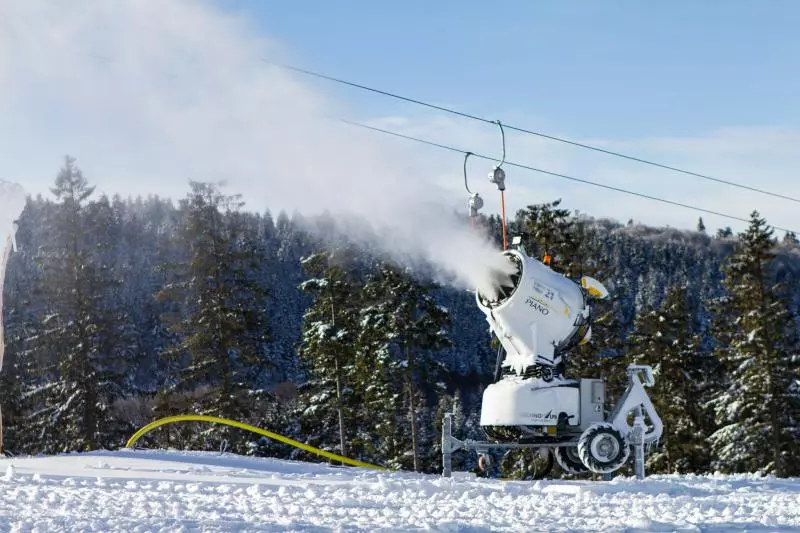 Eine Schneekanone verteilt im Skigebiet Kunstschnee; Sessellift und verschneite Bäume sind im Hintergrund zu sehen.
Photo: Dago Wiedamann / MaxTD Imagebank
Key facts
- Cable cars use electricity for propulsion and operation; their energy needs depend, among other things, on the type of installation, capacity utilization and operating practices.
- Technical snowmaking uses water and energy and depends on suitable weather conditions.
- Heating, lighting, food service and workshops also contribute to a holiday destination’s energy needs.
- Energy monitoring, load management and storage are possible technical approaches; their effectiveness depends on the specific operation.
- A complete energy balance depends on all facilities and energy sources included, as well as the period covered.
Where energy is used at a ski resort
Cable cars consume energy while operating. The type of drive, vertical distance, carrying capacity, utilization and operating hours all affect how much energy an installation requires. Types of cable cars differ in their vehicles and operation, so consumption figures cannot be compared without information about the specific system.
Snowmaking systems need energy to pump and transport water and compressed air. Actual consumption depends on the system, altitude, weather conditions and operating time. Snow groomers and other machinery also require energy; piste grooming is a separate part of operations. Energy is also used in buildings such as mountain stations, restaurants, accommodation and workshops for heating, hot water, lighting and kitchen equipment.
These areas are not always included in the same energy balance. For example, an operator may report the electricity consumption of its lifts while excluding buildings, travel to the resort or supplies from the figure. A partial balance is useful if its scope is clearly stated; it should not be confused with total consumption or the overall environmental impact.
Efficiency, loads and storage
Digital energy monitoring, using meters on individual consumers, shows operators when and where electricity is being used. Load management can shift peak demand to other times, while demand-based controls adapt operations to actual use.
On suitably equipped reversible cable cars, storage systems capture braking energy and make it available for a later journey. How they are integrated depends on the type of installation, operating conditions and control system. On-site electricity generation, for example from photovoltaics, supplements power drawn from the grid; storage can align generation and demand over time.
Digital systems can collect consumption data and make operational processes visible. How digital applications at ski resorts are used depends on the operator. For travelers, published figures are meaningful only if the time period, facilities covered and energy source are clear.
How to compare figures meaningfully
Check whether a figure covers electricity, heat, fuel or total energy use. The reporting year and locations covered also matter, as does whether the figure describes a single operator or the entire destination. An absolute annual consumption figure and a figure per guest transported answer different questions; without a clearly stated denominator, they are not directly comparable.
For “green electricity,” check which facilities are included and distinguish electricity consumption from electricity purchases. Water use, transport, land use and materials are also relevant to the environmental impact of a holiday.
What travelers can take away
Published data make it possible to compare specific measures within the same accounting scope. When planning a trip, public transport, shared transfers and accommodation with transparent energy information can be useful points of comparison.
FAQ
Does technical snowmaking always use the same amount of energy?
No. Systems, elevation differences, weather conditions, operating time and the amount of water and compressed air that needs to be transported all vary. A single figure cannot therefore be applied elsewhere without knowing its specific scope.
Does renewable electricity prove that a ski resort operates carbon-neutrally?
No. The figure may cover only certain facilities or a particular period. Heating, fuels, travel to the resort and other environmental impacts may fall outside the electricity balance.
What information makes a comparison reliable?
The reporting year, facilities covered, energy sources and basis of comparison should all be stated. Only then is it possible to tell whether two figures describe the same part of the operation and the same period.
