
Choosing a Snowboard: Length, Width and Use
Choosing a snowboard starts with body weight, boot size, riding ability and the snow and terrain you expect to use. A board that looks sporty is not automatically right for your ski holiday. Beginners need predictable reactions, while experienced riders can focus more on edge hold, stability and their preferred style. The ski and snowboard equipment overview helps you consider the board, boots, bindings and clothing as one set.
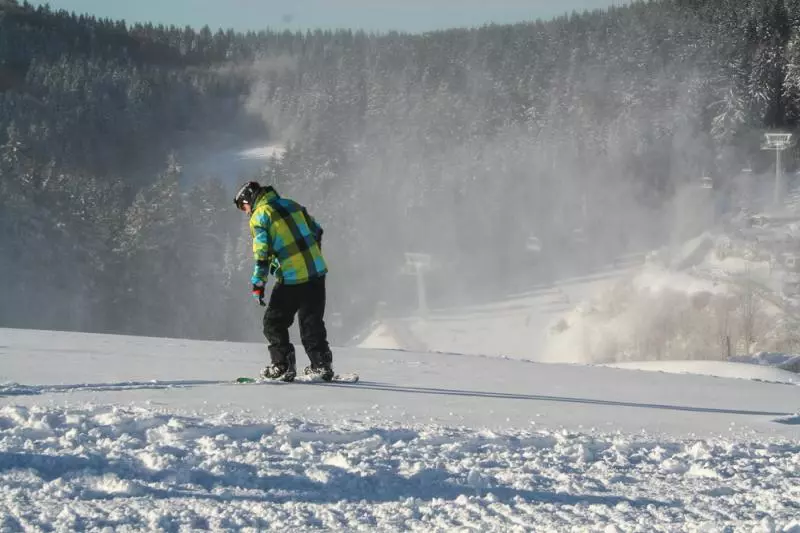 A snowboarder rides on a snowy piste in front of a wooded slope.
Photo: Sabine Wiedamann | MaxTD Imagebank
A snowboarder rides on a snowy piste in front of a wooded slope.
Photo: Sabine Wiedamann | MaxTD Imagebank
Key facts about choosing a snowboard
- Body weight is often a better starting point than a fixed height rule.
- Board width must match boot size so boots do not drag and edge changes remain practical.
- A softer board can be easier for beginners to control, but construction still matters.
- Shape and use affect suitability for pistes, parks or variable snow.
- Board, boots and bindings must be compatible and secure before riding.
- Hiring is useful for children and occasional riders whose size or preferences may change.
Understand length, width and shape
Manufacturer weight ranges are a useful first guide to length, but they do not replace a fitting. A board that is too long or stiff can be difficult for a beginner to turn; one that is too short or soft may feel unstable at speed. The practical test is whether the rider can control it in the conditions where it will be used.
Width matters too. A board that is too narrow can let boots touch the snow, while a very wide board slows edge changes. Take the actual boots to a hire shop or retailer when possible. Advice about ski boots is not identical to snowboard advice, but secure heel hold and a suitable size matter in both cases.
Match the board to riding and resort
Groomed pistes, park features and soft snow require different priorities. For a family holiday with mixed ability levels, a controllable all-round board is often more useful than a specialist model. Beginners should also allow time for a beginner course and practice days. Preferences become clearer once turning, stopping and lift use feel secure.
Hard pistes, fresh snow, changing temperatures and busy runs affect control. The resort's snow reliability helps with trip planning but cannot decide the board choice alone. Consider the piste map, travel dates and the group's abilities together.
Boots, bindings and stance
Snowboard boots should hold the foot and heel securely without painful pressure. Too much space reduces control; boots that are too tight become uncomfortable quickly. Bindings must fit the boots and board. Check straps, ratchets and fixings before starting; changing boots may require another adjustment.
Binding angles and stance affect balance. Beginners should not copy one photograph; a hire shop or qualified adviser can explain the setting. Loose screws, cracks or damaged straps are reasons to stop. A complete setup may also include a ski helmet and suitable goggles.
Hire, transport and check the board
When using ski and snowboard hire, describe ability, weight, boot size and planned use honestly. Start slowly after collection and ask for an adjustment if boots move or bindings do not close correctly. A board bag protects edges during travel, and the board should be stored dry after the day.
Adapt speed to visibility, traffic and ability. The rules for distance and stopping are covered in piste safety. Equipment supports control but cannot compensate for too little practice or excessive speed.
After travelling, avoid edge-to-edge rubbing, remove snow from bindings and do not dry the board directly on a radiator. Check edges, base and fixings before the next day. Clothing such as snowboard trousers and a suitable ski jacket also helps with preparation.
If you have no fixed style, flexible hire equipment is sensible before buying a specialist board. Ask staff to show you the bindings and practise fastening and releasing them somewhere safe. After the holiday, dry the board and boots, remove snow and check straps and fixings again.
Snowboard choice FAQ
How do I find the right snowboard length?
Use the manufacturer's weight range with boot size, ability and terrain. A fitting is more reliable than one height rule.
How important is board width?
It must suit boot size. Excessive overhang can interfere with turns, while an unnecessarily wide board makes edge changes harder.
Is hiring useful for beginners?
Yes. Board and boots can be tried and adjusted before buying, which is especially practical for children and occasional holidays.
