
Choosing Ski Goggles
Ski goggles protect your eyes from wind, snow, bright light and distracting reflections. Colour and appearance are not enough to make a good choice: the goggles must work with your helmet, provide sufficient contrast for your weather and fit without pressure points. Before choosing a model for your ski holiday, check the manufacturer's information on UV protection, lens category and care.
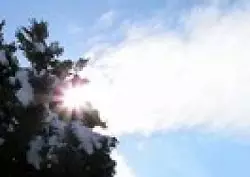 Bright winter sun at altitude can be hazardous for the eyes; ski goggles help protect them.
Photo: Dago Wiedamann
Bright winter sun at altitude can be hazardous for the eyes; ski goggles help protect them.
Photo: Dago Wiedamann
Key points
- Try the goggles on together with the helmet you plan to wear.
- A dark lens is not automatically proof of sufficient UV protection.
- Lens categories describe light transmission and must suit the weather.
- In fog and snowfall, a lighter, contrast-enhancing lens is often more helpful than a strongly tinted one.
- Ventilation and an intact anti-fog coating support clear vision when temperatures change.
- People who wear glasses need a suitable OTG model or an explicitly compatible combination.
Fit and compatibility with the helmet
Put on the helmet first and then the ski goggles. There should be no significant gap between the helmet edge and the goggles. At the same time, the frame must not press on the bridge of your nose, cheeks or eyebrows. Move your head, open and close the chin strap and check that the goggle strap sits securely on the helmet. A good fit remains stable when you bend forward or turn your head.
Also pay attention to your field of vision. The frame should not unnecessarily restrict your peripheral view. If you wear prescription glasses, check an OTG model with enough interior space. The lenses must not touch; repeated fogging or strong pressure means the combination is unsuitable. If possible, try the equipment with the clothing you will actually wear on the slopes.
Choosing a lens for light and UV protection
The lens category provides guidance on light transmission. For fog, snowfall and flat light, a lighter lens with good contrast is generally suitable. A medium category is practical when conditions change between sun and cloud. A darker lens is usually chosen for clear, sunny days. Very dark lenses are intended for intense sunlight and are not suitable for poor visibility. The official uvex guide to choosing a lens for the weather provides an overview.
Do not confuse light reduction with UV protection. The manufacturer's explicit information about UVA and UVB protection is what matters. A dark lens with unclear labelling can create a false sense of security. When conditions change frequently, interchangeable or photochromic lenses may be useful; check how quickly they react and whether they are approved for your typical conditions. Reflections from snow can also tire your eyes. A suitable contrast or polarising solution may improve the view, but it does not replace checking the entire protection concept.
Fogging, ventilation and care
Fogging often occurs when warm, moist air from your face cannot escape sufficiently. Do not wear the goggles under a hat or scarf that covers the ventilation openings, and do not press them constantly against your face. The goggles should be dry when you start skiing. Do not open or alter the ventilation if the manufacturer specifies a different use. If the goggles fog heavily, slow down, stop in a safe place and do not wipe the inside with gloves or coarse fabric.
Touch the inside as little as possible because coatings can be sensitive. After skiing, let snow and moisture dry at room temperature and then keep the goggles in a soft case. Do not place them lens-down on a hard surface or leave them on a radiator. Follow the manufacturer's instructions for cleaning, interchangeable lenses and anti-fog care.
FAQ
Do all ski goggles fit every helmet?
No. The frame shape, helmet edge and strap must work together. Try both items on at the same time and check for pressure points, gaps and a secure fit.
Are dark ski goggles automatically UV-safe?
No. Tint and UV protection are different properties. The manufacturer's specific UV protection information is decisive.
Which lens is suitable for fog?
In fog or snowfall, a lighter lens with higher light transmission and improved contrast is usually more helpful than a strongly tinted lens.
What helps against fogging ski goggles?
Keep the ventilation clear, start with a dry lens and use a suitable helmet-and-goggle combination. Clean the inside only as specified by the manufacturer.
Which goggles are suitable for changing weather?
A medium lens category or a model with interchangeable or photochromic lenses may be useful. The important point is that the solution suits your light conditions and the manufacturer's approval.
Can people who wear glasses use ski goggles?
Yes. Choose an OTG model or an explicitly compatible combination. Check that neither the prescription glasses nor the goggles create pressure points.
