
Choosing Snowboard Trousers: Protection, Mobility and Comfort
Snowboard trousers need to work when riding, sitting, kneeling and standing up. They should protect against snow and wind without restricting movement. Snowboarders spend more time with knees and seat in the snow, so fit, hard-wearing areas and a clean finish around the boots matter more than striking styling. The equipment overview helps plan trousers, jacket, gloves and other layers together.
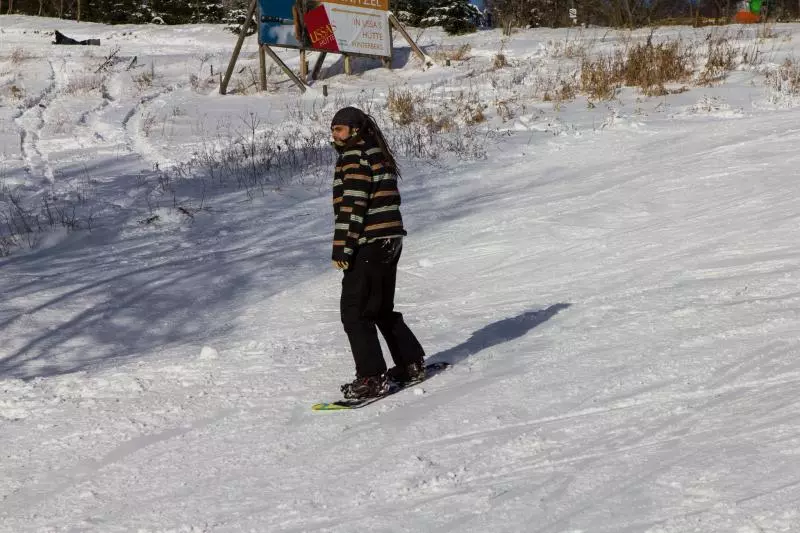 A snowboarder rides on a snowy piste; the weatherproof trousers and boots are clearly visible.
Photo: Dago Wiedamann | MaxTD Imagebank
A snowboarder rides on a snowy piste; the weatherproof trousers and boots are clearly visible.
Photo: Dago Wiedamann | MaxTD Imagebank
Key facts about snowboard trousers
- Trousers should not pull at the waist or thighs when bending, kneeling or standing.
- Water and wind protection should match the planned use and expected conditions.
- Gaiters, adjustable cuffs and reinforced hems help, but cannot replace a good fit.
- Several layers need room; trousers that are too tight become uncomfortable over base layers.
- Wet clothing becomes cold during breaks, so dry spare layers and proper drying matter.
- Children need freedom of movement without trousers catching on boots or bindings.
Check the fit for movement
Try the trousers with the clothing you will actually wear. Bend your knees, sit on a bench and make a typical turning movement. The waistband should not cut in when sitting, but the trousers should not slip while riding. Too much ankle fabric can interfere with boots or bindings. For children, choose a length that does not drag on the ground.
Snowboarders often ride in a low position. Shaped knees, stretch or a suitable cut can improve comfort, but only a fitting shows whether it works. A well-fitting ski jacket and suitable ski gloves complete the system; an outer layer that is too tight or long disrupts movement.
Snow, wind and moisture
Trousers regularly touch snow. When sitting or falling, moisture and cold can enter through an open gap. Look for a secure waistband, protected zips and a clean transition to the boots. A gaiter can help, but must fit both trousers and boot.
Waterproof, water-repellent and breathable are not universal comfort guarantees. Short family runs, long rides in snowfall and frequent breaks place different demands on clothing. For uncertain conditions, check snow reliability. Choose layers for the travel season and activities, not only average temperatures.
Layers and freedom of movement
A functional base layer and a mid-layer chosen for the temperature usually work well. Cotton holds moisture close to the body and can be uncomfortable on active days. A very thick layer may restrict movement. Test the complete combination by kneeling, standing, closing boots and walking.
Bib trousers position straps differently from ordinary trousers. This can be comfortable when sitting, but consider use under a jacket and at the toilet. Do not choose a very oversized pair for a child if the waistband and hems no longer stay in place.
Care and checks before riding
Follow the care label and dry trousers fully after each day. Excessive heat can damage coatings, seams or elastic. Remove snow and dirt carefully rather than packing damp clothing tightly. Check seams, zips, fasteners and cuffs before riding. Equipment care is useful for clothing too.
Good trousers reduce discomfort from dampness but do not make a rider invulnerable. Adapt your riding when tired or visibility is poor and follow piste safety guidance.
For children and beginners, zips, fasteners and braces should work with cold hands. Before the first run, check that nothing catches on the board or binding. A short standing and squatting test says more than the size label.
Spare dry clothing is useful only if it can be carried safely. More important is unpacking wet trousers after the day and letting them dry. Together with a suitable snowboard choice and realistic day plan, clothing becomes part of preparation.
Leave room for a normal base layer. Check that trousers do not slip below the boot edge while sitting on a lift and that the leg width leaves bindings clear. A simple, well-fitting pair is often more useful than unused special features.
Snowboard trousers FAQ
How loose should snowboard trousers be?
They should accommodate the base clothing and allow movement when kneeling and standing. Excess fabric must not catch on boots or bindings.
Do snowboard trousers need a gaiter?
A gaiter can help when sitting or falling. It should close neatly around the boot and work with the trousers.
What should I wear underneath?
A functional base layer and, in colder weather, a suitable mid-layer are usually more flexible than one very thick layer. Test the combination before riding.
