
Ski Lessons & Beginners
A good ski lesson builds confidence, technique and familiarity with the area. Especially for beginners, choosing the right group can make the difference between finding those first runs motivating or overwhelming.
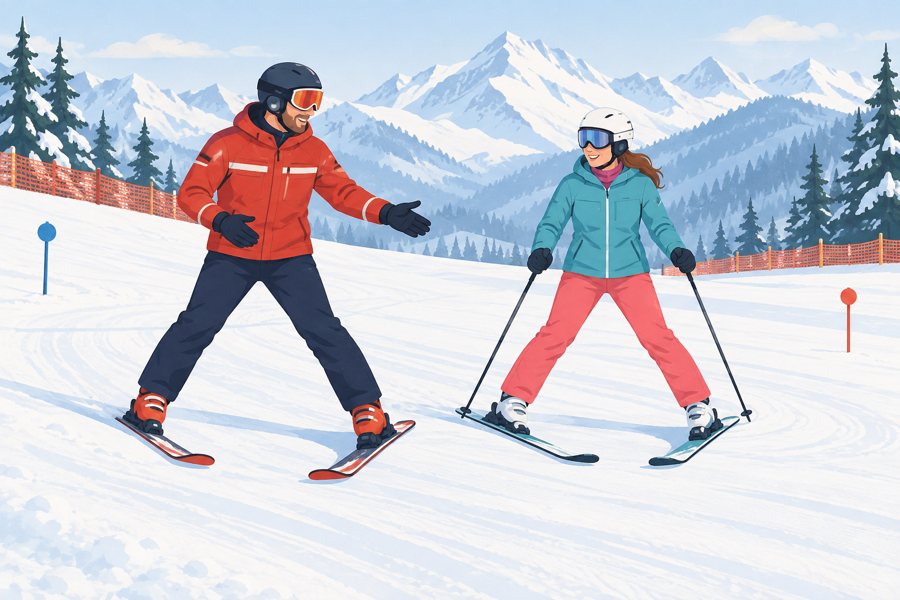 Illustrative, nicht-dokumentarische Darstellung eines Skikurses auf einem sanften Übungshang; kein bestimmter Ort.
Photo: OpenAI / Max-TD (AI illustration)
Key facts
- Group lessons are organized by age and ability.
- Private lessons let you learn at your own pace, but cost more.
- Lessons book up early during holiday periods.
- For beginners, it’s important to be close to the practice area.
- The right clothing and a well-fitting helmet make getting started easier.
- Several consecutive days of lessons can be more helpful for beginners than individual sessions.
Choosing the right lesson starts with an honest assessment
A good ski lesson isn’t about moving up to the next group as quickly as possible; it’s about safety and learning goals. If you’ve never skied before, you’ll need a relaxed introduction to the equipment, stopping, turning and using a lift or magic carpet. Returning skiers often benefit from refreshing the basics without time pressure. More advanced skiers can work specifically on technique, terrain or style. When you book, be open about your experience and any physical limitations.
Ski schools usually group students by age and ability. The group assignment may change on the first day; that’s normal and helps ensure a suitable pace. To prepare, combine your lessons with your first ski holiday, the right equipment and guidance on slope safety.
Group lessons or private tuition?
Group lessons provide time to practise together and can be motivating when everyone has a similar ability and learning pace. Private tuition offers more direct feedback and can be tailored more flexibly to a specific goal. The right option depends on your budget, previous experience, age and how much time you have. Families should also consider whether everyone will have lessons at the same time or whether childcare and shared breaks would be easier to arrange. Planning for families on a ski holiday can help.
It’s not just the lesson itself that matters, but the whole day’s schedule. A morning lesson leaves time to practise afterwards, while a full day of lessons offers more structure. On the first day, allow plenty of time for equipment rental, finding the meeting point and any boot adjustments. Staying somewhere close by can reduce stress before lessons begin.
Choose a ski area that’s beginner-friendly
For beginners, easy-to-navigate practice slopes, accessible lifts, clear signs and a conveniently located ski school are often more important than having a large number of challenging runs. Ask the ski area or ski school about the meeting point, the right lift pass and any beginner offers. Whether conditions are actually suitable on the day depends on the weather, visibility and snow conditions too. So take into account travel dates and season as well as snow reliability, without treating them as a guarantee.
Learning between lessons
Practice helps reinforce what you’ve learned, but only while you still have enough energy and concentration. Stick to familiar, suitable slopes and take breaks in good time. Children and adults learn better in short, focused sessions than during an overly long day on the slopes. If you feel unsure, slow down, use easy runs or ask your instructor for advice. Feeling overwhelmed isn’t progress. Breaks, sun protection and plenty of fluids are also part of staying healthy and being prepared.
FAQ
Do I need ski lessons for my first ski holiday?
For many beginners, lessons are a safe, relaxed way to learn the basics. The ski school can choose a suitable pace and practice area.
How long does it take to ski confidently?
It varies from person to person. Experience, fitness, weather and the type of lessons all play a part. It’s better to set small, achievable goals than to expect to complete a certain number of runs.
What equipment is suitable for beginners?
Well-fitting boots, a helmet, warm clothing that allows you to move freely and properly fitting gloves matter more than especially high-performance equipment. Have rental gear professionally adjusted, and ask for an explanation of how to use it.
