
Choosing a ski jacket: protection, mobility and warmth
A ski jacket needs to work just as well for movement, changing weather and breaks. Wind protection matters on the lift, while skiing generates heat and moisture, and after a fall snow can quickly come into contact with the outer fabric. The best jacket is therefore not the one with the most features, but the one that suits your clothing, destination and plans for the day.
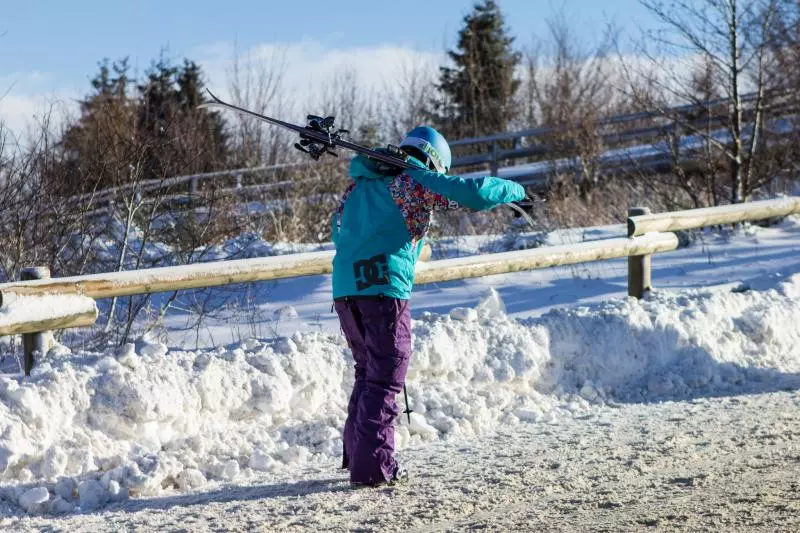 Eine Wintersportlerin trägt Ski über der Schulter und eine farbige wetterfeste Jacke im verschneiten Umfeld.
Photo: Dago Wiedamann | MaxTD Imagebank
Key facts
- The jacket should not feel tight when you bend forward, use your poles or raise your arms.
- Several functional layers are easier to adapt to movement and temperature than one very thick layer.
- Weather-resistant outer fabric protects against wind and snow, but does not replace suitable base layers.
- The hood, cuffs and snow skirt need to work with your helmet, gloves and trousers.
- Pockets should be easy to reach without getting in the way or letting anything fall out while skiing.
- Be sure to try the jacket on with all the layers you plan to wear on your trip.
Check the fit and freedom of movement
Do not try the jacket on only while standing upright. Raise your arms, bend forward and mimic the movement of using your poles. The back should stay covered, the hem should not ride up, and the sleeves should reach over your wrists. A jacket that is too tight restricts layering and movement; one that is very loose may flap in the wind or catch on the lift or your equipment.
Wear at least your base layer and a potential midlayer when trying the jacket on. Check that your ski trousers, gloves and cuffs work well together. Helmet fit also matters if you plan to use the hood. It should not push your helmet forward or restrict your vision.
Weather, layers and the course of the day
An outer layer protects against wind and precipitation. Underneath, a functional base layer wicks away moisture, while a midlayer adds warmth. The number of layers you need depends on the temperature, your activity level and how easily you feel the cold. You may prefer a different combination for long lift rides and frequent breaks than for skiing at a consistently vigorous pace.
Features that help out on the slopes
A high collar can feel comfortable in the wind, but should not press against your neck. Adjustable cuffs make it easier to wear gloves. A snow skirt can keep snow from getting under your jacket if you fall; it should fit your trousers and stay fastened when you sit down. If you keep your lift pass or other essentials in a pocket, you should be able to operate its zippers with gloves on.
For families, durable fastenings and easy care are also important. Beginners often benefit more from a jacket with easy-to-use fastenings and good freedom of movement than from a complex system. A bright colour can make you easier to spot on the slopes, but says nothing about the fit.
Care and checks before your trip
Follow the manufacturer’s care instructions and dry the jacket completely after each day of skiing. Excessive heat can damage coatings, seams or insulation. Before you travel, check the zippers, hook-and-loop fasteners, hood, pockets and seams. You do not want to discover a damaged jacket on the first day of your holiday. Pack a dry spare in case of a long break or a wet journey to your destination.
A complete outfit also includes suitable ski trousers and functional ski gloves. The combination only works if it does not make bending, sitting or standing up more difficult.
