
The right ski helmet
A ski helmet should protect your head in a fall or collision and must not fit loosely. It also needs to be comfortable enough for the whole day. Choose it by fit, condition, visibility and how it works with ski equipment.
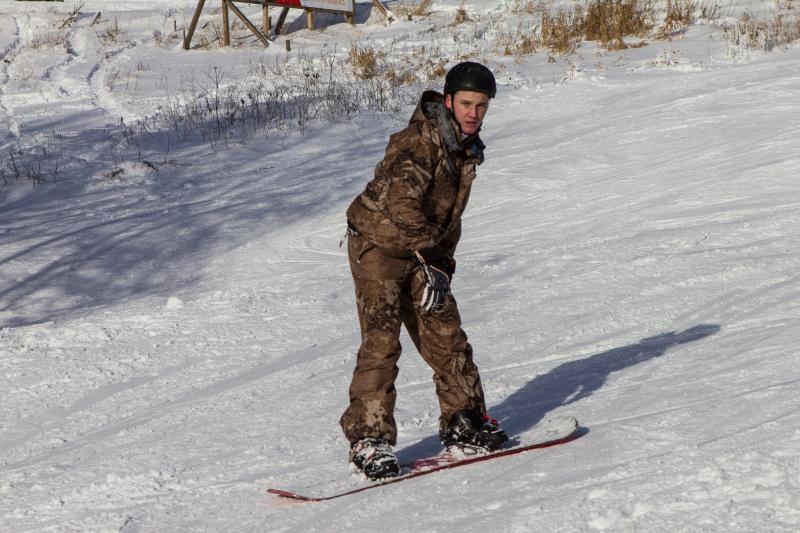 Ein Snowboarder mit schwarzem Helm fährt über eine verschneite Piste.
Photo: Dago Wiedamann | MaxTD Imagebank
Ein Snowboarder mit schwarzem Helm fährt über eine verschneite Piste.
Photo: Dago Wiedamann | MaxTD Imagebank
Key facts
- It should sit all around the head without painful pressure.
- Check the size with the chin strap closed and without slipping.
- Helmet and goggles must fit together.
- A helmet does not replace sensible speed or slope rules.
- After a strong impact, have it assessed and usually replace it.
- Cleaning, storage and checks for cracks are part of care.
Fit and goggles
Position the helmet before closing the strap. It should protect the forehead and not slide backwards. It must not move when you shake your head. Try it with goggles; check pressure, field of view and the transition at the forehead. Children should try the helmet before each season because growth and new goggles change the fit.
Safety on the slopes
Speed, distance, visibility and consideration remain decisive. The FIS provides international guidance; local rules also apply. Do not ski on closed slopes or during grooming. A grooming vehicle may operate in poor visibility or outside opening hours. Children need supervision even with a helmet.
Buying, renting and replacing
Check fit, visibility, ventilation, weight and goggle compatibility. For a rental helmet, inspect shell, closure and pads. After a strong impact it may look normal but still be damaged. Replace it when the shell, straps, adjusters or pads are unreliable.
Care and transport
Remove moisture with a soft cloth and follow the manufacturer's cleaning instructions. Dry at room temperature, not on a heater. Use a bag for transport, avoid heavy items on the shell, and do not leave the helmet in a hot car or direct sun.
Frequently asked questions about ski helmets
How should a helmet fit?
It should protect the forehead, sit all around the head and not move during activity.
Can I wear a hat underneath?
Only if the manufacturer permits it and the intended fit is unchanged.
When should it be replaced?
After a strong impact, visible damage or unreliable shell, straps or adjustment.
Does every goggle fit every helmet?
No. Try them together to check field of view, pressure and fit.
