
Fígols: Dinosaur Footprints, Romanesque Architecture and Mining History
Accommodation in Fígols
Fígols brings together three themes that converge here in different forms: palaeontology, Romanesque buildings and mining history. The Fígols-Vallcebre de Fumanya palaeontological site is 65 million years old, covers more than 38,000 m² and contains 3,500 dinosaur footprints.
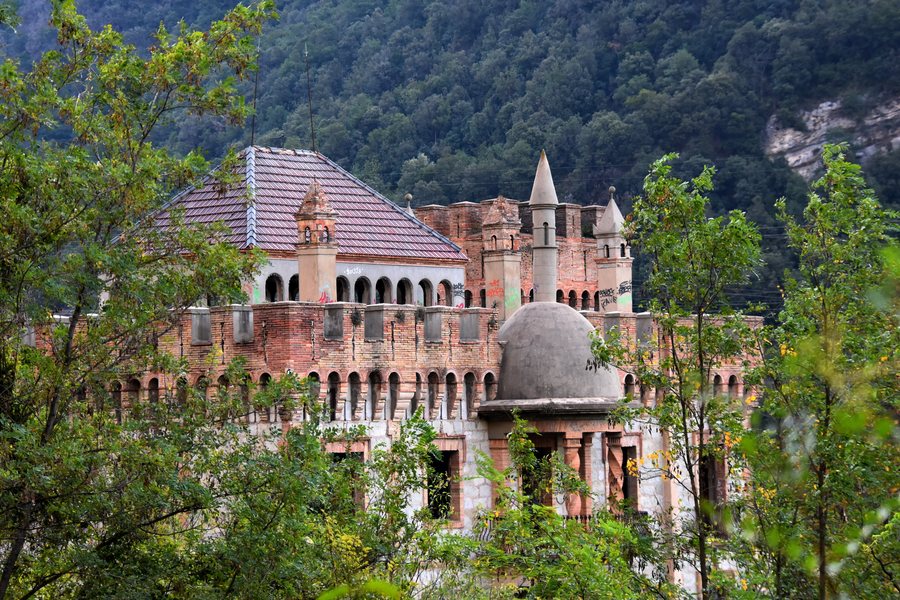 File:Torre del Comte de Fígols, Cercs, Berguedà.jpg
Photo: Angela Llop via Wikimedia Commons, CC BY-SA 4.0
File:Torre del Comte de Fígols, Cercs, Berguedà.jpg
Photo: Angela Llop via Wikimedia Commons, CC BY-SA 4.0
Palaeontology
The “Dinosaures Fumanya” exhibition displays dinosaur bones, dinosaur eggs and an exceptional fossilised skin impression. The presentation is complemented by information about geology and open-cast mining. The Ruta del Cretaci crosses the Fumanya site via a footbridge that leads visitors to two life-size reproductions of sauropods. The exhibition and the route through the site have different focuses: the former centres on finds and displays, while the latter focuses on the route through the site and the reproductions.
Routes and Mining History
The “Fígols i la vall de Fumanya” route leaves the GR 270 and follows the PR-C 73 towards Fígols. Along its course, it passes the entrance to the Curro Mine, which illustrates the area's mining history. In Fígols, the route also highlights the Romanesque church of Santa Cecília, which dates from the 11th to the 12th century.
In the area around Fígols, a restored section of the Tramvia de Sang enables a walk between Sant Jordi de Cercs and Berga through woodland, tunnels and footbridges. The Tramvia de Sang was the first mining railway in Berguedà and transported coal from the Fígols mines to Berga. The different types of route make it possible to compare a thematically guided route with a walk along a restored section of railway.
Culture and Buildings
Castell de Peguera is protected as a cultural asset of national interest (BCIN) under the protection decree of 22 April 1949. The church of Sant Miquel de Peguera is one of the oldest religious buildings in Fígols and, despite its ruined state, retains the character of a single-nave high-mountain Romanesque church. Sant Mateu de Fumanya is a Romanesque church in the hamlet of Fumanya.
The transformer tower in Peguera provides a link to the industrial past. It was part of the infrastructure that supplied the miners' colony and the coal-extraction facilities with electricity. Protected status, sacred architecture and technical infrastructure thus stand alongside one another as different facets of the area's history.
Tradition and Local References
The Cançó del Pegaire is an exceptional example of Catalan oral folklore and preserves the memory of the now-disappeared profession of the pegaire. The text describes how a pegaire gets up early, takes an axe and goes into the forest to make pitch for sealing containers made of clay or wood.
The Font del Bullidor, also known as Font de la Llet, is located near the path to the palaeontological sites of Fumanya and served as a resting place for hikers and day-trippers over the years.
For the overall travel overview: Barcelona.
More destinations
More places within the same destination:

