
Hronec: Winter holiday between the ski lift, nature and railway history
Accommodation in Hronec
Near Hronec, visitors can visit a leisure centre and a ski lift in winter. The town lies in a narrow valley of the Čierny Hron River, where the Osrblianka stream flows into it. Here, running waters, wooded slopes and evidence of the region’s industrial history come together in the valley.
Nature
The Hrončecký grúň National Nature Reserve is located in the cadastral area of Hronec. It represents beech and beech-fir forest communities typical of the region. Due to nature conservation, the reserve is not open to the public. The Kamenistý potok Natural Monument is also located in the cadastral area. It protects a preserved ecosystem of a foothill stream that forms an important habitat for the Eurasian otter (Lutra lutra).
The Hronec Valley is suitable for hiking and cycling. Its landscape includes a freely meandering stream, meadows, pastures and densely wooded slopes, as well as the rock formations of Veľká Stožka and Malá Stožka. The Stožky educational trail begins in Závadka nad Hronom and leads through the Hronec Valley parallel to a blue-marked hiking trail to the former forester’s lodge at Pätina.
Culture
Notable buildings include the Classicist Roman Catholic Church of St. Clement, built in 1826. It features biblical depictions in stained-glass windows made in 1913 at J. Pálka’s workshop in Budapest. The church also contains a monumental altar with a mining emblem and an image of the church’s patron saint.
The two-storey bell tower of Hronec dates from 1835 and has four historic bells. Its ground floor houses a museum exhibition of cast-iron grave crosses. Hronec and its surroundings are also home to an exceptional group of nine chapels built in various historical periods. The Komorský House stands next to the church in Hronec.
History
The history of ironworking is present in several places. In front of the local foundries, a cast-iron bridge made in Hronec in 1810 is on display; it is considered the first cast-iron bridge in Central Europe. In the 16th and 17th centuries, the Hronec ironworks supplied state mines and ironworks in Banská Bystrica, Kremnica and Banská Štiavnica with iron tools and products.
The Prajský House is a chamber building with an enclosed farmyard at the rear, built around 1800 for Prussian foundry workers. In the Tri vody mountain valley locality near Hronec, the remains of a blast furnace from 1795 have been preserved. The representative Komor Court was intended for the administrator and officials of the local ironworks.
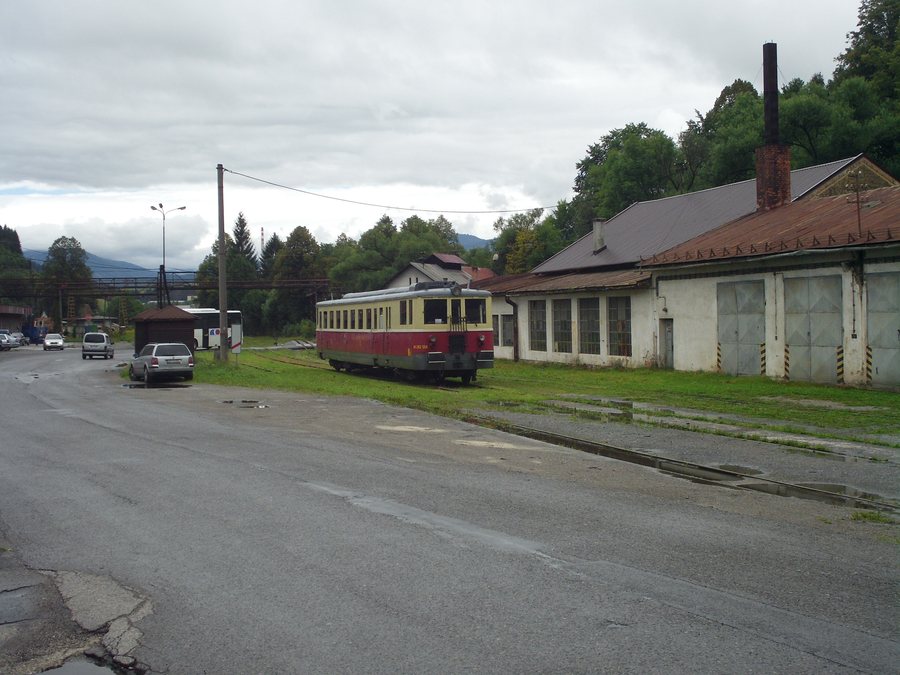
The Čiernohronská železnica railway is also part of the town’s history and is an attraction in Hronec, allowing visitors to travel to Čierny Balog. The 10.4-kilometre main section from Hronec to Čierny Blh, then called Čierny Balog, was built from 1908 onwards; regular service began that same year.
Further destinations: Horná Lehota, Helpa, Valaská, Ráztoka, Bystrá, Braväcovo, Brezno, Podbrezová
To the higher-level travel overview: Brezno District.

