
Manoppello: Pilgrimage, Culture and Trails
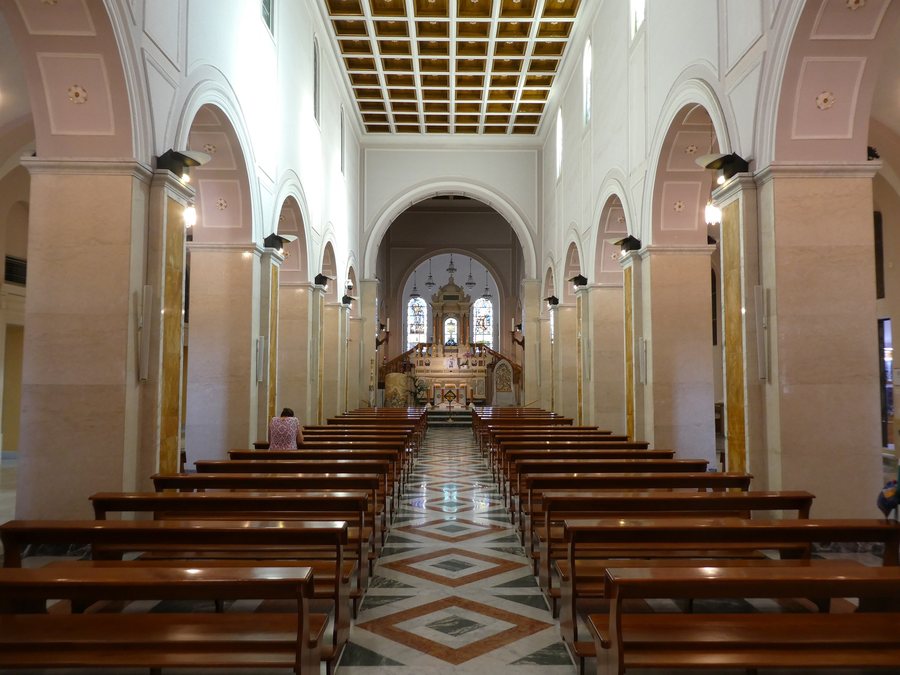 File:Manoppello, basilica del Volto Santo - Interno 02.jpg
Photo: Syrio via Wikimedia Commons, CC BY-SA 4.0
File:Manoppello, basilica del Volto Santo - Interno 02.jpg
Photo: Syrio via Wikimedia Commons, CC BY-SA 4.0
Manoppello combines sacred destinations, historic buildings, trails on the northern slope of the Maiella, nature and regional craft traditions. When choosing accommodation in Manoppello, you can therefore plan your stay around different interests: pilgrimage and art, local history, walking and hiking, or regional products. The main destinations do not belong to a single thematic area; instead, they create a varied picture of the town.
Pilgrimage and sacred sites
The Santuario del Volto Santo was founded in 1620 together with the Capuchin monastery and was initially dedicated to Saint Michael the Archangel. The Volto Santo is considered to be a very thin, almost transparent piece of fabric measuring 17 × 24 centimetres and bearing the imprint of a male face. The image is visible from both sides. This distinctive feature makes the Volto Santo a central point of reference for visitors interested in religious art and pilgrimage.
A strong religious tradition is also reflected in the solemn Processione del Volto Santo. It takes place on the third Sunday in May; during the procession, the sacred image kept in the Basilica is carried through the streets of the town. The remains of the ancient monastery of San Pietro stand on a hill above the Vallebona valley in the municipality of Manoppello. They remain a destination for pilgrimages by believers from Carovilli.
Art and architectural history in Manoppello
The Abbey of Santa Maria Arabona is located in the district of Manoppello of the same name. It dates from the late 12th century and is the first Cistercian church built in Abruzzo. Its choir wall features three paintings signed by Antonio Martini di Atri and dated 1377. The Chiesa di San Pancrazio adds a single-nave church in the Romanesque style.
The historic centre also preserves notable evidence of the town's history. Numerous small aristocratic palaces from the 18th and 19th centuries stand there. They were built from local stone known as “pietra di Manoppello”. Manoppello also stands on the ruins of ancient Samnite and Roman Pollitium. It was destroyed in the 6th century and rebuilt by the Lombards in the 8th century.
Traditional crafts include forging iron and copper, as well as making household items such as pots, conche and Pizzelle moulds. Manoppello is also home to two craft workshops producing ceramics and objects made from Majella stone. The Casa di Terra Cruda di Santa Maria Arabona is a unique example of an earthen construction in the characteristic Massone building style. A restored Roman patrician villa with mosaics that are still intact has been reopened to the public.
Nature, trails and leisurely day planning
Manoppello is part of the Majella National Park. The Arboreto Giancarlo Cipressi provides a distinctive natural attraction, with 90 trees and shrubs, each belonging to a different species. For accommodation in Manoppello, this combination of local history and landscape opens up different possibilities for planning your days, without cultural visits and trail experiences having to compete with one another.
The Sentieri delle Capanne in Pietra trail network also includes Manoppello and allows visitors to see numerous important agro-pastoral complexes made of dry stone walls on the northern slope of the Maiella. The 90-kilometre Cammino di Celestino also passes through Manoppello. It is fully waymarked and georeferenced. The two offerings therefore already differ in their documented focus: traditional dry-stone complexes are central to one, while the other is a longer, continuously waymarked and georeferenced trail.
A specific starting point for an excursion is the Piana del Legname. It has an equipped picnic area. From here, a footpath leads to the remains of the monastery of San Pietro. Those wishing to combine culture, pilgrimage and physical activity during their stay will find a clear sequence of landscape, trail and historic destination. This does not imply anything about the duration, difficulty or current use of the trails.
Regional products and festivals
Extra virgin olive oil and wine are considered typical products of Manoppello. The olive oil is produced by small and medium-sized businesses in the municipality at local oil mills. This culinary connection is complemented by the Asta dei Majtelli. It takes place on the fourth Sunday in September on the occasion of the San Rocco e Sant’Emidio festival. During the event, truncated-cone-shaped wooden structures decorated with gastronomic gifts are auctioned.
For travel planning, Manoppello can therefore be viewed differently depending on the season and your interests: the third Sunday in May is dedicated to pilgrimage through the Processione del Volto Santo, while the fourth Sunday in September, with the Asta dei Majtelli, has a special connection to festival culture and regional products. Historic buildings, sacred art, marked trails, nature and crafts remain additional independent themes of the town.
Further destinations for comparison include Roccamorice, Sant'eufemia A Maiella, Abbateggio, Caramanico Terme, San Valentino In Abruzzo Citeriore and Turrivalignani.
For the higher-level travel overview: Pescara.
Check prices, availability and amenities for your travel dates directly on Booking.com.
View accommodation and offersAdvertisement · Affiliate link to Booking.com
