
Discover Welschenbach
Accommodation in Welschenbach
Welschenbach is divided into the districts of Oberwelschenbach and Niederwelschenbach and is surrounded by meadows and forests. These features help you place the village in context and distinguish it from the broader cultural themes of the wider Mayen-Koblenz destination.
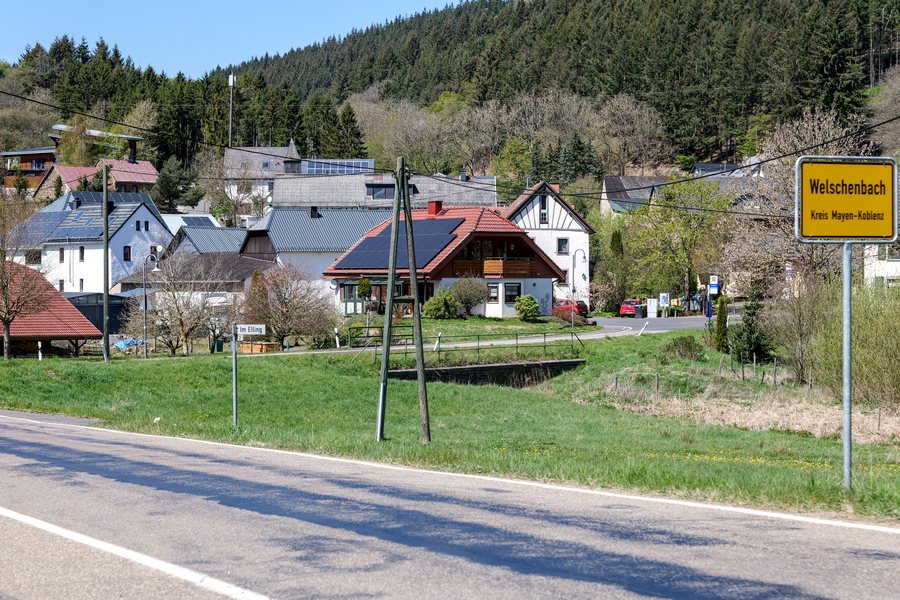
Districts, chapels and the Wanderather
Each of the two districts has a Baroque chapel worth seeing: one in Oberwelschenbach and one in Niederwelschenbach. This arrangement makes the village’s layout easy to follow through its chapels as well. The Baroque style connects the buildings, while their locations in the two districts provide distinct points of reference.
The Wanderather leads from the church in Baar-Wanderath through fields, meadows and wooded hilltops to Welschenbach; along the way, it offers panoramic views towards the village. The route description thus links different landscape features with Welschenbach as its destination. If you are planning the hike, check the current route and access conditions in advance, as route details and access may change.
Historical context
A municipal information brochure from 2018 describes Welschenbach as a village with around 50 residents and links its history to its proximity to Virneburg Castle. Its administrative affiliation is also part of the village’s history: in 1794, after the territory on the left bank of the Rhine became French, Welschenbach was assigned to the Mairie of Virneburg in the Rhine-Moselle Department. This describes the administrative history of the time.
Cultural themes in the wider Mayen-Koblenz destination
The wider Mayen-Koblenz destination has other historical highlights. Genovevaburg Castle was built in 1280 by Heinrich von Finstingen, Archbishop of Trier. Sayn Ironworks is an anchor point on the European Route of Industrial Heritage and the only monument in Rhineland-Palatinate to receive this distinction. Following restoration, it invites visitors to explore modern exhibitions and multimedia presentations; it also offers guided tours and creative workshops.
Sayn Abbey offers another historical perspective: it was founded around 1200, and its abbey church was consecrated in 1202. The exterior paintings dating from around 1255 are considered the best-preserved examples from the High Middle Ages in Germany. Museums are also part of the wider destination: the Lava-Dome in Mendig is the German Volcano Museum. The Geyser Museum explains in five exhibition areas how the world’s highest cold-water geyser works. Alongside the local landscape and chapels, the region thus offers a range of interests, including industrial heritage, architectural history and volcanism. Sayn Palace Park, also in the wider Mayen-Koblenz destination, was laid out as an English landscape garden between 1840 and 1850. The park features a palace pond with a fountain, winding paths and benches.
Choose according to whether you want your stay to focus mainly on the village or also take in this wider range of regional attractions.
Discover more destinations: Acht, Ettringen, Nachtsheim, Arft, Vordereifel, Herresbach, Baar, Langscheid.
Back to the wider travel overview: Mayen-Koblenz.

