
Flintsbach a.Inn: Petersberg, Culture and Nature
Accommodation in Flintsbach Am Inn
A winter hike from Flintsbach a.Inn leads up to Petersberg and the pilgrimage church of St. Peter. If you are looking for accommodation in Flintsbach a.Inn, you can match your travel dates with the local attractions: the castle ruins, parish museum, waterfall and folk theatre offer different highlights. Your plans depend on whether you want to focus on a winter trail, a visit focused on cultural history or the summer theatre season.
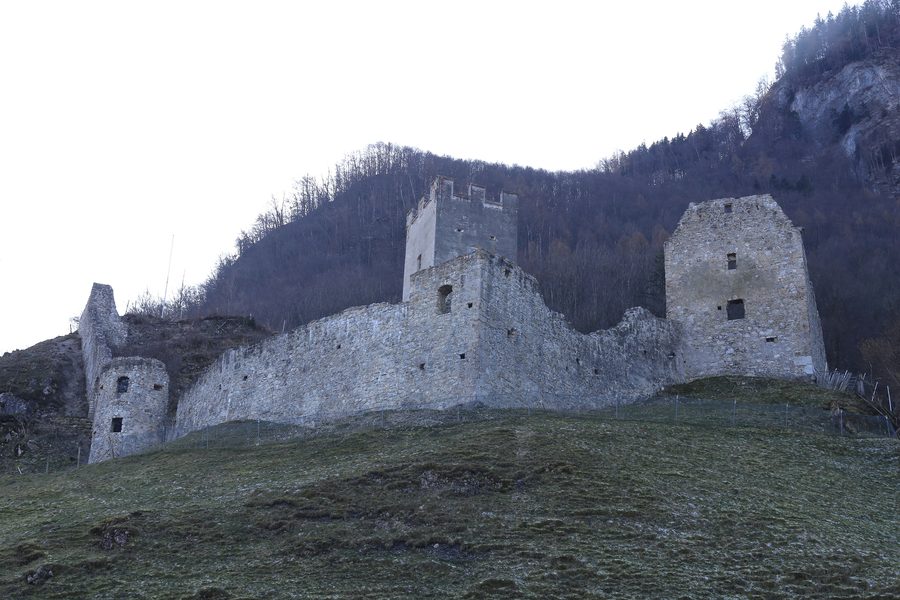 Die Burgruine Falkenstein gehört zum historischen Ortsprofil von Flintsbach am Inn.
Photo: Rufus46 via Wikimedia Commons, CC BY-SA 4.0
Petersberg: Winter Hike and Route Planning
The winter hike leads from Flintsbach up to Petersberg. The destination is the pilgrimage church of St. Peter, dedicated to Saint Peter and considered the oldest pilgrimage church in the Inn Valley. From Flintsbach station, it is about a 15-minute walk through the village to the starting point of the Petersberg winter hike. If you plan to travel by train, check the current connections as well. There is an opportunity to stop for refreshments at the Berggasthof Petersberg during the hike. Check the latest information about refreshments before setting out, as service details may change.
Falkenstein Castle Ruins and Parish Museum
The Falkenstein Castle Ruins in Flintsbach a.Inn include remains of the outer bailey at or above a gorge, with a keep crowning the complex. From the Peterberg hiking car park, it is about a ten-minute walk to the ruins. The trail is steep and can also be walked with a stroller. Keep both details in mind: the fact that the trail is stroller-accessible does not make it any less steep. As access information may change, check the current trail conditions before your visit.
The permanent exhibition at the Flintsbach a.Inn Parish Museum covers the Urnfield period, the medieval rule of the Falkenstein family, the local and church history of Flintsbach, Roman traces in the local history, and the cultural and church history of Petersberg. The exhibition is housed in a room measuring around 100 m².
Waterfall and Theatre Season
The Philosophen Waterfall in Flintsbach a.Inn cascades down the edge of a rock face. This offers a specific natural feature alongside the castle and museum themes.
The Flintsbach Folk Theatre season runs annually from mid-June to mid-August. For specific performances, check the current programme; the season dates do not specify individual performance days. This creates a clear difference in travel timing: the Petersberg tour is described as a winter hike, while the theatre season takes place in the summer months. Choose your travel dates based on your priorities, and check the theatre programme for specific dates.
More to Explore in the Wider Rosenheim Destination
The wider Rosenheim destination offers more cultural and natural attractions. The Museum at Amerang Castle provides insights into the castle's architecture and the history of the noble family. The Amerang Farmhouse Museum run by the District of Upper Bavaria features farmhouses, craft buildings and technical installations from the Chiemgau region. The Amerang Open-Air Museum offers guided tours and activities for groups; if needed, arrange group activities in advance, as visitor services may change. Established in 2010, the moorland trail between Amerang and Halfing explains how the moorland landscape formed after the Ice Age, as well as the local flora and fauna.
Discover more destinations: Raubling, Lake Chiemsee, Brannenburg, Bad Feilnbach, Riedering, Neubeuern, Gstadt am Chiemsee, Kiefersfelden
Back to the wider travel overview: Rosenheim.

