
Kiefersfelden: Trails, Water and Hydropower
Accommodation in Kiefersfelden
If you are considering Kiefersfelden as a travel destination, you can tailor your choice to specific interests: trails along the Kieferbach, insights into local hydropower and a ferry connection to Tyrol offer different focal points. When looking for accommodation, it helps to decide first whether you would rather include a trail, the topic of energy or the Inn ferry connection in your travel plans. This makes it easier to distinguish between the options: one hiking trail passes through a gorge to the Schopperalm, the Energy Trail focuses on the use of various resources, and the ferry connects Kiefersfelden with Ebbs/Eichelwang in Tyrol.
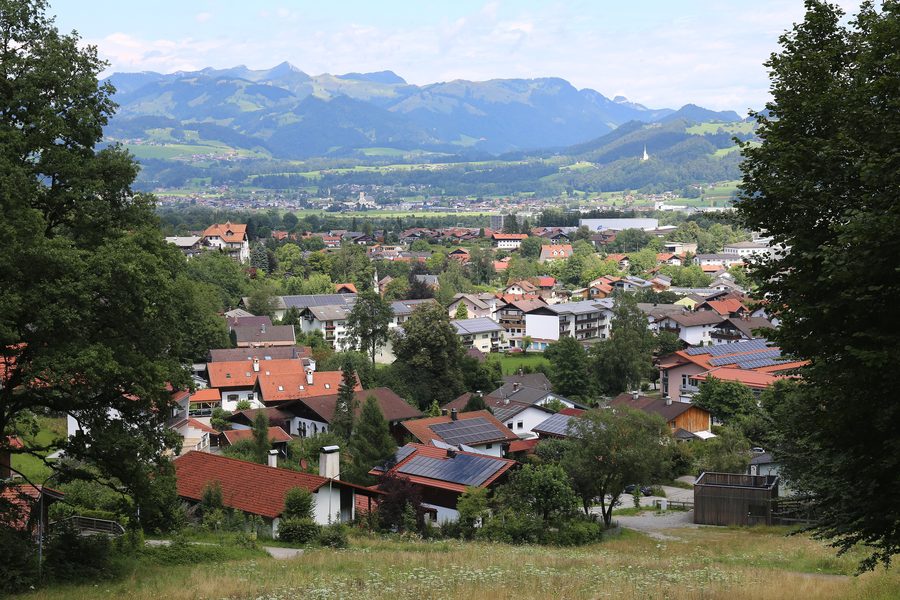 Blick auf Kiefersfelden vor der Bergkulisse des Geigelsteins.
Photo: Rufus46 via Wikimedia Commons, CC BY-SA 4.0
Hiking from the town center to Gießenbach Gorge
The Kiefersfelden–Gießenbach Gorge–Schopperalm hiking trail leads from the town center along the Kieferbach, past Bavaria’s largest waterwheel and through Gießenbach Gorge to the Schopperalm. Its description includes several specific waypoints and a named destination. If you are interested in water and scenery, you can compare this route with the thematic focus of the Energy Trail: here, the emphasis is on a trail with stops along the Kieferbach, while there, the focus is on the use of different energy sources.
Gießenbach Gorge is closed seasonally. Before your visit, check whether the section of the trail through the gorge is accessible at that time. This lets you take the seasonal restriction into account without making an unverified assumption about access to the rest of the hiking trail.
Hydropower and the Energy Trail
The Kieferer Energy Trail shows hikers and walkers how energy generation is integrated into the local natural environment. Its 23 stops explore how the abundance of water, forest resources and solar energy have been used responsibly and sustainably in the climatic health resort of Kiefersfelden for more than 500 years. The trail therefore presents several energy sources side by side rather than focusing solely on hydropower.
On the Kieferer Energy Trail, adults and children can discover energy snails, hidden channels, power plant turbines, weirs, a surge tank, a water playground, Bavaria’s largest waterwheel and Gießenbach Gorge. The stops combine technical features with themes from nature. The comparison becomes especially tangible in the blue section of the Kieferer Energy Trail: Kiefersfelden’s smallest, largest and oldest hydropower plants are located there. Each uses a different technology. The three plants can therefore be distinguished not only by their size or age, but also by the technology used in each one.
The Inn ferry to Tyrol
Another option for your travel plans is the Inn ferry between Kiefersfelden and Ebbs/Eichelwang in Tyrol. It has connected the two places since May 2023. Made of larch wood using traditional craftsmanship, the ferry is 11 meters long and 2.80 meters wide; it can carry 12 passengers as well as bicycles. These details give a clear idea of the vessel’s size and capacity. If you would like to include the ferry in your plans, check its current availability in advance.
More topics in the wider Rosenheim destination
In the wider Rosenheim destination, the museum at Amerang Castle offers insights into castle architecture and the history of the noble family. The Amerang Farmhouse Museum, run by the District of Upper Bavaria, showcases farmhouses, craft buildings and technical installations from the Chiemgau region. These topics offer a different perspective from the trails and hydropower in Kiefersfelden: the focus here is on the history of castles and farms, as well as technical installations.
The Amerang Open-Air Museum offers private guided tours and activities for groups. As visitor offerings may change and arrangements may be necessary, it is advisable to check in advance if you are considering a guided tour or group activity. Another thematic highlight is the Moorland Nature Trail, established in 2010 between Amerang and Halfing. It explains how the moorland landscape formed after the Ice Age and offers insights into the local flora and fauna. The range of topics in the wider Rosenheim destination thus extends from the history of castles and farms to the formation of the moorland landscape.
Discover more destinations: Mühlbach, Nußdorf Am Inn, Chiemsee, Bad Aibling, Raubling, Brannenburg, Breitbrunn am Chiemsee, Flintsbach Am Inn.
Back to the main travel overview: Rosenheim.

