
Snow groomers and slope maintenance: the technology behind safer runs
A freshly groomed ski run looks even, grippy, and easy to read. Usually, a snow groomer travels across the slope at night or in the early morning to achieve this. It pushes, spreads, and compacts snow, shapes the surface, and takes into account the gradient, weather, snow depth, and how the run is used. For a day of skiing, good grooming does not mean that every run is equally easy, but that the conditions have been prepared as consistently and predictably as possible.
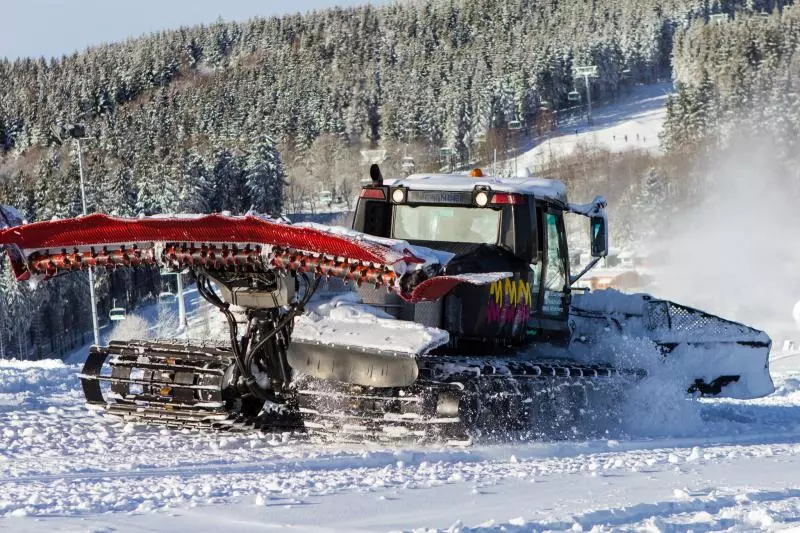 Pistenraupe bei der Pflege einer verschneiten Skipiste.
Photo: Dago Wiedamann
Pistenraupe bei der Pflege einer verschneiten Skipiste.
Photo: Dago Wiedamann
Key facts
- Snow groomers push and spread snow, smooth out uneven areas, and compact the surface.
- Grooming often takes place outside normal operating hours, but can also be done during the day if needed.
- Moisture, temperature, wind, fresh snow, and the number of skiers all affect the result.
- A groomed run is still a descent on mountain terrain; visibility, gradient, traffic, and personal experience remain important.
- Closures and warning signs must always be observed while work is underway.
What a snow groomer does
The vehicle has a blade at the front for pushing and spreading snow. A tiller at the rear can loosen hard or uneven layers. A finishing unit then shapes the snow into as even a surface as possible. Depending on the model, additional equipment may be fitted, for example to prepare terrain park features or transport materials. Information from a manufacturer such as Prinoth on snow vehicles illustrates their basic technical functions; the specific methods used are determined by each ski area.
Getting the amount right is crucial when grooming. If too little snow is spread, rocks, icy patches, or uneven areas may become visible sooner. If the snow layer is worked too much, its structure changes. Drivers and operations managers therefore decide which areas to groom based on the current surface, the weather forecast, and the expected use.
Why runs are often groomed overnight
After the lifts close, the slope is usually clear of skiers. The machine can then work across its full width without crossing active ski traffic. The snow also needs time to settle and form a durable surface. How long this takes depends on temperature, moisture, wind, and the composition of the snowpack. Work schedules may change after heavy snowfall, during temperature fluctuations, or for special events.
If you set off early, you may still see a few vehicles on a distant slope. There must always be enough distance between a snow groomer and a skier. Cables, winches, and areas where work is hard to see can pose particular hazards. Closures must be observed even if the run looks skiable from below.
Grooming and how the snow feels
A hard, even surface feels different from soft fresh snow. Beginners often benefit from a run that is easy to read, but still need enough room to brake. More advanced skiers pay closer attention to edge grip and turn radius. In the afternoon, repeated runs, braking, and traversing create ruts and small piles of snow. This is normal use and does not mean that the morning’s grooming was ineffective.
For an overview, see types of ski runs and difficulty levels. The color of a run does not replace your own judgment. Steeper terrain, poor visibility, or an icy patch can make a seemingly easy route more challenging. The trail map and signage also show available return routes, connecting runs, and alternatives.
Special challenges posed by snow and weather
After heavy snowfall, snow is not distributed evenly across the slope. Wind moves the upper layers, while more snow collects in hollows than on ridges. The load is particularly heavy at bottlenecks, transitions, and in busy areas. Technical snowmaking can also produce snow with different grain sizes and layers. Energy use in the ski area matters too, as do water availability and the time available for grooming.
During a thaw or rain, the surface can become soft. If temperatures then drop, hard layers or icy patches may form. A snow groomer can work on the surface, but it cannot prevent the weather from changing. Current warnings, closures, and operator notices therefore take priority over any expectation that every run will remain the same throughout the day.
Safety during slope maintenance
Do not ski on a run that is closed to vehicles. Tensioned winch cables, work taking place above traverses, and machines that are hard to see on turns or in the dark are particularly dangerous. Vehicles may also be moving beside marked runs. Bypassing a closure puts both you and the workers at risk.
Before setting off, check the current winter lift operations, weather conditions, and open runs. The ski area cable cars often take guests to areas that are being groomed or are closed because of wind or poor visibility. For families, open beginner slopes and safe meeting points are more important than finding the longest possible run. The available ski area facilities can also make planning the day easier.
What guests can realistically expect
Slope maintenance creates good starting conditions, but does not guarantee a particular speed, level of grip, or snow depth. Every run changes with the sun, shade, wind, and passing traffic. Even a carefully groomed run should be skied attentively and in keeping with your experience. If you are unsure, choose a less steep route, take breaks in safe places, and follow local rules.
FAQ: Snow groomers and slope maintenance
When are ski runs usually groomed?
Much of the work takes place after the lifts close and before the next ski day. The operator may adjust the schedule after fresh snowfall, for events, or because of particular weather conditions.
Why is a freshly groomed run sometimes very hard?
Temperature, moisture, compaction, and the existing snowpack all affect firmness. A hard surface may change during the day as a result of sunshine and skier traffic.
Can I cross a closed run anyway?
No. A run may be closed because of machinery, cables, avalanche work, poor visibility, or other hazards. It must remain closed until it is officially reopened.
Does slope maintenance automatically make skiing safer?
It can make uneven areas and changing snow layers more manageable. Your skiing, visibility, the gradient, and current notices still matter.
Why do runs look different in the afternoon?
Skiers move snow around, brake, and turn. This creates ruts, piles, and harder patches. These changes are normal when the slopes are busy.
