
Chieti: Archaeology, Museums and City History
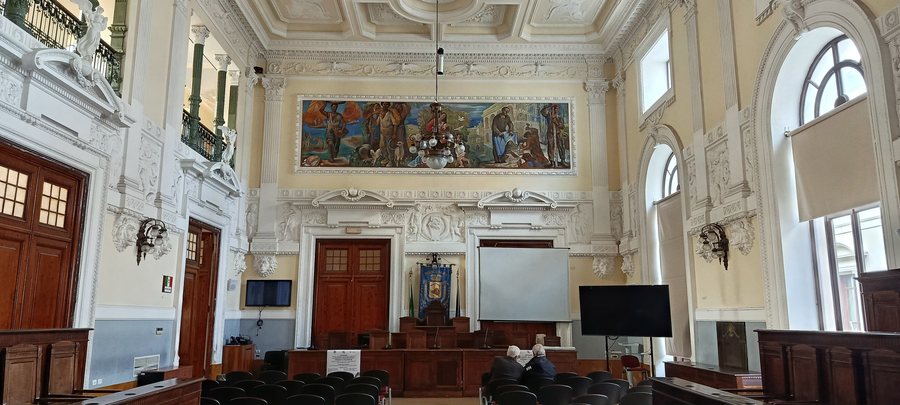
Chieti lies on a 330-metre-high hill and offers views of the sea and the surrounding mountains. The historic centre is compact and easy to explore on foot: old streets lead past monuments, churches, squares and historic shops. For day planning, city walks, museums, archaeological sites and underground remains can be combined according to different interests.
Cityscape
One prominent public space is the Villa Comunale. It consists of several terraced levels with Italian gardens, a small wood, illuminated ponds, paths and stone bridges. The grounds also include a small peninsula surrounded by water for smaller performances. The Villa Comunale is also home to the Monumento ai Caduti della Guerra 1915-18, created by Pietro Canonica.
Archaeology
The Roman Amphitheatre della Civitella dates from the 1st century AD and was used for gladiatorial contests. It is elliptical in shape; parts of the arena wall and the honorary tribune have survived. The Tempietti Romani are considered Chieti’s oldest place of worship and consist of three adjacent temples. They were probably built in an area that had already been used for the worship of deities in the 5th to 4th century BC.
Under today’s historic centre lies Chieti Sotterranea, an underground city. A partially preserved system of cisterns and tunnels remains there; some underground rooms were used as air-raid shelters during the Second World War. The Terme Romane of Chieti date from the 2nd century AD and lie in the eastern part of the city. The Sito archeologico di Teate Marrucinorum in Chieti preserves a mosaic depicting Neptune’s trident, a dolphin and two hippocamps.
The Museo Archeologico Nazionale La Civitella is located on the summit of the acropolis of ancient Chieti. It displays finds illustrating the city’s origins and development through artefacts from the area once inhabited by the Marrucini. The museum offers three tours entitled “L’inizio della storia urbana”, “Da Roma a ieri” and “La terra dei Marrucini”. Another important artefact in Chieti is the Guerriero di Capestrano, a life-size statue from the 6th century BC depicting a Vestinian king in military dress.
Museums
The Museo Archeologico Nazionale d’Abruzzo documents the culture of the ancient Abruzzo region from prehistory to the Late Imperial period. It also includes a numismatic collection with coins from the 4th to the 19th century. A specialised museum library contains around 13,000 volumes.
The Museo D’Arte Costantino Barbella is housed in the Palazzo Martinetti, which dates from the 17th century. It comprises five sections featuring paintings, Barbella’s sculptures, works on paper, paintings from the Premio Michetti and ceramics from Castelli. The museum also displays 15th-century panels, Neapolitan paintings from the 17th and 18th centuries, and works by the Abruzzese artists Cascella and Michetti.
The Museo Universitario d’Annunzio is a science museum focusing on the natural sciences and the history of science. Other subject areas include biological, medical, archaeological, anthropological and palaeontological topics. The museum covers more than 1,500 m² over three floors and is divided into twelve sections.
The Museo Diocesano Teatino preserves historical and artistic material from the Palazzo Comunale, the Cattedrale di San Giustino and other churches in the diocesan area. On display are works of art and liturgical furnishings from the 13th to the 16th century. The Cattedrale di San Giustino has three naves separated by columns, ending in three apses; the central nave is covered by a barrel vault with lunettes. Its crypt preserves the saint’s relics and has a simple medieval structure.
The Teatro Marrucino was built from 1813 to December 1817 on the perimeter walls of the former deconsecrated church of S. Stefano e S. Ignazio.
Nature and Surroundings
Access to the Giardino dei Semplici is free of charge during the university’s opening hours. In the immediate surroundings of Chieti are the Museo d'Arte C. Barbella, the Palazzo de Mayo, Trifoglio Arte and the Palazzo De Pasquale. The surrounding area also includes Spiaggia Pescara, Spiaggia Postilli, Spiaggia del Foro di Ortona and Spiaggia di Foro.
More destination pages: Pizzoferrato, Guardiagrele, Pennapiedimonte, Casacanditella, Lama Dei Peligni, Pretoro, San Martino Sulla Marrucina, Gamberale, Roccamontepiano, Borrello, Taranta Peligna.
Getting There
Travellers arriving from the north can take the A14 Bologna–Bari motorway to the Pescara Ovest–Chieti exit and then continue on the SS 656 towards Chieti Centro. By train, Chieti can be reached via the Pescara–Rome route; several regional railway lines also connect the city, among other places, with Teramo and Sulmona.
To the higher-level travel overview: Abruzzo.
Check prices, availability and amenities for your travel dates directly at Booking.com.
View accommodation and offersAdvertisement · Affiliate link to Booking.com
