
Discover Schwalm-Eder District
Accommodation in Schwalm-Eder District
If you are looking for accommodation in Schwalm-Eder District, your travel group’s interests can be a good starting point: are you interested in cycling, hiking, museums or historical exhibitions? The district’s landscapes, trails and cultural sites offer a variety of options. You can plan your trip around the topics you would like to explore during your stay.
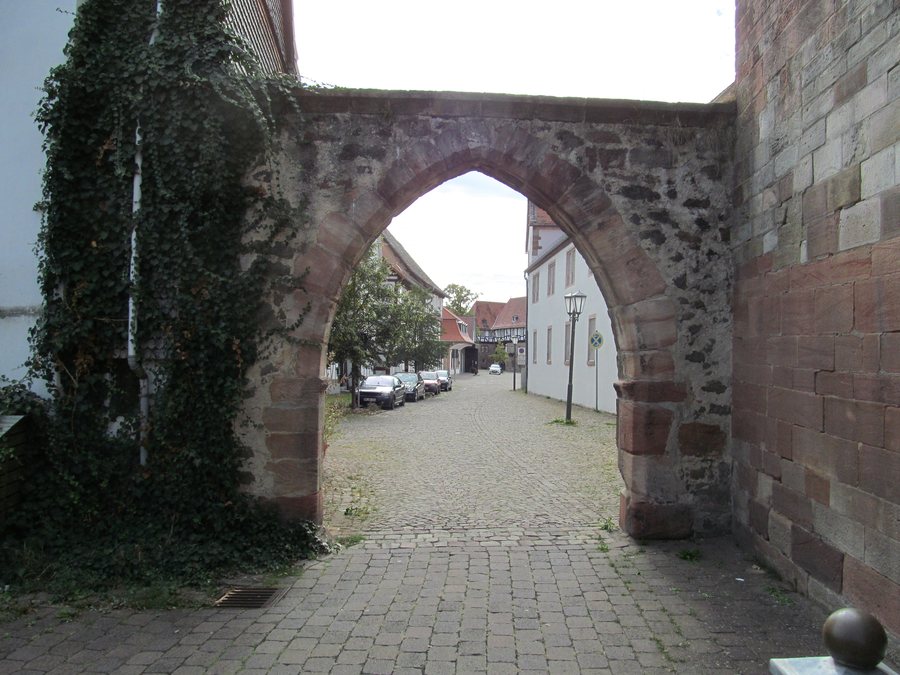 Heinz von Lüdertor, Ziegenhain, Schwalmstadt, Schwalm-Eder-Kreis
Photo: GeorgDerReisende via Wikimedia Commons, CC BY-SA 4.0
Landscape, Cycling and Hiking Routes
Schwalm-Eder District includes low mountain landscapes around the Knüll, Kellerwald and Habichtswald ranges. For cyclists, the Schwalm Cycle Route is a helpful reference point: it is around 100 kilometres long and leads to the point where the Schwalm flows into the Eder, just before Felsberg in Schwalm-Eder District. Most of the route follows paved or surfaced paths. The river landscapes described along the way include meadows, fields, villages and half-timbered towns.
Train connections to Felsberg-Gensungen and Schwalmstadt-Treysa are listed as ways to reach the Schwalm Cycle Route. Check current timetables before travelling and route conditions before setting out. This lets you consider your journey there and your plans along the roughly 100-kilometre route separately, rather than inferring a specific travel time from the total distance.
The Steinkammergrabrunde near Fritzlar-Lohne offers a different kind of tour. This easy circular trail is 4.90 kilometres long and is designated Nature Park Circular Route L1. This gives you two clearly different sets of information to consider when planning: the approximate length of a cycling route, and the length, difficulty level and circular format of a hiking route. Trail conditions can change; check the latest information before setting out.
The Schlossbrunnenweg passes a spring pond on the way to the castle well. The well once supplied Burg Wallenstein with fresh water. The ruins of Burg Wallenstein are located in the Knüllwald on a mountain spur below Babloh Mountain. Here, a described former function and a specific location come together: the well path tells the story of the historic water supply, while the ruins’ location anchors the site in the landscape.
Museums, Crafts and History
The Museum Malerstübchen in Willingshausen focuses on the art history of the 19th and 20th centuries. On display are paintings featuring motifs of traditional Schwalm dress. Schwalm’s traditional rural crafts are also among the exhibition topics, including whitework embroidery, knitting and spinning. Guided by an expert, visitors can attend talks about the artists’ colony and its artists, Schwalm customs and crafts, and whitework embroidery. Art history, traditional dress motifs and crafts thus offer different perspectives on Schwalm culture.
The Museum der Schwalm in Schwalmstadt-Ziegenhain focuses on different topics. In a reconstructed pottery workshop, it displays ceramics and pottery commonly found in the region. The museum also houses a large model of the Ziegenhain water fortress. It depicts the fortress as it was in 1761, after it had been shelled during the Seven Years’ War. Those interested in regional crafts will find a different perspective here than at the Malerstübchen: the exhibits focus on ceramics and pottery, complemented by the historic fortress model.
A permanent exhibition in the tithe barn at the Breitenau Memorial commemorates events of the Nazi era. Its educational programme includes guided tours, walks, talks and readings. The cultural sites therefore differ not only in their subject matter, but also in the formats they offer: Willingshausen explores the artists’ colony and crafts, among other topics; Schwalmstadt-Ziegenhain focuses on ceramics and the water fortress; and Breitenau commemorates the Nazi era.
When choosing excursions, you can first weigh up outdoor activities and the different cultural and historical themes. The cycling route is described by its approximate total length and the train connections mentioned; for the Steinkammergrabrunde, the length, circular format and difficulty level are specified. The museums’ topics and educational programmes can help guide your choice.
Discover more destinations: Edermünde, Frielendorf, Homberg/Efze, Oberaula, Ottrau, Knüllwald, Niedenstein, Neukirchen
Go to the overview of destinations: Hesse.

