
Amberg-Sulzbach: Rock Trails, River Valleys and Culture
Accommodation in Amberg-Sulzbach
Amberg-Sulzbach offers a range of reasons to visit: limestone cliffs, Jura hills, forests and river valleys shape the landscape, alongside hiking trails, water activities, mining history and regional customs. If you are looking for accommodation, you can start by considering which of these aspects you would like to shape your stay.
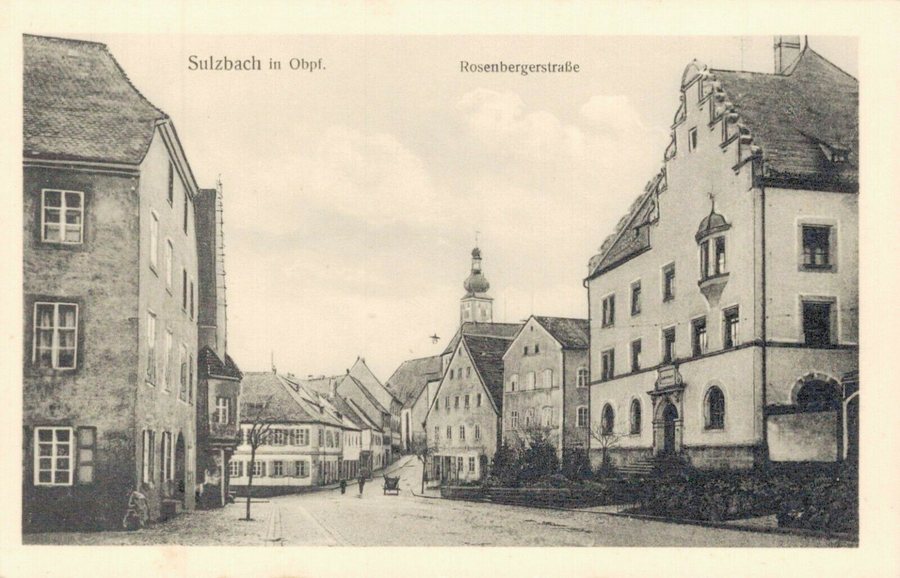 File:AK - Sulzbach in Obpf - Rosenbergerstraße.jpg
Photo: Unknown author via Wikimedia Commons, Public domain
Trails, Rocks and Water
The Amberg-Sulzbach region offers impressive limestone cliffs, gentle Jura hills, extensive forests and lovely river valleys. For a hike with clearly specified details, the Felsenweg trail runs from Sackdilling for 2.7 kilometres and takes about 45 minutes, passing through the rock labyrinth to the Bauernlöcher caves and their impressive rock formations. The Wacholderwanderweg is also one of the finest hiking trails in the Amberg-Sulzbach region. The options range from a hike with a specific route and estimated duration to a trail singled out as a regional highlight.
At Wolfertsfeld in Birgland, you can try traditional archery on the Bow-Vision 3D course. The approximately three-kilometre circular route leads through the farm woodland typical of the Upper Palatinate Jura. Its format differs from that of the Felsenweg: here the focus is on archery on a woodland loop, while the other route takes you through the rock labyrinth to the Bauernlöcher caves.
The River Vils offers a water-based experience of its own: from Hahnbach, it is navigable by canoe and passes unspoilt stretches of river, castles and historic Amberg. The Theuern nature observation platform offers a different perspective on the water. It was built at the edge of the settling ponds at the wastewater treatment plant. The adjoining wetland, with the Vils, its old river channels and ponds, is a year-round resting and breeding ground for local birds and those migrating from the north.
If caves are among your interests, take the seasonal restriction into account when planning: access to caves on the region’s cave hiking trails is prohibited from 1 October to 31 March.
Mining, Customs and Regional Cuisine
The East Bavarian Mining and Industry Museum at Kultur-Schloss Theuern researches and documents mining and industry in eastern Bavaria, keeping their history alive. The Erzweg links sites with a mining tradition spanning more than 1,000 years and leads through cultural and natural landscapes. Mining is therefore represented both in the museum’s work and as part of a route through cultural and natural areas.
Kirwan festivals are also an important part of local tradition. Since 2023, they have been included on Bavaria’s intangible cultural heritage list. They are celebrated every year in their respective towns and are open to visitors and locals alike. If you would like to experience a particular Kirwa, check the date for the town in advance.
Traditional Schlachtschüssel is part of the regional cuisine, and many restaurants in the Amberg-Sulzbach region serve it regularly. It includes Wurschtsuppn (sausage soup), boiled pork and blood, liver and fried sausages made to the restaurants’ own recipes. Dates vary by restaurant. Another regional brewing tradition is original Upper Palatinate Zoigl beer, brewed in Erlheim. The Sudhang private brewery in Amberg uses hops from Illschwang, the world’s smallest hop-growing area.
Monte Kaolino near Hirschau
Near Hirschau is one of the region’s more unusual landmarks: Monte Kaolino is a ski mountain about 120 metres high, without snow and made of around 33 million tonnes of fine quartz sand, and is a unique attraction worldwide. The contrast between the term “ski mountain” and its snowless quartz sand makes it a distinctive attraction alongside rock trails, river landscapes and woodland.
Discover more destinations: Schnaittenbach, Königstein, Weigendorf, Auerbach in der Oberpfalz, Freudenberg, Fürstenfeldbruck district, Nürnberger Land, Landsberg am Lech.
View the overview of the wider region: Bavaria.

