
Vöcklabruck: Lakes, Culture and Regional Experiences
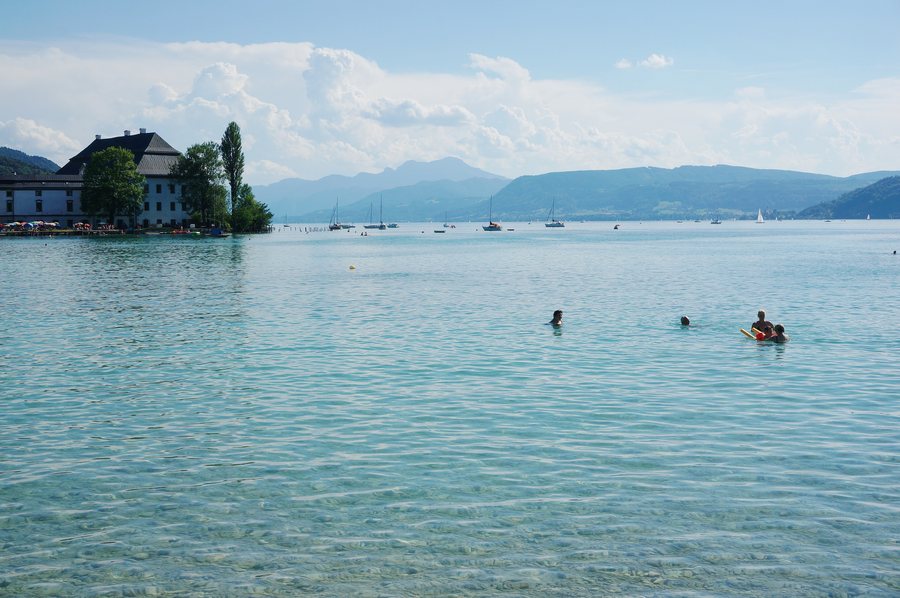 File:Attersee, Bezirk Vöcklabruck, Oberösterreich mit Schloss Litzlberg.jpg
Photo: Naturpuur via Wikimedia Commons, CC BY-SA 4.0
File:Attersee, Bezirk Vöcklabruck, Oberösterreich mit Schloss Litzlberg.jpg
Photo: Naturpuur via Wikimedia Commons, CC BY-SA 4.0
Vöcklabruck and the district of the same name combine a lake landscape, culture, trails and regional products. The focus is not only on individual destinations, but on different experiences: water at Lake Attersee, historic buildings and museums, themed trails through the hilly countryside, as well as markets and farm-gate sales. When choosing accommodation in Vöcklabruck, it helps to decide on your personal focus in advance.
Special natural area: The Attersee-Traunsee Nature Park has been Austria's first dark-sky park since April 2021. Transport route: The Attersee railway connects Vöcklamarkt, St. Georgen im Attergau and Attersee and runs back again. Cultural offering: The district has numerous exhibitions, concerts and theatre performances, as well as cultural activities organised by associations. Regional specialities: Schnapps production and cider taverns enhance the range of offerings for guests. Klimt Centre: The Gustav Klimt Centre on the northern shore of Lake Attersee opened in 2012 and presents a new exhibition every year. Water surface: Lake Attersee covers approximately 47 km² and is Austria's largest inland lake. Lakes in the south: The lake district in the south of Vöcklabruck district is part of the Salzkammergut.
Lake Landscape and Water Sports
The landscape of Vöcklabruck district is politically divided into a variety of areas. In the north, the foothills of the Kobernaußerwald and the hilly Hausruck landscape shape the scenery. To the east are fertile fields and farmland around Schwanenstadt. In the south, the lake district meets the rock faces of the Limestone Alps, the wooded peaks of the Flysch Mountains and, to the west, the transition to the gentle landscape of the Salzburg Flachgau region. This means that very different landscape impressions can be found within a small regional area.
Lake Mondsee and Lake Irrsee are characterised by exceptional scenic beauty and attractive bathing opportunities. Sailing, stand-up paddling and diving are possible on Lake Attersee. The unusually clear water there allows visibility of up to 25 metres.
Museums, History and Cultural Sites
The Heimathaus Vöcklabruck is a local history museum in one of the city's oldest buildings. It also houses a valuable collection from the estate of file manufacturer Isidor Braun. Mondsee Abbey provides a different historical highlight; it was founded in 748 by the Bavarian Duke Odilo. In Vöcklamarkt, the Vöckladom is a late Gothic church with Baroque elements and a Baroque interior dating from the 18th century.
At the Stehrerhof open-air museum, an authentically furnished Hausruck farmhouse provides an impression of rural life in the 19th century. The adjoining Museum of Threshing Machines shows the development from the first hand-operated spike threshers through various wide threshers to the combine harvester. Medicinal and culinary herbs, shrubs, as well as perennials and flowering plants typical of the region's farm gardens grow in the herb garden. Around 70 crafts and activities are represented, mostly in working order, in the craftsman's house. These stations are particularly suitable if you would like to view technology, crafts, agriculture and everyday history as interconnected rather than separately.
Specific artists' locations also shape the region. Gustav Klimt spent his summer holidays at Lake Attersee between 1900 and 1916 and created numerous masterpieces there inspired by the region. In Gustav Mahler's composing cottage in Steinbach am Attersee, his 2nd Symphony was completed and his 3rd Symphony composed in full. The Frankenburger Würfelspiel is associated with a performance held every two years on Europe's largest natural stage. At the glassworks in Schwanenstadt, visitors can experience the processing of glowing glass during a live demonstration.
Themed Trails and Hiking Routes
A variety of trails are available for walks and hikes. The 10-kilometre Würfelspiel hiking trail leads from the market square through the Hausruck hills to the natural stage and features informative display panels. Das gläserne Tal is a themed trail approximately 2.5 kilometres long, with six thematic focuses, ending in the Freudenthal model village. Stations and interactive elements there explain the material glass and the history of Freudenthal village.
A longer tour is offered by the Attergau 4-Peak Tour. It starts and ends at the car park by the roundabout in Kogl in St. Georgen im Attergau.
Other places: Mühlbach, Loibichl, Abtsdorf, Seewalchen Am Attersee, Rutzenmoos, Kammer, Lenzing, Sankt Lorenz, Schörfling Am Attersee, Zell Am Moos, Tiefgraben, Nußdorf Am Attersee, Steinbach Am Attersee, Sankt Georgen Im Attergau, Weyregg Am Attersee, Weissenkirchen Im Attergau, Unterach Am Attersee, Straß Im Attergau, Oberwang, Mondsee, Innerschwand Am Mondsee.
Regional Products
Farm shops, markets and farm-gate sales are part of the region's everyday and culinary culture. They enrich the range of offerings for guests in Vöcklabruck district and complement visits to the lake, museums or themed trails with an insight into regional products.
Arrival and Regional Connections
The Attersee railway provides a connection between Vöcklamarkt, St. Georgen im Attergau and Attersee. In addition, regional bus route 565 connects Vöcklabruck and St. From Vöcklabruck railway station and Attnang-Puchheim railway station, there are bus connections to Lake Attersee and to St.
To the overall travel overview: Upper Austria.
Check prices, availability and amenities for your travel dates directly on Booking.com.
View accommodation and offersAdvertisement · Affiliate link to Booking.com
