
Weissenkirchen Im Attergau: Glassmaking History and Themed Trail
Accommodation in Weissenkirchen Im Attergau
Glassmaking culture, local history and landscape shape the thematic points of interest in Weissenkirchen Im Attergau. The former glassmaking in Freudenthal, the Freudenthal Glass Collection and the open-air museum offer different perspectives. The “Das gläserne Tal” themed trail leads to the Freudenthaler Ache and continues to the open-air museum.
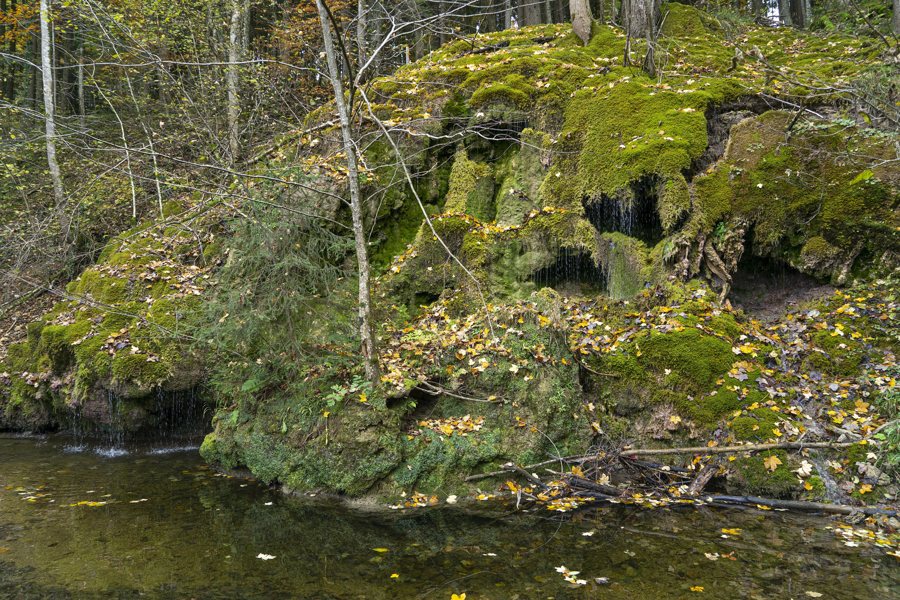 File:Naturdenkmal Kalktuffquelle, Weißenkirchen im Attergau.jpg
Photo: Thomas Ledl via Wikimedia Commons, CC-BY-SA-4.0
Regional Location and Building History
Weissenkirchen Im Attergau lies roughly midway between the Upper Austrian Salzkammergut lakes Attersee, Mondsee and Irrsee. This approximate location places the town within the region. Another historical landmark is the Church of St. Margaret in Weißenkirchen: its securely established date gives it a special place among Upper Austrian single-support churches. Alongside the town’s location, a specific building and its historical context therefore provide points of reference.
Glassmaking in Freudenthal
The glass factory in Freudenthal operated from 1716 to 1942. From 1893 onward, the glassworks produced only medical and pharmacy glassware. The two dates describe different aspects: 1716 to 1942 refers to the period of operation, while 1893 marks the start of the narrower product range. The history can thus be divided into its operating period and its later specialization, without reducing the entire operating period to the types of glass mentioned from 1893 onward. Both the long timespan and the changes within that history are important for understanding the local glassmaking theme.
Collection and Evidence of Glassmaking Culture
The glass museum’s collection includes Freudenthal glassware and is based on the former Freudenthal glassworks. It also includes glassmaking tools, photographs and documents. These items offer different perspectives: the glassware is complemented by tools and visual and written materials. The collection therefore focuses not only on glass as a finished product, but also on other evidence related to its manufacture. Together with the factory’s historical timeline, this offers an approach that connects objects with local history.
Open-Air Museum and Themed Trail
The Freudenthal open-air museum is located at the head of a valley. There, a former workers’ house presents what life was like in the past in a modern format. The “Das gläserne Tal” themed trail descends to the Freudenthaler Ache and then continues along the stream; it ends at the Freudenthal open-air museum. The route follows a clear sequence: first the descent to the Ache, then the path along the stream, and finally the open-air museum as the endpoint. The themed trail thus links the landscape to its destination in a clear order, while the workers’ house offers a separate perspective on life in the past.
Planning Your Trip and Accommodation Search
When planning your stay, you can first choose the focus that interests you most: the glass factory’s operating period and product history, the different elements of the museum collection, or the themed trail and its endpoint at the open-air museum. These perspectives answer different questions—one places glassmaking in its historical timeline, another focuses on the collection, and the trail describes a specific route through the landscape. When looking for hotels, you can tailor your choice to the travel interest that matters most to you.
Discover more destinations: Steinbach Am Attersee, Nußdorf Am Attersee, Unterach Am Attersee, Mühlbach, Seewalchen Am Attersee, Rutzenmoos, Lenzing, Tiefgraben.
Go to the main travel overview: Vöcklabruck.

