
Oberwang between the Lebensroas and Church Art
Accommodation in Oberwang
Oberwang lies in the forested hill country around Mondsee and is nestled in the picturesque Wangauer Ache valley. These landscape features offer a first point of reference when choosing accommodation; hiking, church art and local history provide other interests to explore. If you are looking for hotels in Oberwang, you can first consider whether you would like to plan your stay around the landscape, outdoor activities or culture.
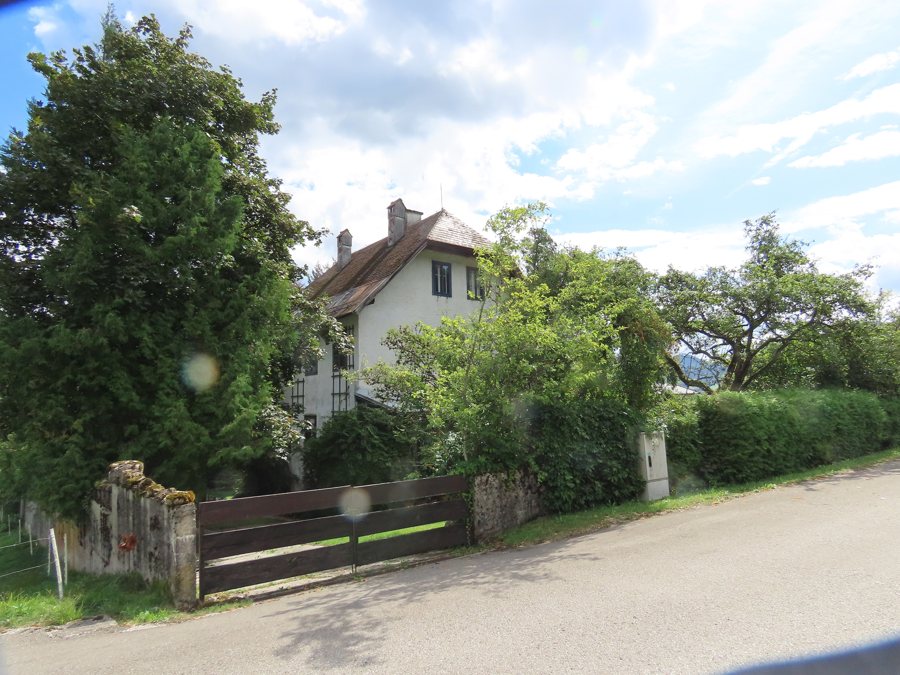 File:Anlage Wohnhaus und Atelier Lydia Roppolt, Gesschenschwandt 22, 4882 Oberwang.jpg
Photo: HGT64 via Wikimedia Commons, CC-BY-SA-4.0
Landscape and trails
The “Lebensroas” is a 2 km circular hiking trail that takes about 45 minutes to walk. Its length and approximate walking time can help you fit the route into your day; the time given is a guide. Before setting out, check the latest route information on the route’s website.
The gravel path on the “Lebensroas” is 1.50 metres wide and is suitable for pushchairs and wheelchairs when accompanied by another person. Suitability depends on local conditions. If you are using a pushchair or wheelchair, take both the need for an accompanying person and current conditions into account.
Oberwang’s landscape and the circular hike offer different points of reference: the forested hill country and the Wangauer Ache valley describe the character of the area, while the information about the “Lebensroas” gives a specific route length and approximate walking time. This makes it possible to distinguish experiencing the landscape from planning the time needed for the route.
The Konrad Church and church art
The Konrad Church is a branch church of St Martin. It stands just outside Oberwang in the municipal district of Gessenschwandt, at the foot of the wooded Kulmberg. Its location and the name of the district help situate the church within the surrounding area. Another route, “Places of Faith: In the Footsteps of Abbot Konrad,” ends at Oberwang parish church.
The Konrad Church houses an early Baroque high altar, probably created around the middle of the 17th century. It is attributed to the workshop of Hans Waldburger, who died in 1630 and whose workshop was headed by Hans Pernegger the Younger. The dating is approximate and does not specify an exact year of creation. For those interested in art history, the altar brings together a stylistic classification, a workshop history and the names of the artists involved.
The church windows offer a distinct glimpse of the interior decoration: nine windows feature stained glass by a female artist. Together with the early Baroque high altar, they represent two different artistic aspects of the Konrad Church—the altar’s design and the colourful effect of the windows.
Festival and local stories
The Konrad Festival takes place every year on the first Sunday in August. It is dedicated to the promotion of contemporary art and includes a Mass in the Konrad Church. Art and the religious occasion are combined at this festival. If the Konrad Festival will determine when you travel, check the date for your travel year.
A local historical tradition is associated with the Konradbrunnen (Konrad Fountain). The fountain is located where the body of the murdered Abbot Chunrad Bosinlother had been buried and later resurfaced through a spring. The story of the fountain thus points to a tale about the abbot and the place where the spring emerged.
Another cultural connection links Leo Fall with the farmer Josef Schossleitner: Leo Fall composed the operetta “Der fidele Bauer” after an encounter with Schossleitner. This offers a range of ways to explore the area’s themes—from church art and festival traditions to a local story connected with an operetta.
Discover more destinations: Mühlbach, Zell Am Moos, Seewalchen Am Attersee, Schörfling Am Attersee, Steinbach Am Attersee, Mondsee, Abtsdorf, Unterach Am Attersee.
Go to the main travel overview: Vöcklabruck.

