
Styria between the Dachstein, Gesäuse and cultural attractions
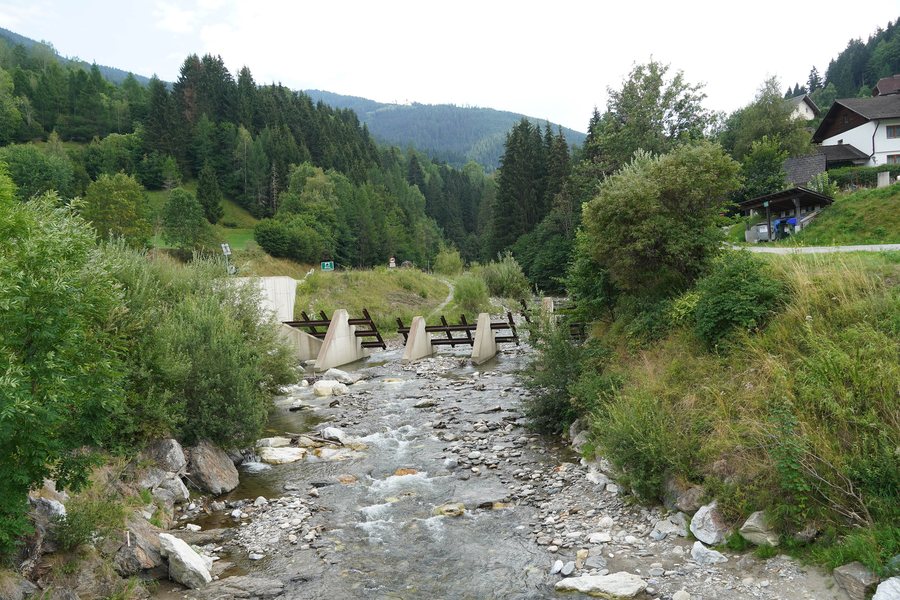 File:Predlitz, Wildbachverbauung des Turrachbaches, Steiermark, Austria 01.jpg
Photo: Naturpuur via Wikimedia Commons, CC BY-SA 4.0
File:Predlitz, Wildbachverbauung des Turrachbaches, Steiermark, Austria 01.jpg
Photo: Naturpuur via Wikimedia Commons, CC BY-SA 4.0
Styria combines high Alpine landscapes, distinctive nature experiences, historic places and regional culinary culture. When choosing a ski hotel in Styria, you can therefore tailor your stay to different interests: mountain panoramas and hiking trails are complemented by cultural sites, exceptional excursion destinations and culinary routes. The key differences lie not in a single local landscape, but in the region’s broad geographical and thematic range.
Highest mountain: At 2,995 metres, the Dachstein is the highest mountain in Styria.
Historic railway line: The Semmering Railway was built across 41 kilometres of high mountain terrain between 1848 and 1854 and has been in continuous operation since 1854.
National park: Gesäuse National Park is the only national park in Styria.
Starry sky: The Eisenwurzen Nature Night Region also includes Styria and has been certified as a Dark Sky Reserve by DarkSky International since 17 March 2026.
Hiking opportunities: Styria offers thousands of kilometres of marked hiking trails.
Culinary route: The 25-kilometre-long Styrian Apple Road connects orchards, cider taverns, farm shops and direct marketers.
Landscapes between high mountains and wine regions
In geographical terms, Styria stretches from the Dachstein Glacier across alpine pastures, forests and lakes to the wine landscapes in the south and east. For travel planning, this means that a stay can focus on Alpine impressions, extensive trails, waterscapes or the wine landscapes of southern and eastern Styria, without these themes merging into a single uniform type of landscape.
The Alpine character is particularly concentrated in Gesäuse National Park. There, between Admont and Hieflau, the Enns meets sheer limestone walls and Alpine forests. The area is framed by the Buchstein massif and the Hochtor group. The Riegersburg, perched on a 482-metre-high volcanic rock, offers a completely different landscape.
The nocturnal landscape is also part of the region’s profile. Astrophotography workshops are offered in the Eisenwurzen Nature Night Region, allowing visitors to experience the area’s dark skies.
Culture, history and special excursion destinations
The UNESCO site “City of Graz – Historic Centre and Schloss Eggenberg” bears witness to the vibrant heritage of a Central European urban complex. In the Joanneumsviertel, art, natural sciences and literature come together in historic buildings and modern architecture.
The Semmering Railway provides another historical gateway to the region. Its construction made areas of great scenic beauty more accessible and led to their development for residential and recreational purposes. In Mariazell, the basilica forms the centre of the pilgrimage town in the Mariazell region, which has attracted visitors from around the world for centuries. The museums of Admont Abbey provide insights into the life of the Benedictines.
Industrial history can be directly connected with a distinctive landscape at Erzberg. Rock has been mined there for more than 1,300 years; at the same time, Erzberg is the largest open-cast mine in Central Europe. The Hauly, a converted heavy-duty truck with 1,217 horsepower, takes visitors right through the open-cast mine. This is a clearly distinct experience from the historic interiors in Graz, Mariazell or Admont.
Activities for different interests
Gesäuse National Park can be explored on marked trails by hiking, climbing and cycling, as well as by rafting. Guided hikes focusing on geology, wildlife, forests and water are also available. This combination makes Gesäuse interesting for travellers who want not merely to observe nature, but to experience it from a range of thematic and sporting perspectives.
At the Dachstein, the Skywalk, the suspension bridge and the Stairway to Nothingness can be reached from the mountain station in just a few minutes. At Erzberg, a ride in the Hauly offers a technology- and industry-focused experience. Riegersburg has a bird-of-prey flying display. The destinations therefore differ significantly in character and allow visitors to choose according to their interests rather than being limited to a single type of activity.
Further options include the Red Bull Ring and Herberstein Animal World. The Red Bull Ring offers driving experiences at the Driving Center, on the racetrack and off-road. Herberstein Animal World is home to 85 animal species from every continent and also offers narrated feedings. For groups with different preferences, this creates independent alternatives to mountain and cultural destinations, without all travellers having to choose the same activity.
Apples, wine and regional routes
Hundreds of traditional wine taverns shape Styrian food and wine culture. The Styrian Apple Road makes apples an immersive experience along hiking trails while connecting orchards, cider taverns, farm shops and direct marketers. Culinary hiking trails also lead through Alpine pastures, apple orchards and vineyards, connecting these landscapes with regional cuisine.
For a regional overview, you can also consider the individual subregions: Mitterbach, Voitsberg, Weiz, Murau District, Leoben, Liezen, Hartberg-Fürstenfeld, Graz-Umgebung, Feldbach, Deutschlandsberg District, Bruck-Mürzzuschlag District and Murtal District.
For the overarching travel overview: Austria.
Check prices, availability and amenities for your travel dates directly on Booking.com.
View accommodations and offersAdvertisement · Affiliate link to Booking.com
