
Weiz between culture, nature and cycling routes
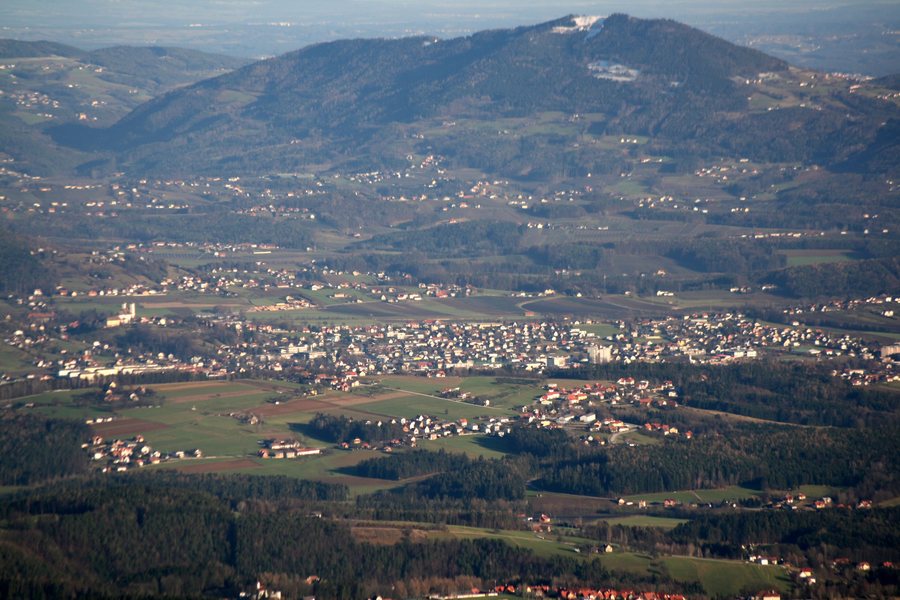 File:Weiz Schoeckl 3.jpg
Photo: Marion Schneider & Christoph Aistleitner - - - User:Mediocrity via Wikimedia Commons, Public domain
File:Weiz Schoeckl 3.jpg
Photo: Marion Schneider & Christoph Aistleitner - - - User:Mediocrity via Wikimedia Commons, Public domain
Weiz combines several clearly recognisable highlights for your stay: The City Museum introduces visitors to the history of the electrical industry and the pioneering work of engineer Franz Pichler, while the Tabor Church and Basilica on Weizberg are important landmarks in the town's history. Paths through the Adventure Forest, the Weiz Gorge and to the Raab Gorge complement the cultural attractions.
Cultural history around Tabor and Weizberg
The Weiz City Museum sees itself as a central institution in the town's cultural life. It preserves the cultural and historical memory of the town and its citizens and documents the history of the electrical industry in Weiz as well as the pioneering work of Weiz engineer Franz Pichler. The museum therefore focuses not only on one individual, but also on a specific period in Weiz's economic and technological development.
Tabor Church (St. Thomas Church on Tabor) is the oldest surviving building in Weiz. It was consecrated to Saint Thomas Becket of Canterbury in 1188. The Baroque high altar painting was created in 1771 after a painting by J. A. Ritter von Mölck and depicts the oldest surviving view of the market town of Weiz. On the south side of the church, the courtyard of Tabor contains Late Antique gravestones dating from the 1st to the 2nd century.
The architectural development of Tabor can also be seen in several features. In the 16th century, a fortified Tabor with a gate complex, round towers, a curtain wall and a moat was built around the church. Tabor Church contains partially well-preserved Romanesque and Gothic frescoes.
The first church on Weizberg was built in the 11th century. The simple Romanesque basilica was replaced by a Baroque basilica in the 18th century. In January 2018, the church on Weizberg was elevated to the status of a minor basilica. The Baroque church building is 53.58 m long and its interior is decorated with frescoes by Josef Adam Ritter von Mölck. The Spiritual Path connects Tabor Church in the town centre with the Basilica on Weizberg over a distance of 3 km and features seven stations.
Kunsthaus Weiz and events
Kunsthaus Weiz is a central venue for the region's art and cultural scene. The Frank Stronach Hall has 634 seats. The town gallery is located on the second upper floor. It covers 310 m² and primarily hosts exhibitions. Kunsthaus presents exhibitions there throughout the year, focusing on contemporary art.
The Kunsthaus programme extends beyond the gallery. Events in Weiz range from classical music and pop to exhibitions, workshops, readings and theatre performances.
Adventure trails through forest, gorge and cave
The large Adventure Forest extends across Weiz and Mortantsch and ends at the large playground in Hofbauer Landscape Park (Augsten). The Nature Experience Trail leads from Weiz down to the Raab Gorge and back via Hafning. Numerous information boards and activity stations explain the flora and fauna of Eastern Styria. The trails therefore combine landscape exploration with specific information about the region's natural environment.
For a shorter, adventure-oriented hike, the Jägersteig trail in the Weiz Gorge is an option. The short hike passes caves and includes a suspension bridge as well as ropes for holding on to the walls. In the Katerloch cave, the guided route covers around 1 km, 135 m in elevation gain and 400 steps. Katerloch is considered Austria's cave with the greatest abundance of stalactites and stalagmites. The two attractions therefore differ significantly in their route design and in the demands of the guided route.
Cycling routes with different route profiles
Weiz is connected to several cycling routes. The Weiz Almenland Cycling Tour connects the district capital of Weiz with the Almenland region. The almost 112 km-long Raab Valley Cycle Path passes through the historic town of Weiz. From the town of Weiz onwards, this cycle path leads only downhill. The S31 rapid transit railway runs to St. Ruprecht an der Raab and Weiz; according to the route information, bicycles can be carried free of charge.
At 3 km, the Spiritual Path is significantly shorter than the almost 112 km-long Raab Valley Cycle Path, while the Weiz Almenland Cycling Tour connects Weiz with the Almenland region.
Regional specialities from the Weiz sheep farmers
The Weiz sheep farmers add a regional focus to the cultural and landscape-related themes. Their adventure tour passes through an interactive and demonstration cheese dairy and includes five stations focusing on lamb and sheep products. The tour includes tastings of various sheep cheese varieties and cheese refinement. This means that production is presented not only through finished products, but also through several stations and processing steps.
The Weiz sheep farmers' cooperative produces an extensive range of selected specialities from sheep's milk and lamb meat. The Weiz sheep farmers also process sheep's wool to a high standard for various applications. For your stay in Weiz, this provides another specific thematic area related to regional production alongside the museum, churches, exhibitions and trails.
Further places for regional orientation: Sankt Kathrein Am Offenegg, Markt Hartmannsdorf, Breitenau, Ratten, Fischbach, Fladnitz An Der Teichalpe, Sankt Kathrein Am Offenegg Ii.Viertel, Anger, Birkfeld, Passail, Sankt Georgen, Stenzengreith, Sankt Ruprecht An Der Raab, Plenzengreith, Brand, Sankt Kathrein Am Hauenstein and Rettenegg.
For the overarching travel overview: Styria.
Check prices, availability and amenities for your travel dates directly on Booking.com.
View accommodation and offersAdvertisement · Affiliate link to Booking.com
