
Villablino: Mountain Landscapes, Culture and Winter Sports in the Valle de Laciana
Accommodation in Villablino
Villablino in the Valle de Laciana
Villablino is the main town of the Valle de Laciana, which is surrounded by mountain peaks rising above 2,000 metres. The River Sil crosses the Valle de Laciana, forming gorges and narrow passages in places. The Valle de Laciana UNESCO Biosphere Reserve encompasses the municipality of Villablino and 14 villages. These villages include Caboalles De Abajo.
Natural Environment and Wildlife
The protected Valle de Laciana and the ZEPA bird protection area provide a habitat for the Cantabrian capercaillie, brown bears, roe deer and wild boar. The UNESCO Biosphere Reserve is particularly important for the protection of the brown bear; a network of viewpoints enables patient visitors to observe them in their natural habitat.
The mixed forest of Rabanal de Arriba, with birch, oak and rowan trees, remains one of the last refuges of the Cantabrian capercaillie in this mountain landscape. The “La Tierra del Oso” Trail Running Centre, supported by the Biosphere Reserve, offers hiking and running routes of varying lengths and elevation profiles that take the protection of endangered species into account.
Hiking and Cycling
The 12-kilometre-long Vía Verde de Laciana connects valley landscapes with archaeological remains of the mining industry. The 15-kilometre circular hike to Cueto Nidio begins and ends in Rabanal de Arriba (Villablino).
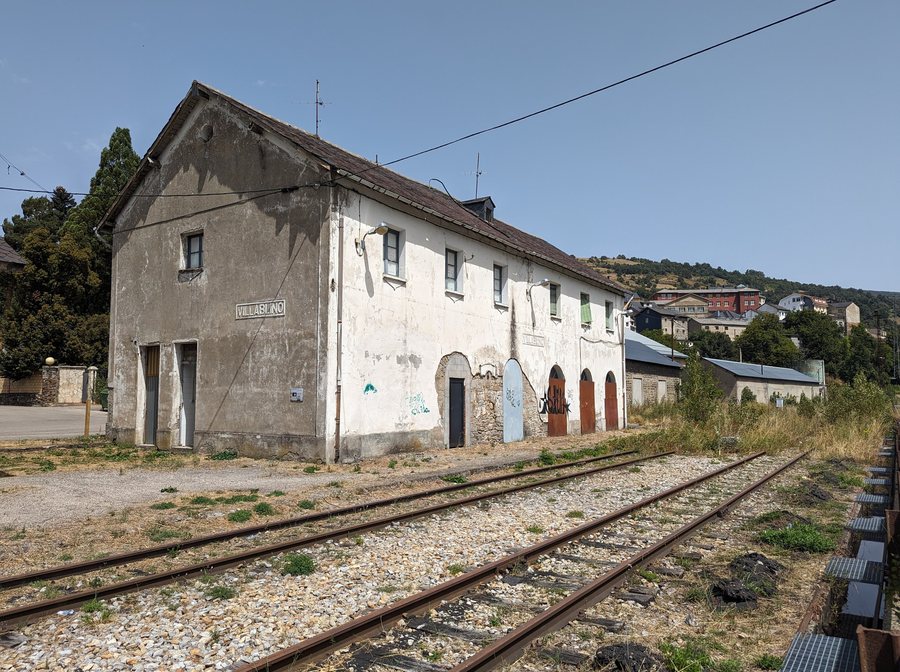
The Camino Natural a Villaseca is fully accessible by bicycle and follows the former railway line between Villablino and Villaseca de Laciana. At Laciana Natura in Villablino, you can rent e-bikes or book a guided route accompanied by instructors.
Winter Sports in the Valle de Laciana-Leitariegos
The Valle de Laciana-Leitariegos winter sports and mountain area offers skiing, snowboarding and various routes adapted to different users. There are currently 8 kilometres of ski runs and a snow park.
Culture and Regional History
The Casona Sierra Pambley in Villablino is a manor house built in 1774 by the Sierra Pambley family. At the end of the 19th century, Francisco Fernández Blanco de Sierra Pambley founded the Sierra Pambley Mercantile and Agricultural School in Villablino and had a building constructed for it next to his birthplace. The Aula Geológica de Robles houses a large collection of fossils, particularly from the Carboniferous period, as well as minerals.
The La Zamora archaeological site is one of three pre-Roman hill forts in Laciana that can be visited. The Castro de La Muela in Rioscuro originated in the Second Iron Age and represents the history of Asturian settlement, with livestock farming and subsistence agriculture. The Iglesia de San Miguel in Villablino is a significant example of rural Romanesque architecture.
The Centro del Urogallo in Caboalles de Arriba near Villablino presents the geology, palaeontology and habitats of Alto Sil – from the high-mountain landscape to the valley floors. The regional natural and cultural environment includes the forests of Alto Sil, the Cantabrian capercaillie, the brown bear and the traditional summer use of the high mountain pastures by the Brañeros.
Festivals and Specialities from Laciana
The Fiesta de la Manteiga in Sosas combines a visit to La Popular, the historic hydraulic dairy now used as a museum, with demonstrations of traditional butter-making and regional festivities; it takes place in August. La Feriona in Villablino is a livestock fair featuring exhibitions of cows, horses, mastiffs and chickens, numerous market stalls, and the tradition of eating octopus on 12 October.
Traditional desserts from the Laciana mountain region include fisuelos, pionono or brazo de gitano, and borrachines.
For the overarching travel overview: León.
More Destinations
More places in the same destination:

