
Dekýš: Discover Hiking Trails, Lakes and Churches
Accommodation in Dekýš
Dekýš is ideally located for hiking and retains its peaceful character throughout the year. The village lies in the southern part of the Štiavnické vrchy, in an erosion-formed depression at the headwaters of Dekýšsky potok. Trails, forests and historic bodies of water are just as much a part of the local landscape as traces of a long history of settlement and construction.
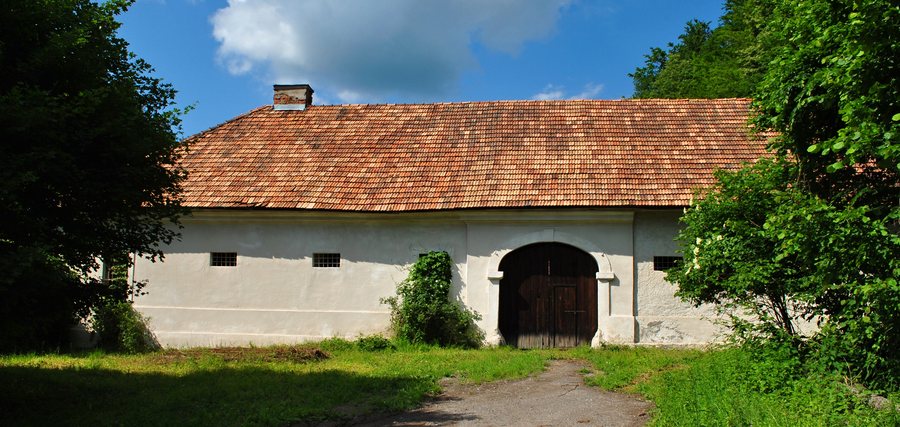 File:Dekýš - hostinec s voziarňou.JPG
Photo: Photograph: Patrik Kunec ( talk ) via Wikimedia Commons, CC BY-SA 4.0
File:Dekýš - hostinec s voziarňou.JPG
Photo: Photograph: Patrik Kunec ( talk ) via Wikimedia Commons, CC BY-SA 4.0
Nature
Three quarters of Dekýš’s cadastral area is covered by forest. Oak and beech stands are typical of the forests in the area. The flora is mixed and includes both mountain plants and heat-loving species.
Near Dekýš, 4 km southwest of the village, lies the Jabloňovský Roháč state forest reserve, also known as Almášsky Roháč. Red deer are found around Dekýš; the Sitno roe deer (Capreolus sitnensis) lives in the Sitno Nature Reserve.
Trails and Bodies of Water
Hiking trails run through Dekýš towards Sitno, Počúvadlo and the surrounding lakes. Počúvadlianske Lake is the largest lake in the Štiavnické vrchy. It was created according to plans by S. Mikovíny between 1738 and 1740.
Most of the lakes around Dekýš were artificially created for ore mining. They have historic and technical value. The bodies of water therefore form not only part of the landscape, but are also closely connected with the region’s former use.
History
Dekýš was first mentioned in writing in 1270, when it was called Gukes. A Roman-era settlement is also known to have existed in the village’s territory.
The area around Dekýš was already settled in the Stone Age. A settlement of the Linear Pottery culture, with Želiezovce-type pottery and an idol find, is known to have existed there. The documented history of the village therefore stands alongside much older traces of settlement.
Culture
Traditional folk art in Dekýš included making agricultural tools and furniture from locally available wood. The village’s embroidery also has characteristic development features: at first, small cross, lattice and dot motifs were used; after the First World War, plant ornaments were added.
The religious buildings include the Roman Catholic Church of the Nativity of the Virgin Mary. It was built in 1805 and extended with a transept in 1924. The church is in good condition and is used for religious purposes.
The Evangelical church in Dekýš was built in 1924 in a secession-influenced neoclassical style. It too is in good condition and is used for religious purposes.
Also check which services are included, how the price is composed, and which booking or cancellation conditions apply. When travelling with several people, it is equally important to check whether the stated occupancy suits your group. The specific features and conditions vary by offer; the information on the respective offer page is decisive.
You can find more destinations in the same regional area under Banska Bela, Banska Stiavnica, Svätý Anton, Banský Studenec, Štiavnické Bane, Vysoká, Ilija.
For the broader travel overview: Okres Banská Štiavnica.

