
Cluj-Napoca: Hotels and Accommodation
Accommodation in Cluj-Napoca
Geographical Location
Cluj County is located in the northwestern half of Romania at the intersection of the Apuseni Mountains, the Someșan Plateau and the Transylvanian Plain.
The county’s public road network covers 2,454 kilometres, including 342 kilometres of national roads. Railway lines with a total length of 232 kilometres also run through the area.
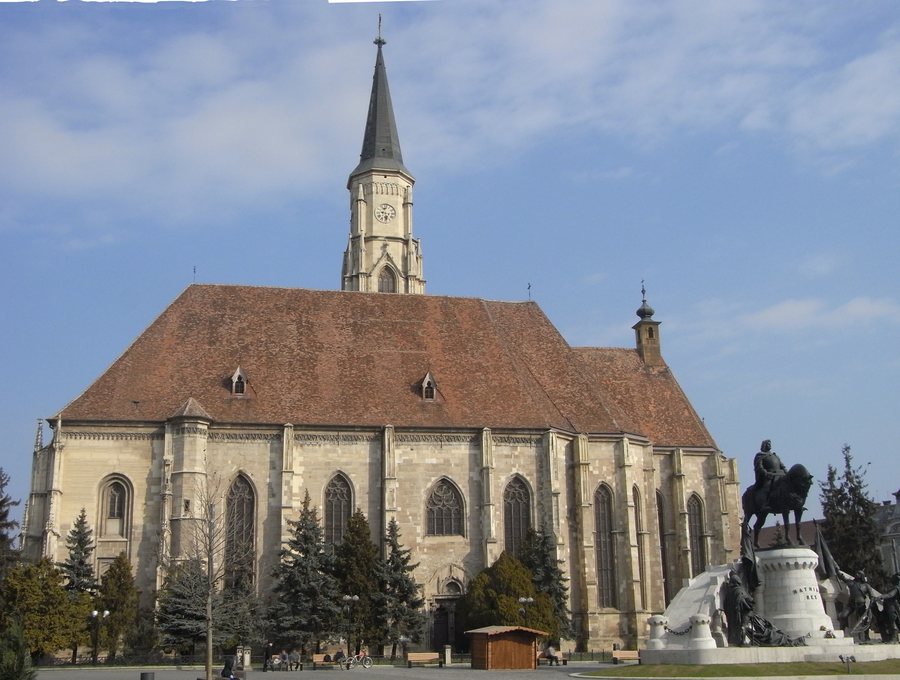
Perhaps you would like to book a hotel in Cluj-Napoca for your stay.
Culture
In Cluj-Napoca, you will find the “Romulus Vuia” National Ethnographic Park, Romania’s first open-air museum, founded on 1 June 1929. The Cluj National Centre for Tourist Information and Promotion organises free one- to three-hour guided tours in the historic centre of Cluj-Napoca. They take place from Monday to Friday between 08:00 and 16:00.
The collections of the Muzeul Etnografic al Transilvaniei comprise 41,542 original artefacts. Most date from rural Transylvania and from the 17th to the 20th century. They reflect the cultural environment of the Romanian, Hungarian, Saxon and Roma populations.
The Muzeul de Istorie Turda was founded in 1943 in the former customs building for salt in Turda. The building also served as a temporary residence for the princes of Transylvania. Today, the museum preserves 30,000 objects representative of all historical periods.
Bánffy Castle in Bonţida is a representative architectural monument of the Transylvanian Baroque. The park and lake behind Bánffy Castle are suitable for picnics and recreation.
The Terezia Mine at Salina Turda contains an underground lake where boat trips are possible at a depth of 112 metres in the salt mine. Salina Turda also offers modern recreational facilities and treatment options.
Nicula Monastery has an uninterrupted monastic history spanning several hundred years. Every year on 15 August, the largest Orthodox pilgrimage event in Transylvania takes place there on the occasion of the patronal feast of “Adormirea Maicii Domnului”. Glass painting developed into a distinct school in Nicula; the monastic craft was learned by the villagers.
The Sic Dance Museum displays a collection of 460 pairs of boots used for traditional dances. It is housed in restored traditional buildings; the complex also includes a barn built in the traditional style. In Sic, the predominantly Hungarian community continues to preserve its ethnographic traditions.
Nature
Cheile Turzii is a complex nature reserve of geological, faunal, floral, archaeological and speleological significance. The gorges extend for approximately 3 kilometres, and their walls reach heights of up to 300 metres. Cheile Turzii also offers numerous climbing and mountaineering routes of all difficulty levels.
The Stufărişurile de la Sic is an avifaunal nature reserve in the village of Sic in the Fizeş Valley. It forms a mosaic of reed beds, salt meadows, steppe meadows, wet meadows, marshes and ponds, providing habitat for a great variety of migratory waterbirds.
To the main travel overview: Romania.
More destinations
More places under the same destination:

