
Cluj-Napoca: Garden, Open-Air Museum and City History
Accommodation in Cluj-Napoca
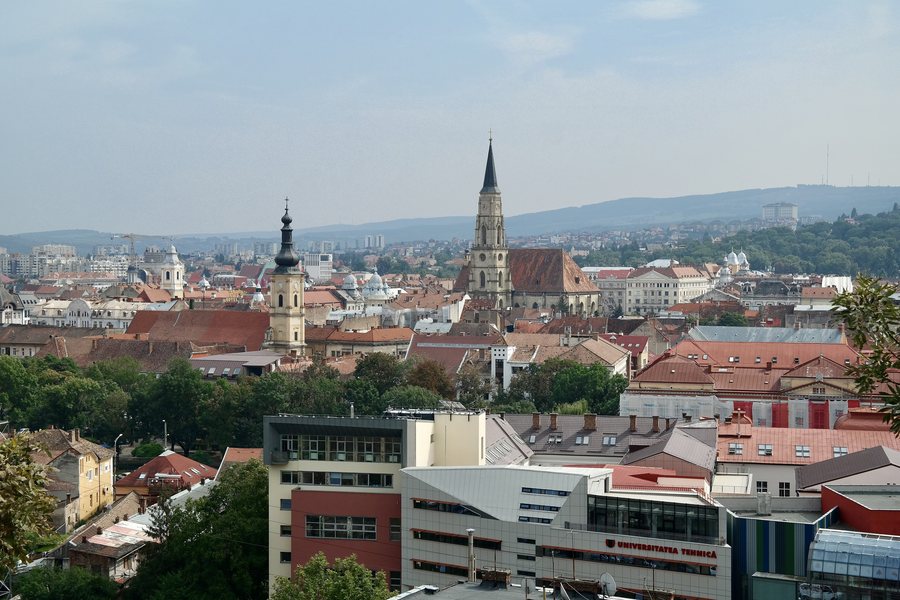 File:Cluj-Napoca as seen from Cetățuia Park.jpg
Photo: Choinowski via Wikimedia Commons, CC BY-SA 4.0
File:Cluj-Napoca as seen from Cetățuia Park.jpg
Photo: Choinowski via Wikimedia Commons, CC BY-SA 4.0
Culture
The „Alexandru Borza“ Botanical Garden in Cluj-Napoca was founded in 1920 and officially opened to the public in 1925. The garden cultivates around 10,000 plant categories across 14 hectares. It can be approached from either a historical or botanical perspective.
When choosing accommodation in Cluj-Napoca, you can compare travel dates, room categories and cancellation policies according to your own travel plans. The cultural themes of your stay can be assessed independently, keeping organisational selection and content planning separate.
History
The „Romulus Vuia“ National Ethnographic Park in Cluj-Napoca was founded on 1 June 1929 as Romania's first open-air museum. Its original design concept envisaged that original rural households would be inhabited by farmers carrying out traditional economic activities.
The Bastionul Croitorilor was part of the Old Fortress of Cluj. This was built during the 15th century on the orders of the Hungarian King Sigismund of Luxembourg. The Bastionul Croitorilor is a multifunctional space with a centre for urban culture and an exhibition hall.
Cluj-Napoca therefore brings together various historical and institutional forms: the open-air museum with its original concept and the Bastionul as part of the Old Fortress with its present-day cultural use. The dates and the different functions can be assessed separately when planning your own visit.
City
The Turnul Pompierilor was completed in 1574. It is set up as a centre for urban culture and presents various exhibitions, objects and old photographs relating to firefighting. The Turnul Pompierilor also offers a 360-degree panoramic view over Cluj-Napoca.
Central Park offers outdoor recreational facilities, including a basketball court illuminated at night, free-to-use fitness equipment and a specially designed children's park.
The areas of focus mentioned can be considered independently of one another. When planning your visit, you can distinguish between a focus on cultural history and time spent in public open spaces.
Surroundings
The immediate surroundings of Cluj-Napoca include the Statuia lui Baba Novac monument, the Statuia lui Ion Agârbiceanu monument, the Mânăstirea Romano-Catolică Franciscană Cluj-Napoca monastery and the Statuia lui Mihai Viteazul monument.
The surroundings of Cluj-Napoca also include the Vârful Peana summit, Dealul Melinilor mountain and Dealul Sălaşului mountain.
The Parcul Etnografic Romulus Vuia Cluj-Napoca park is located in the immediate surroundings of Cluj-Napoca.
For Cluj-Napoca, you can consider the four monuments, the monastery and the park in the immediate surroundings separately from Vârful Peana and the two mountains in the surrounding area.
Art
Art can also be considered as a separate focus alongside history, the city and the landscape. Some of the small-format icons from the Muzeul de Artă Cluj-Napoca are exhibited in the first hall of the National Gallery.
For the overarching travel overview: Cluj.

