
Ząb: Panorama, Trails and Culture
Accommodation in Ząb
Ząb combines a specific winter landmark with walking trails, a wide mountain panorama and local cultural attractions. When planning your trip, it is worth deciding first whether the ski lift, trails through the village or cultural stops should be the focus.
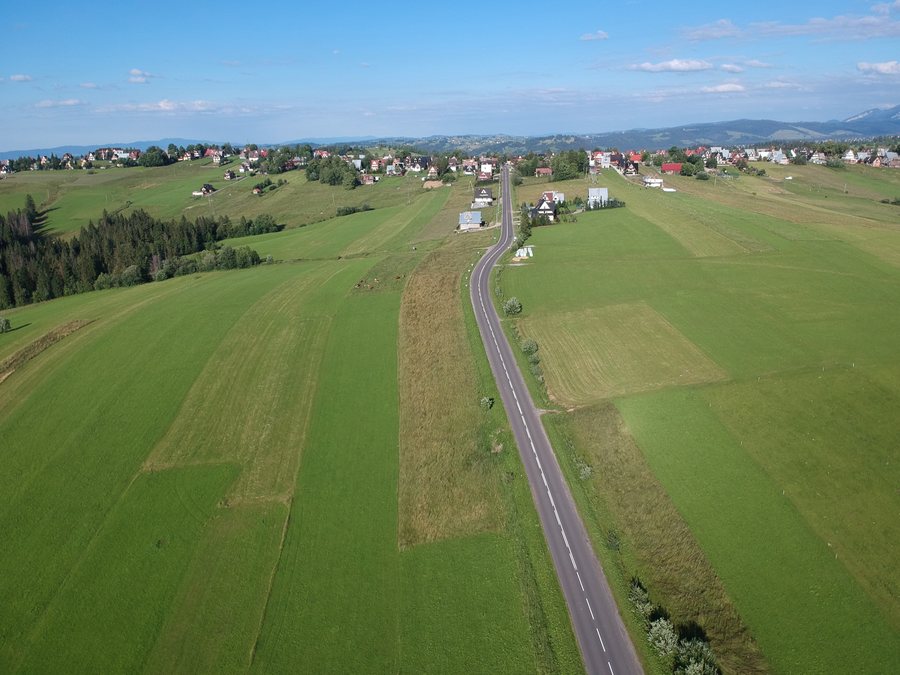
Winter landmark
On the eastern side of Ząb, the Potoczki ski lift is located at an altitude of 980 m. This makes Potoczki a clearly identified point of reference for winter days in Ząb. If the lift is part of your plans, check before your trip whether it will be operating during your stay. Compare the location of an accommodation option with your planned daily destinations, especially if you would like to combine several interests. This way, you can choose where to stay based on what you actually plan to do on holiday, rather than considering accommodation and your daily itinerary separately.
Walking trails and hiking routes
Several trails in Ząb lead in different directions. From the church, a walking trail leads towards the cemetery and continues along the ridge in the direction of Tatarów. Another walking trail runs through Ząb towards Gubałówka. In addition, the green PTTK-marked Zakopane–Kotelnica–Szaflary D47 hiking trail passes through Ząb. The two walking trails can be distinguished by their destinations; for the D47, the green markings and trail name provide clear guidance. For planning your day, this is a simple choice: which direction would you like to take, and would you like to follow a marked hiking trail?
Panorama and culture in Ząb
From Ząb, the view extends across the panorama of the Tatras, the Babia Góra massif and Orawa, the Gorce with Turbacz, and the Pieniny Mountains. This landscape view is a separate consideration alongside the lift and trails. If the views are important when choosing your destination, you can take the panorama into account.
The wooden Church of St. Anne in Ząb was consecrated on 15 September 1921. The main altar was created by Wojciech Brzega. The Zbójnicek regional ensemble was founded in Ząb in 1964 by Maria Stoch. The details highlight different aspects: the church’s construction, consecration and altar, and the ensemble’s founding story. If you are interested in local history and culture, you can weigh these topics alongside trails and winter destinations.
The playground in Ząb is also part of a cultural trail. Elements of its landscape architecture draw on the traditional farming of the Gorals. This gives the stop a local thematic connection beyond its function as a playground. If you plan to visit, check the current condition of the facilities beforehand.
More places to compare: Małe Ciche, Biały Dunajec, Bukowina Tatrzanska, Gliczarów Górny, Poronin, Jurgów, Koscielisko, Leśnica.
For the broader travel overview: Tatras.

