
Experience Liechtenstein between mountains, culture and nature
Accommodation in Liechtenstein
If you are looking for accommodation for a skiing holiday in Liechtenstein, it is first worth taking a look at the country's various travel purposes. For mobility within the country, the connection with LIEmobil to Malbun is also relevant. This allows you to choose your accommodation based on whether culture, nature, active trails or a stay with a side trip to Malbun should be the focus.
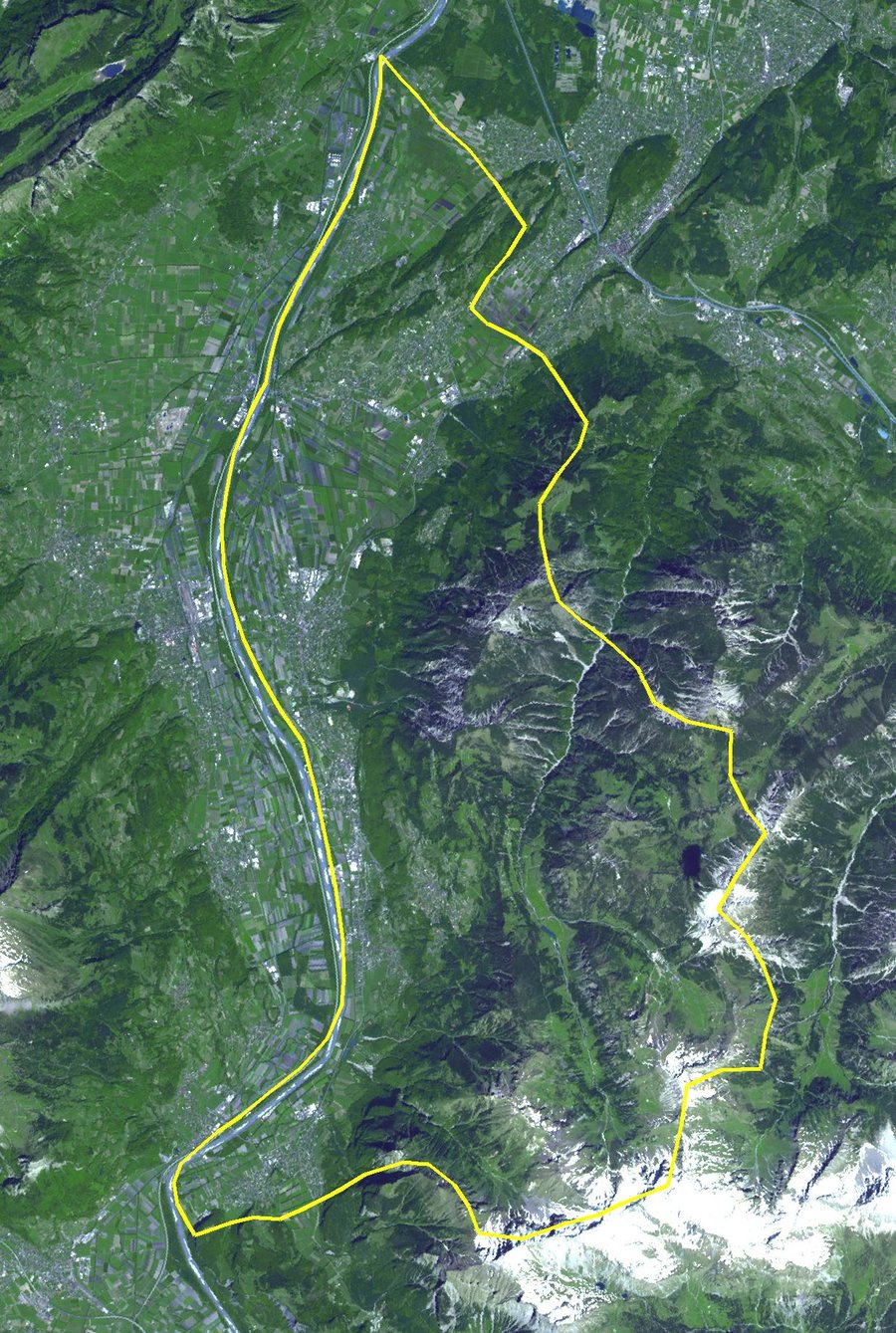 File:Principality of Liechtenstein (ASTER).jpg
Photo: NASA/METI/AIST/Japan Space Systems, and U.S./Japan ASTER Science Team via Source, Public domain
File:Principality of Liechtenstein (ASTER).jpg
Photo: NASA/METI/AIST/Japan Space Systems, and U.S./Japan ASTER Science Team via Source, Public domain
- The hill on which Gutenberg Castle stands has been inhabited for thousands of years; archaeological finds provide evidence of this.
- Ruggeller Riet is a peatland and nature reserve covering around 90 hectares in the far north of Liechtenstein.
- At the end of 2024, Ruggeller Riet was incorporated into the cross-border Emerald Network by the Council of Europe's Bern Convention.
- Guided tours of the accessible interior and grounds of Gutenberg Castle last 75 minutes.
- The Walser Museum presents the farming and domestic life of the people who immigrated from Valais and settled in Triesenberg in the 13th century.
- The Liechtenstein Trail passes through all municipalities and connects nature, culture and history.
- The cycling route of the Liechtenstein Trail is 85 kilometres long.
Culture between castles, Walser houses and museums
Gutenberg Castle combines a historic site with a clear connection to the past: the castle hill has been inhabited for thousands of years, and archaeological finds provide evidence of this long period of settlement. Guided tours of the accessible interior and grounds of Gutenberg Castle offer a time-limited, easy-to-plan insight.
In Triesenberg, the Walser Museum focuses on the history of the people who immigrated from Valais and settled there in the 13th century. The museum depicts their farming and domestic life. In addition, during guided tours, the 400-year-old Walser house in the hamlet of Hag conveys 19th-century residential culture. The two sites have different focuses: the Walser Museum is dedicated to the lives of the immigrant Walsers, while the historic house allows visitors to experience residential culture through a specific building.
The country's industrial and art history also have their own points of interest. The IndustrieWelt Liechtenstein, newly established in 2019 at the Liechtenstein NationalMuseum, presents the country's leading industrial companies and their history. The Liechtenstein NationalMuseum offers private tours of its exhibitions in German and English; other languages are available on request. In the heart of Vaduz, the Kunstmuseum Liechtenstein opened in 2000 as a museum of modern and contemporary art. Its collection is also the state art collection of the Principality of Liechtenstein and places particular emphasis on three-dimensional works such as sculptures, installations and objects.
Natural areas and trails for active days
Ruggeller Riet is located in the far north of Liechtenstein and covers around 90 hectares. As a peatland and nature reserve, it represents a different type of landscape from the historic and urban cultural destinations. At the end of 2024, the area was incorporated into the cross-border Emerald Network by the Council of Europe's Bern Convention. The area is suitable for walking, cycling and inline skating and is connected to the cycling path networks of Austria and Switzerland. For families or groups with different interests, this natural area therefore offers an alternative to purely museum and cultural programmes.
The Alpine region of Liechtenstein is a plant protection area. There are more than 1,500 plant species within the country's borders. If you are interested in landscapes and biodiversity, you can take this focus into account when arranging your days alongside culture and cycling.
The Liechtenstein Trail passes through all municipalities and connects nature, culture and history. The associated cycling route is 85 kilometres long. This provides different scales for planning: the entire trail forms a connection across the country, while the cycling route has a clearly specified length. This distinction can be helpful when choosing a hotel or other accommodation if you would prefer to structure your days around individual sights, sections through nature or a longer cycling tour.
Excursions in the surrounding area and mobility
There are several other destinations in the surrounding area of Liechtenstein, each with a different profile. The Stamp Museum is a museum in the vicinity of Liechtenstein. The Buchs Bird of Prey Park is a zoo in the vicinity of Liechtenstein. Ober Burg is a ruin in the vicinity of Liechtenstein, while Bergle is classified as a peak in the vicinity of Liechtenstein. These destinations should therefore not be treated as a uniform range of excursions: the museum, zoo, ruin and peak each represent a different type of interest.
With a LIEmobil ticket, you can travel to Liechtenstein from the railway stations in Sargans, Buchs or Feldkirch. With a ticket valid throughout the country, you can travel as far as Malbun. If Malbun is part of your travel plans, this nationwide transport option is a separate consideration when planning your stay. However, it says nothing about the location, facilities or availability of any individual accommodation. When choosing a hotel in Liechtenstein, it therefore remains crucial which cultural destinations, natural areas, trails or journeys you wish to combine.
Regional classification
For further orientation, you can consider the municipality of Triesen, municipality of Ruggell, municipality of Eschen, Gamprin, Schaan, Balzers, municipality of Vaduz and municipality of Triesenberg individually.

.jpg)