
Triesen between village history, culture and walking trails
Accommodation in Municipality of Triesen
Triesen lies between the Rhine and Liechtenstein’s mountain landscape. Triesen combines natural scenery, village history, walking trails and a diverse cultural offering. When choosing accommodation in Triesen, you can therefore plan your stay around several specific aspects: from the historic village centre and chapels to museums and paths through natural and cultural landscapes.
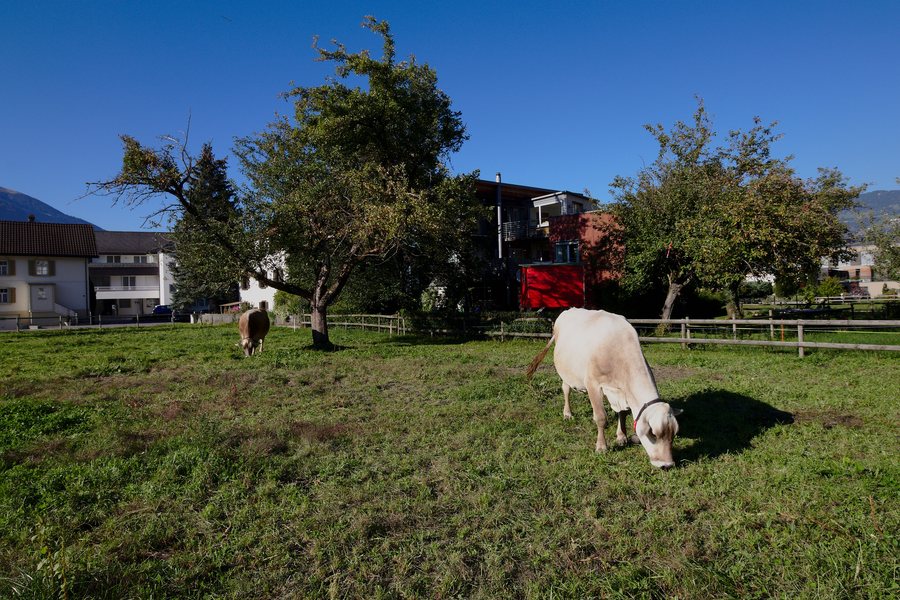 File:2018-10-05 Liechtenstein, Triesen (KPFC) 01.jpg
Photo: Rafael P. D. Suppmann via Wikimedia Commons, CC BY-SA 4.0
File:2018-10-05 Liechtenstein, Triesen (KPFC) 01.jpg
Photo: Rafael P. D. Suppmann via Wikimedia Commons, CC BY-SA 4.0
Landscape and village centre
The village’s distinctive geological foundation is directly connected to its location: Triesen lies on the debris fans of a postglacial landslide. The Hahnenspiel summit is also located nearby.
The historic village centre, with its old houses, is flanked by vineyards and two stylish chapels. This combination conveys the centuries-old history of the village within a compact area. A tour of Triesen therefore focuses not only on individual buildings, but also on the relationship between settlement, viticulture and sacred architecture.
Culture on historic grounds
An important point of reference in the village’s history is the listed complex of the former Jenny, Spörry & Cie. cotton weaving mill. It was built in 1863. The architecturally appealing site is home to the Gasometer cultural centre. The site’s former industrial use remains recognisable as part of its historical setting, while the Gasometer presents an independent cultural programme.
The Gasometer hosts art exhibitions featuring regional and international artists, as well as themed exhibitions. It also presents projects on the history of the village and the country. The programme extends beyond visual art: cultural activities include music, theatre, dance and literature. This means that a stay in Triesen can be explored not only through its landscape and townscape, but also through changing cultural perspectives.
Museums between technology and national history
The Lawena Museum is dedicated, among other things, to the history of electricity. Its exhibits include objects dating back to 1900. A special exhibition traces the electrification of Liechtenstein: from life without electricity, through the electrification of the first factories and industries and the construction of the first power plant, to today’s electricity procurement and renewable energy.
For groups, guided tours at the Lawena Museum are available year-round from Monday to Saturday by prior arrangement. This is a clearly defined planning option for visitors travelling together, without implying a general opening-hours or event guarantee for other offerings.
Walks and hikes
Numerous walking trails provide access to the village’s surrounding natural and cultural landscapes. The “Culture and Nature Trails” series includes walking and hiking guides that explore the village and the cultural landscape of Triesen. This allows you to combine the history of the village with movement through the landscape, rather than viewing individual attractions independently of one another.
One specific example is the “Explore the Settlement Centre” walk. It leads from the municipal centre to St. Mamerta Chapel, follows the village street and traces the course of the village stream, which is no longer visible today.
For longer outings, the brochure “Hiking through the Cultural Landscape” presents six hikes of varying lengths and difficulty levels. This range makes it easier to choose according to the desired duration and challenge, without presenting all routes as equivalent. For groups with different interests, this is a useful distinction: not everyone has to choose the same route length or difficulty level.
Chapels, wine and other aspects of the village
The two chapels in the village centre also represent different historical periods. During a recent renovation of the Marien Chapel, Baroque frescoes were discovered on the walls. St. Mamerta Chapel is older than the Marien Chapel and is believed to date back to the 9th century. The two buildings therefore represent different layers of the village’s history.
The connection between vineyards and village culture is also reflected in the traditional Triesen Wine Festival 2025. On 30 August, more than 20 wines from Triesen’s winegrowers were available for tasting at St. Mamerta, accompanied by regional specialities. The wine festival can be traced back to 1990. Both viticulture and the festival tradition documented over time are therefore relevant to understanding the local context.
Another practical leisure option is the tennis courts at the Forst tennis facility. They can also be used by guests for a court fee.
To the village overview: Triesen.
To the broader travel overview: Liechtenstein.
More destinations
More places within the same destination:

_01.jpg)