
Klausen: Monastery, Art and Trails
Accommodation in Klausen
Museum and Monastery Complex
The Museo Civico di Chiusa is located in the former Capuchin monastery. The museum tour also includes the cloister and the church of the Capuchin monastery. A cloister is a covered walkway in a monastery, often surrounding a courtyard. The Museo Civico also includes a section on the Chiusa artists' colony from 1874 to 1914. An artists' colony is a group of artists who stay in one place or its surroundings and work together there over an extended period. For those interested in culture, the Museo Civico combines the monastery building with its cloister, monastery church and section on the Chiusa artists' colony. The tour therefore brings together architectural elements of the former monastery and a section on the artists' colony clearly defined by period.
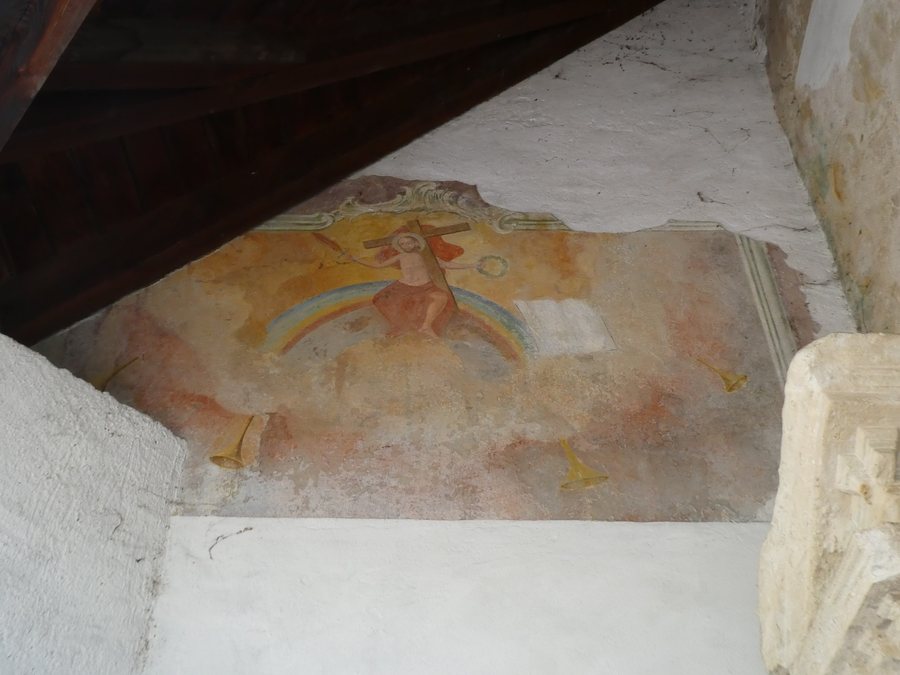 File:Chiusa, chiesa di Sant'Andrea - Affresco sul fianco destro.jpg
Photo: Syrio via Wikimedia Commons, CC BY-SA 4.0
File:Chiusa, chiesa di Sant'Andrea - Affresco sul fianco destro.jpg
Photo: Syrio via Wikimedia Commons, CC BY-SA 4.0
Paintings, Sacred Objects and Churches
The Loreto Treasure comprises a valuable collection of paintings and sacred objects. The collection was donated to Father Gabriel Pontifeser and the Capuchin monastery of Chiusa by the Spanish kings and other important figures at the Spanish court. Sacred objects are items used for religious purposes, such as worship or devotion. Chiusa is also home to the parish church of Sant'Andrea. The church is late Gothic and was consecrated in 1494. The Capuchin church was built in 1699 and consecrated in 1701. The churches differ in their construction and consecration history: Sant'Andrea is late Gothic, while the Capuchin church was built in 1699 and consecrated in 1701.
Sabiona on Foot
Sabiona Monastery can be reached exclusively on foot via the Via Crucis in approximately 30 minutes. For personal day planning, the approximate walking time to Sabiona already counts as a separate time block. The name Via Crucis refers to a Way of the Cross, that is, a religiously themed route with stations. At Sabiona, the Chiesa di Nostra Signora houses Baroque frescoes, monumental stucco work and an altar dating from 1612. Frescoes are paintings on walls or ceilings, while stucco work consists of three-dimensional ornaments made of mortar or plaster.
Monte Tschan and Trails
Albrecht Dürer stayed in Chiusa in autumn 1494 and climbed the slopes of Monte Tschan on the left side of the valley. The Dürerstein Trail from Chiusa leads to the slopes of Monte Tschan and, after a few minutes, to a bench.
The second stage of the Chestnut Trail passes through the north portal into Sabiona Monastery. A stage is a defined section of a longer route and serves to provide clear orientation along the entire course of the trail.
Festa del Törggelen
At the Festa del Törggelen, a wide selection of white wines from the Isarco Valley complements the culinary offerings. White wine refers to wine made from light-coloured grapes or from grapes whose juice is processed as a light wine.
More travel destinations: Mühlbach, Laion, Bressanone, Feldthurns, Funes, Rodengo, Luson and Naz-Sciaves.
To the overview of the wider travel region: Isarco Valley.

